UNESCO clearinghouse on living heritage and education
Welcome to the UNESCO Clearinghouse on living heritage and education. Browse materials, case studies and reports that focus on the many benefits of integrating intangible cultural heritage in formal and non-formal education. Learn more
-
News (27)
-
Events (27)
-
Projects (30)
-
Resources (104)
1 October 2025
The project ‘Supporting the resilience of Ukrainian school children through enhancing awareness of their living heritage’ is scaling up at the country level, with its second phase officially launched on 16 September 2025.
22 August 2023
UNESCO Cairo Office release the publication ‘National capacity building on inventorying the intangible cultural heritage in the Arab Republic of Egypt’
13 April 2023
‘Teaching and learning with living heritage in Ukraine’ is a pilot project implemented with the support of the UNESCO Heritage Emergency Fund.
10 March 2023
‘Safeguarding Intangible Cultural Heritage in basic education in Namibia and Zimbabwe’ is a project implemented with the support of the Government of Flanders, Belgium.
22 September 2021
To celebrate the 15th anniversary of the Slovak ratification of the 2003 Convention, the Slovak Intangible Cultural Heritage Centre in cooperation with the National Institute of Folk Culture in Strážnice, Czechia will host a webinar for Slovak and Czech-speaking teachers on 24th September 2021 from 9am to 1pm.
19 July 2021
The first global Online training of trainers course on living heritage and education ended recently. The Living Heritage Entity takes this opportunity to highlight the beneficial relationship between living heritage safeguarding and education.
25 June 2021
A webinar on ‘Teaching and learning with living heritage’ will allow European teachers and students to share their experience on 29 June 2021 from 3 to 5 p.m. (Paris time).
This event concludes the project ‘Engaging Youth for an Inclusive and Sustainable Europe’ implemented jointly by UNESCO and the European Union to raise awareness about the benefits and challenges of teaching and learning with living heritage in primary and secondary schools. Register to follow the event!
2 June 2021
From 31 May to 4 June 2021, the Global ASPnet meeting will bring together teacher education and training institutions represented by deans, teacher educators and student teachers from the UNESCO Associated Schools Network (ASPnet). Tomorrow, an online session dedicated to Living heritage as an enabling force for transformative education is taking place. It aims at highlighting the importance of bringing together safeguarding living heritage and education in achieving Sustainable Development Goal 4 (SDG 4) on quality education. 13 teachers from Asia, Middle East and Europe will share their inspiring insights. Do not miss this great opportunity to learn from experiences on the ground!
20 April 2021
UNESCO welcomes young heritage professionals, students and heritage enthusiasts to join the upcoming open Webinar on European Youth and Heritage being held on 23 April 2021 from 14:00 to 15:30 Paris time, and discover a thriving network of Cultural Heritage Messengers. Online registration here.
4 March 2021
The UNESCO Bangkok Field Office and the International Information and Networking Centre for Intangible Cultural Heritage (ICHCAP) have jointly published the results of a recent survey on ‘Teaching and learning with and about intangible cultural heritage in Asia and the Pacific’, which provides an overview of different tools for teachers to integrate ICH in schools and several case studies from Asia and the Pacific.
22 January 2021
For several years, UNESCO has been putting a strong emphasis on bringing education and living heritage safeguarding together. In that regard, a webinar will take place on 26 January 2021, 13.00-14.30, Paris time
15 April 2020
The workshop ‘Integrating intangible cultural heritage in school-based education. Lessons learnt from the UNESCO-EU pilot project’, was organized from 27 February to 1 March 2020 in Rotterdam in partnership with the UNESCO Associated Schools network (ASPnet)
27 February 2020
Interview with Tarcila Rivera Zea, Executive Director, Centro de Culturas Indígenas del Perú. She grew up speaking Quechua and only learnt Spanish at the age of 10 when she started attending school. Since a young age, she has defended the rights of indigenous peoples
25 October 2019
The introduction of living heritage into schools can make education more exciting, accessible and relevant for both teachers and children. A pilot project entitled the 2018 European Year of Cultural Heritage: Engaging Youth for an Inclusive and Sustainable Europe.
24 June 2019
UNESCO Almaty organized this sub-regional meeting for Central Asia in Bishkek, Kyrgyzstan from 18 to 19 June 2019, which was hosted by the National Commission of the Kyrgyz Republic for UNESCO.
5 April 2019
A new report published by UNESCO shows that safeguarding intangible cultural heritage through technical and vocational education and training (TVET) is a pertinent, yet unexplored, topic.
28 January 2019
On 18 December 2018, UNESCO Beirut, in partnership with the Lebanese National Commission for UNESCO, launched a pilot project called ‘Learn with the Intangible Cultural Heritage for a sustainable future’ that targets Lebanese public and private schools.
7 January 2019
Under the European Year of Cultural Heritage 2018, UNESCO and the European Union teamed up to develop a new project strengthening the connections between heritage, youth and education.
19 October 2018
From 29 October to 7 November, 2018 the Intangible Cultural Heritage Section and UNESCO-UNEVOC will co-host a virtual conference on ‘Integrating the safeguarding of intangible cultural heritage (ICH) in technical and vocational education and training (TVET)’.
3 September 2018
A sub-regional meeting for ICH safeguarding in Northeast Asia was held in Ulaanbaatar, Mongolia from 28 to 29 August 2018 on ‘ICH in Education: Towards Joint Collaboration for Promoting ICH in Formal and Non-Formal Education’.
10/07/2025 - 10/07/2025
The UNESCO programme on safeguarding intangible cultural heritage in formal and non-formal education has been a key focus under the 2003 Convention, highlighted as a funding priority for the periods 2018-2021 and 2022–2025 (Decisions 12.COM 6 and 16.COM 12). The programme is built on the understanding that living heritage offers a powerful foundation for learning: It enriches education by anchoring content, methods, and meaning in learners’ cultural contexts and promotes the appreciation of cultural diversity and mutual understanding. Aligned with UNESCO’s broader intersectoral action on culture and education, the programme has supported a wide range of initiatives — from policy development to activities that raised awareness on the
02/07/2025 - 03/07/2025
Living heritage offers a powerful foundation for learning. It enriches education by anchoring content, methods, and meaning in learners’ cultural contexts. When education is rooted in culture and heritage, it becomes more relevant, meaningful, and transformative. This connection not only deepens the learning experience but also fosters respect for cultural diversity and strengthens social cohesion. Recognized as a key safeguarding measure, incorporating living heritage into formal and non-formal education also contributes to the recognition, respect, and enhancement of intangible cultural heritage, as outlined in Articles 2 and 14 of the 2003 Convention.
The UNESCO programme on safeguarding intangible cultural heritage in formal and n
21/06/2023 - 23/06/2023
The meeting organized from 21 to 23 June 2023 in Belgrade, Serbia by UNESCO, through its Regional Bureau for Science and Culture in Europe and the Regional Centre for the Safeguarding of Intangible Cultural Heritage in South-Eastern Europe in Sofia, Bulgaria, is generously hosted by the Ministry of Culture of Serbia.
Following up on the previous edition, this year’s session will continue exploring the nexus between intangible cultural heritage and education, with a special focus on secondary/professional/technical and vocational training - TVET and tertiary education across the South-East Europe region.
The meeting is aimed at the 2003 Convention’s Focal Points (or other appointed rep
25/03/2022 - 25/03/2022
UNESCO Bangkok office is co-organizing with ICHCAP a side-event ‘Bringing Living Heritage to the Classroom in Asia-Pacific to Promote Transformative Education’, in the context of the 2022 Asia-Pacific Forum for Sustainable Development, which takes place online on 25 March between 8am and 9 am (Paris time).
If you are interested in following this event, kindly register here.
06/10/2021 - 08/11/2021
Living heritage enriches education by grounding learning in the cultural contexts of learners and their communities, making it more relevant and transformative. Integrating it into formal and non-formal education supports cultural diversity, social cohesion, and the safeguarding of intangible cultural heritage, as outlined in Articles 2 and 14 of the 2003 Convention.
Following the successful completion of the first editionin June and July 2021, the Living Heritage Entity and the Section of Global Citizenship and Peace Education at UNESCO organized the second edition of the online Training of trainers on living heritage and education in the spirit of Sustainable Development Goal 4 “Quality Education”, Target 4.7
24/09/2021 - 05/05/2026
For more information on this event, please visit: https://www.ludovakultura.sk/pozvanka-webinar-zive-dedicstvo-a-vzdelavanie/
08/06/2021 - 09/06/2021
The two-day workshop gathered national teams from four West African countries to create awareness of the immense potential for achieving SDG 4 and safeguarding intangible cultural heritage through the integration of living heritage in formal and non-formal education. At the same time, it built the capacities of relevant stakeholders in Ghana, Liberia, Nigeria and Sierra Leone to develop and implement policies that will support this initiative at all levels of the educational system in the target Member States. In doing so, this activity supports an accelerated achievement of SDG 4.7, and encourage the safeguarding of the living heritage by communities and authorities.
23/04/2021 - 23/04/2021
UNESCO welcomes young heritage professionals, students and heritage enthusiasts across Europe and beyond, to join the upcoming open Webinar on European Youth and Heritage being held on 23 April 2021 from 14:00 to 15:30 (Paris time), and discover a thriving network of Cultural Heritage Messengers.
Online registration here.
26/01/2021 - 26/01/2021
UNESCO, in collaboration with the International Information and Networking Centre for Intangible Cultural Heritage in Asia-Pacific Region under the Auspices of UNESCO (ICHCAP), will hold an online webinar entitled ‘Monitoring Intangible Heritage in Education: Contributing to Heritage Safeguarding and to Achieving SDG4’ on 26 January from 1 to 2:30 p.m., Paris time. This webinar is generously sponsored by the Cultural Heritage Administration of the Republic of Korea.
Experts in the fields of intangible heritage and education gathered in December 2020, to discuss the education-related indicators of the Overall result framework for the 2003 Convention for the Safeguarding of the Intangible Cultural Heritage. This new onl
01/12/2020 - 08/12/2020
UNESCO is organizing this expert meeting under its programme ‘Safeguarding intangible cultural heritage in formal and non-formal education’ which recognizes that intangible cultural heritage and education intersect and can be mutually beneficial and supportive. The programme was adopted as a funding priority by the Intergovernmental Committee for Safeguarding Intangible Cultural Heritage in 20171 and contributes to the attainment of the Sustainable Development Goals (SDGs). The online expert meeting is generously hosted by the International Information and Networking Centre for Intangible Cultural Heritage in the Asia-Pacific Region under the auspices of UNESCO (ICHCAP) and sponsored by the Cultural Heritage Administration of the Rep
09/11/2020 - 13/11/2020
From 9 to 13 November, an online training of trainers led by two UNESCO-trained facilitators was organized by the National Commission for Culture and the Arts (NCCA) in the Philippines and UNESCO with support from CRIHAP. Thirty-nine participants from various cultural and indigenous communities, government agencies and units, civil society organizations, and academia came together online over the five days to discuss the following topics:
Intangible cultural heritage in emergencies: Facilitators covered the new Operational principles and modalities for safeguarding intangible cultural heritage in emergencies; how ICH in the Philippines has been affected by natural and human-induced disasters and conflict; and how
28/10/2020 - 28/10/2020
On 28 October, 2020, the UNESCO Office in Quito held an online resiliart debate on the topic of ‘Re (ex) sistence in the face of the crisis: ethno-education, technical and vocational education and training (TVET) and intangible cultural heritage of Afro-descendant communities in the context of the pandemic in Latin America’.
The recording of the debate can be found online at: https://www.facebook.com/UNESCOQuito/videos/793823724495014/
27/02/2020 - 01/03/2020
Implemented from January 2019 to July 2020, the UNESCO-EU project Engaging Youth for an Inclusive and Sustainable Europe proposes an innovative approach to education by inviting teachers and learners to explore their living heritage and learn not only about it, but also with and through it. Over the past few months, teachers and students from 10 selected UNESCO Associated Schools across the European Union have developed and implemented pilot projects in their own schools. Accompanied by UNESCO trained facilitators, each school team has conducted activities to identify the living heritage present in their school communities and to integrate it in lesson plans of
26/10/2019 - 29/10/2019
In January 2019, UNESCO and the European Union launched a new project to strengthen the connections between young people, cultural heritage and education. The project proposes an innovative approach to education by inviting teachers and learners to explore their living heritage and learn not only about it but also with and through it. In close collaboration with the UNESCO Associated Schools in the European Union (ASPnet members), UNESCO will carry out a series of activities to assist schools in identifying and mapping the living heritage present in the school community.
In this context, UNESCO will organize a workshop to explore the
07/10/2019 - 08/10/2019
Safeguarding intangible cultural heritage in formal and non-formal education
28/08/2019 - 29/08/2019
A sub-regional meeting for ICH safeguarding in Northeast Asia was held in Ulaanbaatar, Mongolia from 28 to 29 August 2018 on ‘ICH in Education: Towards Joint Collaboration for Promoting ICH in Formal and Non-Formal Education’.
The meeting was co-organized by the International Information and Networking Centre for Intangible Cultural Heritage in the Asia-Pacific region under the auspices of UNESCO (ICHCAP) and the UNESCO Beijing Office to explore the relationship between the safeguarding of ICH and education. Participants discussed conceptual issues and concrete examples of how ICH safeguarding can be integrated in formal and non-formal education. Special attention was paid to the role of gov
24/06/2019 - 26/06/2019
The 2019 Sub-regional Meeting for ICH Safeguarding in South Asia was held from 24 to 26 June in Dhaka, Bangladesh, to examine the current status of ICH education in South Asia and discuss ways forward. The meeting was co-organized by ICHCAP and the UNESCO Dhaka Office. There were twenty-seven participants, including government officials and civil society members from six South Asian countries (Bhutan, Bangladesh, India, Maldives, Nepal, and Sri Lanka). During the meeting, they shared national education policies and activities for ICH safeguarding and discussed future cooperation projects.
18/06/2019 - 19/06/2019
For the first time education and culture stakeholders from Kazakhstan, Kyrgyzstan, Tajikistan and Uzbekistan came together to discuss benefits and methods of integrating intangible cultural heritage in formal and non-formal education programmes. UNESCO Almaty organized this sub-regional meeting for Central Asia in Bishkek, Kyrgyzstan from 18 to 19 June 2019, which was hosted by the National Commission of the Kyrgyz Republic for UNESCO.
As part of the discussions, participants shared recent experiences from the region such as surveys on technical and vocational education and training institutions for intangible cultural heritage and on integrating intangible cultural heritage in schools. Participants saw a great need
29/10/2018 - 07/11/2018
Safeguarding intangible cultural heritage through technical and vocational education and training (TVET)
Virtual conference on the UNESCO-UNEVOC TVeT Forum from 29 October to 7 November 2018
Moderated by Panas Karampampas and Wouter de Regt
When: 29 October to 7 November 2018
Where: UNESCO-UNEVOC TVeT Forum
From 29 October to 7 November, 2018 the Intangible Cultural Heritage Section and UNESCO-UNEVOC will co-host a virtual conference on ‘Integrating the safeguarding of intangible cultural heritage (ICH) in technical and vocational education and training (TVET)’. The conference, which comes under the new programme on ‘Safeguarding intangible cultural heritage in formal and non-formal education’, will explore the links between ICH and TVET.
The conference will be
26/10/2018 - 26/10/2018
On 26 October, 2018, the Living Heritage Entity, in partnership with the Education Sector at UNESCO Headquarters, held a webinar for the education for sustainable development (ESD) key partners. The one-hour webinar introduced the ESD key partners to intangible cultural heritage, looked at a the relationship between intangible cultural heritage and education, and provoked discussion on how existing ESD activities relate to safeguarding intangible cultural heritage. The webinar revealed a clear interest from the ESD key partners in intangible cultural heritage and identified ideas for possible future collaborations with the Education Sector.
17/05/2017 - 19/05/2017
The Intangible Cultural Heritage Section is developing new partnerships with relevant educational institutions in the context of the next quadrennial UNESCO programme (2018–2021). To this end it organized an intersectoral meeting on ‘Integrating intangible cultural heritage in education’ from 17 to 19 May 2017 at UNESCO Headquarters, which brought together 40 colleagues working in education and in intangible cultural heritage at the UNESCO Education Institutes, in Field Offices and at Headquarters.
Participants discussed the interface between intangible cultural heritage and education with special reference to the Sustainable Development Goal, Target 4.7 on learning for the ‘promotion of a culture of peace and non-violence, global citizenship and appreci
29/11/2016 - 29/11/2016
Incorporating intangible heritage in education ‘a win-win situation’
21/02/2007 - 23/02/2007
At this meeting specialists and community members shared and discussed concrete practical experiences and insights into how educational efforts can be deployed to strengthen the safeguarding of intangible cultural heritage.
The meeting focused on two areas: K-12 (basic and secondary) and non-formal education for the continued or renewed transmission of intangible cultural heritage (ICH) in communities, and educational awareness-raising about ICH among young people.
The meeting intended to make contributions to the implementation of the 2003 Convention for the Safeguarding of the Intangible Cultural Heritage and placed particular emphasis on education, awareness-raising and capacity-building as safeguarding measures.
Finally, the participants formulated
01/01/2023 - 01/01/2024
This project initiated by UNESCO proposes to apply the existing training materials from recent projects in the Asia-Pacific region to be used by educators, teachers and schoolchildren
01/09/2022 - 31/05/2023
The project is being implemented by the Development Centre ‘Democracy through Culture’, a non-governmental organization accredited under the 2003 Convention, in close cooperation with the UNESCO Chair in Scientific Education, the UNESCO Associated Schools Network in Ukraine and other partners. It is supported by the UNESCO Heritage Emergency Fund.
01/06/2022 - 01/06/2024
Launched on 28th February 2023 by both countries, the project aims to promote an innovative and transformative methodology of learning with living heritage through a whole-school community-based approach – involving learners, teachers, staff and the wider community. This project is supported by the Government of Flanders, Belgium and implemented by the UNESCO Regional Office for Southern Africa (ROSA) in partnership with the Culture Fund of Zimbabwe Trust.
01/06/2021 - 31/12/2025
Education can play a valuable role in safeguarding intangible cultural heritage, especially today, where the continued transmission of many knowledge systems and practices is under threat in Africa. Modes and methods of transmission that are recognized by communities can be
Safeguarding intangible cultural heritage is confronted with significant challenges today, whereby the continued transmission from person to person and from generation to generation of many expressions and practices is under threat. The region of Latin America and the Caribbean is no exception. In this regard, safeguarding intangible cultural heritage in formal and non-formal education is an untapped opportunity to ensure that future generations can continue to benefit from and contribute to their living heritage while making learning more relevant and meaningful for them.
01/09/2020 - 31/12/2021
This project was built upon the ongoing efforts led by UNESCO Bangkok in the Asia and the Pacific region, taking into account findings from the regional survey carried out by UNESCO on the use of ICH in primary and secondary schools in the region. The main motive was to generate knowledge, methods and tools that countries require, to support the transmission of intangible cultural heritage through education and thereby improve the educational quality and its relevance. Additionally, it built capacities among teachers and generated broader awareness among a wide group of concerned stakeholders, with a view to create an enabling environment for the wide application of these approaches at the regional level.
01/01/2019 - 30/06/2021
On January 2019, UNESCO launched the joint UNESCO/EU project 'Engaging Youth for an Inclusive and Sustainable Europe’,that was initiated within the context of the European Year of Cultural Heritage 2018.
18/12/2018 - 20/12/2019
Lebanon participated in the 2009-2012 ‘Mediterranean Living Heritage’ project, which sought to build capacity among Mediterranean countries to develop intangible cultural heritage (ICH) safeguarding projects as they implement the UNESCO Convention for the Safeguarding of
01/11/2018 - 31/12/2022
The 2030 Agenda for Sustainable Development and the African Union Agenda 2063 provide southern Africa with crucial plans of action for addressing present challenges arising from climate change, dramatic population growth, high levels of poverty, the degradation of
18/08/2018 - 16/08/2021
In response, Réf-Culture worked closely with the Ministry of Culture and Communication (MCC) and the MENFP to introduce a novel cultural education programme focusing specifically on living heritage in 40 secondary schools across four selected departments in the country. These efforts included the training of numerous teachers on integrating living heritage in the classroom, together with the design of student didactic materials. Ultimately, based on interim reports and a project evaluation, the objective is to extend the programme to cover all schools in the secondary system in Haiti.
01/07/2018 - 01/12/2018
One of the priorities in the field of ICH for 2018-2021 is ‘Safeguarding Intangible Cultural Heritage in Formal and Non-formal Education’. As a first response to this priority, the Central Asian Region developed a pilot survey to identify linkages that already existed and where
The Institute for Social and Cultural Research (ISCR) within the National Institute of Culture and History (NICH), the Belize Ministry of Education, the various local communities along with their living heritage practitioners and several cultural organizations have come together to work for the piloting and development of a Belizean Studies Curriculum.
01/01/2018 - 31/12/2020
Heritage Hubs was a two-year project related to the European Year of Cultural Heritage 2018, co-funded by the Creative Europe programme of the European Union. It brought together 10-16 years-old school children from Finland, Serbia and Spain, to share examples of their cultural heritage via digital platforms and to interpret the cultural heritage of others through face-to-face interactions at home and abroad. The integration of cultural heritage, both tangible and intangible, into formal education was seen as a valuable learning resource and communication medium, through which different cultural practices and values could be used to advocate for social and inter-cultural cohesion.
01/06/2017 - 01/02/2018
The Pirá Paraná River, located in the Vaupés Province in the south-eastern region of Colombia, is home to the sacred sites of the jaguar shamans of Yuruparí. Inscribed on the Representative List of the Intangible Cultural Heritage of Humanity in 2011, their traditional knowledge is an
07/02/2017 - 31/05/2018
An awareness of the very low number of Náhuat speakers and a decline in intergenerational transmission in Santo Domingo de Guzmán, El Salvador, led to the implementation of a project aiming to document, in both Náhuat and Spanish, the region’s oral traditions.
01/10/2016 - 01/03/2018
‘Sustainability Starts with Teachers’ is an innovative action-learning programme led by UNESCO that supports capacity building for southern African secondary teacher educators to respond to regional sustainable development concerns and opportunities, the Africa 2063 Agenda and the Global Sustainable Development Goals (SDGs). This programme is especially tailored for Southern African Teacher educators from Early Childhood Care and Education (ECCE), Primary and Secondary Education, and Technical Vocational Education and Training (TVET) coming from 11 countries.
22/09/2016 - 29/09/2017
The Lala people of Luano District migrated in the 18th century from present-day Democratic Republic of Congo to their current settlements in Zambia. Their oral expressions, particularly proverbs used to informally educate community members and settle disputes, are
30/06/2016 - 16/06/2017
In 2012 Paramount Chief Chikulamayembe (Tumbuka), Paramount Chief Kyungu (Ngonde) and Traditional Authority Chadza (Chewa) requested the assistance of the Malawi National Commission for UNESCO via the Oral Traditions Association of Malawi to document their
01/05/2016 - 01/07/2017
The ‘Guide for teachers of indigenous education’ is the result of a collaboration between the Mexican National Union of Education Workers (SNTE) and the UNESCO office in Mexico. The project was implemented through a cooperative process with the participation and
01/01/2015 - 01/01/2020
The creation of The School of Living Traditions (SLT) programme was built on the affirmation of the Sub-commission on Cultural Communities and Traditional Arts of the National Commission for Culture and the Arts (NCCA), in 1995, which arose from the need to safeguard traditional knowledge and practices from rapid cultural devaluation brought about by media, tourism, formal education and religion. The identification of priorities for safeguarding was led by elders, leaders and other members of communities through a series of consultations. In this process, the NCCA provided capacity-building assistance for the mobilization of logistics and other resources needed to establish living heritage learning centres or the ‘Schools of Living Traditions’.
01/01/2013 - 25/11/2015
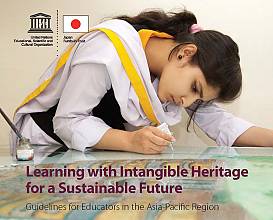
This pilot project took place in seventeen schools across four countries: Pakistan, Palau, Uzbekistan and Viet Nam. Its aim was to develop a pedagogical framework for educators to use intangible cultural heritage to raise awareness about sustainable development by
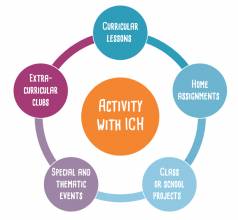
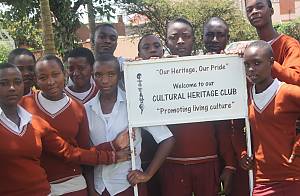
In 2011, CCFU initiated a programme aimed at enriching heritage education in Uganda, which has consistently expanded over the last decade. Through this programme, CCFU has enhanced the value of heritage in schools at three different levels. The first, consisted of improving cultural heritage knowledge and skills through extra-curricular heritage clubs in schools, along with the development and use of a heritage education toolkit. The second level involved incorporating heritage as a formal subject of study in the Ugandan secondary school curriculum. Finally, as part of the third level, it assisted in the production of a bachelor’s degree course on ‘Intangible Cultural Heritage and Sustainable Development’ at the university level.
01/01/2010 - 31/12/2016
A UNESCO Local and Indigenous Knowledge Systems project, carried out with the support of the inhabitants of the Lakus River (one of the five Mayangna groups in BOSAWAS), had two interrelated objectives:
* To ensure that the knowledge possessed by the Mayangna, as well as their unique ecological, social and cultural relationship with the natural environment, were recognized and incorporated into the design and implementation of resource management processes of the BOSAWAS Biosphere Reserve; and
* To develop materials on local knowledge and living heritage in the Mayangna language and introduce them in the school curriculum in BOSAWAS.
01/04/2007 - 01/06/2009
The cultural landscape of Koutammakou in northeastern Togo is renowned for its mud tower houses called ‘takienta’. The land is imbued with meaning for the resident Batammariba people, whose rituals, beliefs, crafts, songs, sports and agricultural practices are strongly
01/02/2016 - 31/12/2021
Sekolah Adat Samabue (Samabue Indigenous School or SAS) is a self-funded, volunteer-run indigenous school of the Dayak Kanayatn indigenous people from Menjalin in West Kalimantan province, Indonesia. The school was founded in February 2016, after the young
01/01/2019 - 31/12/2019
The UNESCO Office in Cairo has developed an educational toolkit for safeguarding living heritage. It was designed to be a practical, portable and interactive educational toolkit for trainers and teachers for integrating intangible cultural heritage in education in Egypt.
01/01/2018 - 31/12/2021
From 2016 to 2017, UNESCO Amman Office undertook a pilot community-based inventory of the intangible cultural heritage in Mafraq. This initiative highlighted the need to develop practical tools that could be used to support safeguarding in the country.
01/01/2016 - 31/12/2021
The Heritage in a Box toolkit is a revised version of the UNESCO World Heritage in Young Hands kit adapted by UNESCO Beijing Office and its partners to the Mongolian context of the Orkhon Valley Cultural Landscape World Heritage site.
01/01/2007 - 31/12/2021
The Province of La Guajira on the north-Caribbean coast of Colombia, is home to the ancestral sacred territory of the Wayuu indigenous people. The Wayuu’s are spread between La Guajira province in Colombia and the state of Zulia in Venezuela, they are the largest