3 de marzo de 2026
UNESCO invites experts or consortia to develop an ‘overview paper’ and a ‘position paper’ on foodways as living heritage, including a compilation of research bibliography for the ‘International Food Atlas’ project, supported by the Kingdom of Saudi Arabia.
Proposals should reach UNESCO (ich-capacity@unesco.org and p.vangeti@unesco.org) no later than 31 March 2026 (midnight, Paris time).
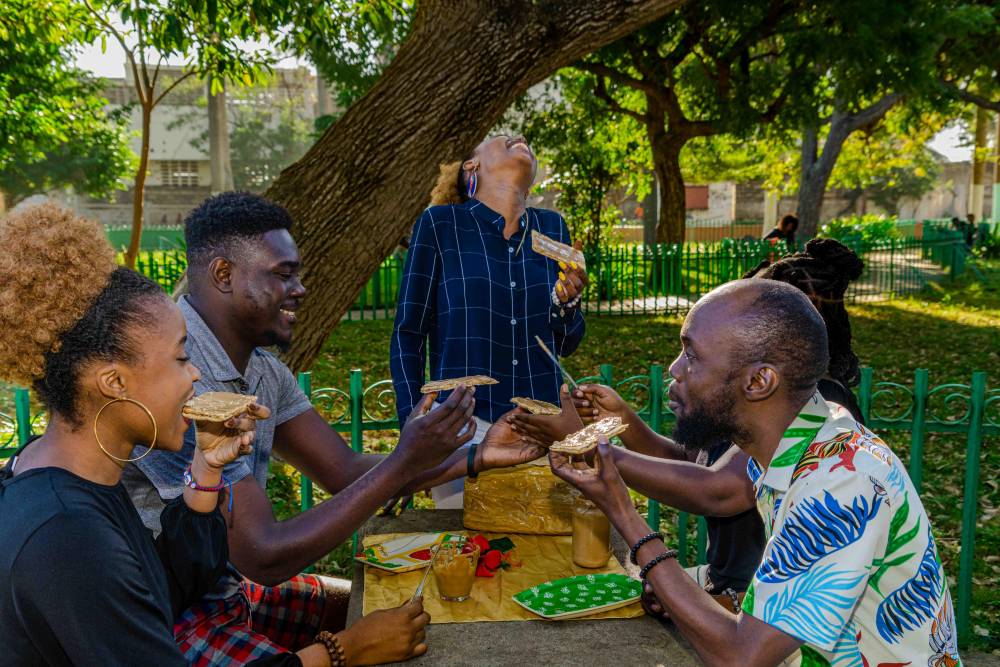
Foodways convey deep meanings about who we are and how we relate with the world and the people around us. They form an essential part not just of our everyday lives and social practices, but also of special occasions such as rituals and festive events, which are often marked by unique food-related traditions. The sourcing of ingredients as well as the preparation and consumption of food involve a diversity of social roles and necessitate knowledge, know-how, and social practices that are transmitted within communities as a key aspect of their living heritage.
Since the adoption of the Convention for the Safeguarding of the Intangible Cultural Heritage in 2003 (hereinafter referred to as ‘the 2003 Convention’) and its entry into force in 2006, UNESCO has worked closely with States Parties and communities to ensure that foodways-related heritage is recognized, valued and safeguarded.
The Operational Directives for the Implementation of the 2003 Convention, in Chapter VI.1.1, call upon States Parties to recognize knowledge and practices related to farming, fishing, hunting, pastoralism, food preparation, food-gathering and food preservation, together with their related rituals and beliefs, as vital elements of intangible cultural heritage that support sustainable food security and nutrition. They further encourage States Parties to foster research, establish appropriate legal and administrative measures, and ensure equitable benefit-sharing to sustain and transmit these practices, while respecting and protecting the customary rights of the concerned communities, groups, and, where applicable, individuals.
Through the implementation of the 2003 Convention, the consistent emphasis has been placed on the knowledge, skills, social functions, and cultural meanings associated with these practices, rather than on the food products as such. Moreover, significant connections have been drawn between foodways and economic activities, and, in turn, the sustainable livelihoods of the concerned communities, while cautioning against the risks of over-commercialization, standardization, and labelling.
States Parties to the Convention have shown an increasing interest in the recognition and visibility of foodways-related elements, notably through the preparation of nominations to the Lists and Register of the Convention. To date, 170 of the 849 inscriptions on the Lists and Register of the Convention are broadly related to foodways.
To further advance this area of focus and strengthen the capacities of communities worldwide in safeguarding foodways as living heritage, UNESCO has launched the project ‘International Food Atlas and Digital Platform for safeguarding, promoting and transmitting foodways to future generations’, (hereinafter called ‘International Food Atlas’) in sixteen countries, with the generous support of the Ministry of Culture of the Kingdom of Saudi Arabia.
The project seeks to generate new knowledge and develop interactive tools to document, safeguard, and transmit foodways as living heritage to future generations. Within this framework, the UNESCO Culture Sector Living Heritage Entity (the Secretariat of the 2003 Convention) is looking for a qualified researcher, expert or consortium of experts to contribute to the development of a conceptual foundation on foodways as living heritage.
2. Work Assignment
The selected research expert or consortium shall carry out the following tasks:
2.1. Prepare an ‘overview paper’ (approximately 15 pages in length) elaborating on foodways as living heritage, discussing key themes and issues concerning their safeguarding. The paper shall, inter alia.
- Draw from the following sources: (i) provisions contained in the 2003 Convention, its Operational Directives and other relevant documents contained in the Basic Texts of the 2003 Convention; (ii) relevant past discussions of the 2003 Convention Governing Bodies; (iii) relevant information included in nomination files, International Assistance projects and periodic reports on the implementation of the 2003 Convention submitted by States Parties; (iv) relevant international policies and frameworks, including those established by the UN system; (v) research publications; and (vi) other documents deemed pertinent by the expert and UNESCO.
- Analyse the interlinkages between foodways and the various domains of intangible cultural heritage, in particular those highlighted in the 2003 Convention, namely: oral traditions and expressions, including language as a vehicle of the intangible cultural heritage; performing arts; social practices, rituals and festive events; knowledge and practices concerning nature and the universe; and traditional craftsmanship – and illustrate the interconnections with relevant examples.
- Discuss approaches of community-led transmission and safeguarding of foodways as living heritage, and articulate, where appropriate, their connection with different areas of sustainable development, such as economic dimensions, climate change, sustainable tourism, sustainable urban development, nutrition, health and well-being, and food security and sovereignty. In this context, the paper should take into account the guidance notes developed by UNESCO under the three thematic initiatives of the 2003 Convention (economic dimensions, climate change, urban development), as well as the UNESCO template used for preparing entries to the platform for sharing good safeguarding experiences.
- Highlight the role of different stakeholders, including communities, State actors, public institutions, private establishments and others, in the safeguarding of foodways as living heritage.
- Integrate the reflections and insights being generated through the ongoing capacity-building and knowledge-sharing activities of the International Food Atlas project at the country-level.
More specifically, s/he shall:
2.1.1. Undertake a desk review and compile a research bibliography on foodways as living heritage, to be annexed to the overview paper. This shall include organizing and synthesizing available information related to foodways as living heritage. It shall complement relevant references already included in the online 2003 Convention Research Bibliography.
2.1.2. Develop an annotated outline of the overview paper for validation by UNESCO, including: an introduction; relevant global frameworks on foodways as living heritage; key issues and opportunities related to their safeguarding; the contribution of foodways as living heritage to sustainable development; and recommendations to further strengthen their safeguarding.
2.1.3. Complete the first draft of the overview paper and integrate comments and feedback from UNESCO, if and as appropriate.
2.1.4. Conduct a peer review for the overview paper with at least 2 reviewers identified in consultation with UNESCO, and integrate comments and feedback, if and as appropriate.
2.1.5. Finalize the overview paper for submission to UNESCO.
2.2. Prepare a ‘position paper’ (approximately 5 pages in length) on safeguarding foodways as living heritage, based on the findings from the overview paper and other resources reviewed in its preparation.
The document should lay the ground for exploring the ways to maximize the positive effects on communities, groups and individuals through the safeguarding of foodways as living heritage; and indicate ways forward and make proposals on key issues at stake for safeguarding foodways as intangible cultural heritage, in line with the obligations of States Parties under the 2003 Convention and in synergy with other relevant multilateral agreements where appropriate.
To this end, the research expert or consortium shall, in consultation with UNESCO:
2.2.1. Develop an annotated outline of the position paper for validation by UNESCO.
2.2.2. Prepare the first draft of the position paper and integrate comments and feedback from UNESCO, if and as appropriate.
2.2.3. Conduct a consultation process with at least 2 reviewers identified in consultation with UNESCO, and integrate comments and feedback, if and as appropriate.
2.2.4. Finalize the position paper for submission to UNESCO.
3. Deliverables and schedule
All deliverables are expected to be delivered over a period of sixteen weeks (tentative estimate), according to the following schedule:
- Annotated outline for the overview paper – in 2 weeks
- Initial draft of the overview paper – in 10 weeks
- Annotated outline of the position paper – in 12 weeks
- Initial draft of the position paper – in 14 weeks
- Final version of the overview paper following feedback from UNESCO and the peer reviewers – in 16 weeks
- Final version of the position paper following feedback from UNESCO and the consultation process – in 16 weeks
4. Qualifications
Required
- PhD degree (or equivalent) in a relevant field such as heritage and cultural studies; traditional food systems; anthropology; agroecology and others;
- Demonstrated professional experience of at least 7 years in research related to foodways and living heritage;
- Good knowledge of the 2003 Convention and its implementation mechanisms;
- Excellent communication and drafting skills in either English or French.
Desired
- Publications in peer-reviewed scientific journals;
- Experience in international research collaborations;
- Previous experience of collaborating with UNESCO or other UN agencies.
5. How to apply?
Applicants are invited to express their interest through the submission of a technical proposals in English or French, comprising:
- An up-to-date curriculum vitae (max. 2 pages)
- A short description (max. 5 pages) of the approach and methodology for the assignment, outlining how the components of the Terms of Reference will be addressed, including any input that may be required from UNESCO.
Proposals must be submitted via e-mail no later than 31 March 2026 (midnight, Paris time) to UNESCO (ich-capacity@unesco.org and p.vangeti@unesco.org) without copies to other e-mail addresses. Proposals sent to other e-mail addresses will be disqualified. Maximum email size: 10 MB.
6. Additional Information
Kindly note that:
- Only selected candidates will be further contacted. Candidates in the final selection step will be subject to reference checks based on the information provided.
- Selection will be based on the candidate’s level of expertise and experience, as well as their ability to fully meet the requirements defined in the call.
- The selection process will have two steps: submission of a technical and financial proposal followed by an interview (Teams platform).
Candidates from non- and under-represented Member States (last update here) are particularly welcome and strongly encouraged to apply. Individuals from minority groups and indigenous groups and persons with disabilities are equally encouraged to apply. All applications will be treated with the highest level of confidentiality.
Please note that until an applicant has been formally selected and their contract has been formally signed by UNESCO, the Organization assumes no commitment, whether written or oral, to a potential contractor.
Proyecto:
-
International Food Atlas and Digital Platform for safeguarding, promoting and transmitting foodways to future generations (1 de junio de 2023 – 1 de diciembre de 2026)