Report on the status of an element inscribed on the list of intangible cultural heritage in need of urgent safeguarding
A. Cover sheet
A.1.
State Party
Name of State Party
Mongolia
A.2.
Date of deposit of the instrument of ratification, acceptance, approval or accession
This information is available online.
Date of deposit of the instrument of ratification, acceptance, approval or accession
2005-06-29
A.3.
Element inscribed on the Urgent Safeguarding List that is the subject of this report
Name of element
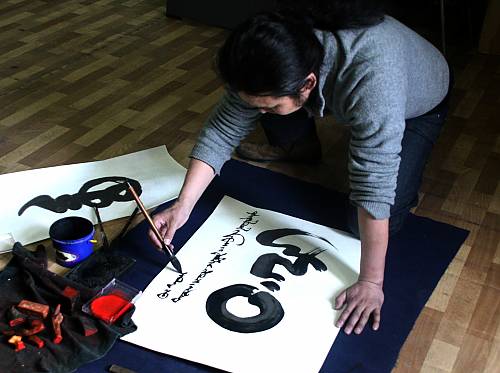
Mongolian calligraphy
Inscribed in
2013
Submitting State(s)
Mongolia
A.4.
Reporting period covered by this report
Please indicate the period covered by this report.
Reporting period covered by this report
16-12-2021 - 15-12-2025
A.5.
Other elements inscribed on the Urgent Safeguarding List, if any
Please list all other elements from your country inscribed on the Urgent Safeguarding List, together with the year of inscription; for multinational elements, please indicate the other States concerned.
Other elements inscribed on the Urgent Safeguarding List, if any
Coaxing ritual for camels (2015)
Folk long song performance technique of Limbe performances - circular breathing (2011)
Mongol Biyelgee, Mongolian traditional folk dance (2009)
Mongol Tuuli, Mongolian epic (2009)
Mongolian traditional practices of worshipping the sacred sites (2017)
Traditional music of the Tsuur (2009)
A.6.
Executive summary of the report
Please provide an executive summary of the report that will allow general readers to understand the current status of the element, any positive or negative impacts of inscription, the implementation of safeguarding measures during the reporting period and their possible update for the following years.
Executive summary of the report
Since the inscription, Mongolia has implemented a wide range of measures to safeguard, revive, promote, and transmit this heritage to future generations. These measures, already established as traditions, have continued without interruption and have yielded results each year.
National Policy and measures:
• Since 2003, the first Sunday of May has been celebrated annually as the “National Mongolian Script Day”, with calligraphy competitions and events organized as tradition.
• Presidential Decree No. 25 of 2017 designated September 1st as “National Mother Language Day”, a day to promote and take pride in the traditional script.
• Since 2022, special calligraphy events have been organized during the “Nomads” World Cultural Festival.
As a result, interest in calligraphy has grown, and the involvement of government and NGOs has expanded, strengthening dissemination activities.
National Program and Legal Framework:
• Government Resolution No. 96 of 2020 approved the “National Program on Mongolian Script III”, stipulating that from 2025 onward, official state documents will be maintained in both Cyrillic and Mongolian script.
• Within this program, progress has been made in safeguarding and promoting Mongolian calligraphy.
Provisions in the Law on the Mongolian Language: Article 7.3: Students in general education schools must study the traditional script under a special program from Grade 6 until graduation. Article 7.4: At least 25% of the Mongolian language examination for university admission and civil service entry must assess knowledge of the traditional; script.
During the reporting period (2021–2025), the element's viability improved, the number of bearers and learners increased, and its position in the socio-cultural environment was consolidated.
Local-Level Activities:
Regular training, competitions, exhibitions, clubs, and programs were organized to disseminate, transmit, and integrate calligraphy into daily use. Examples include:
• Bayankhongor Province: On International Mother Language Day, the “Titem” workshop and “Brush Strokes” exhibition and competition were held and 75 students participated in competitions, 286 in calligraphy contests, 40 book exhibitions were organized, 150 people attended genealogy script training, and 50 events reached 12,084 participants.
• Govi-Altai Province established the objective of becoming a bilingual script province. Currently, 74.7% of civil servants are proficient in the traditional script, and all institutions have implemented standard Mongolian script signage.
• Dornogovi Province: Teachers in Sainshand and Zamyn-Uud soums organized training circles involving 435 students.
• Sukhbaatar Province: The “Land of Jaakhan Sharga” international competition was held, and participants represented Mongolia, Kalmykia, Tuva, Buryatia, and Inner Mongolia. The event featured five categories and nine divisions, including careful script, brush script, and bamboo pen script.
• Khuvsgul Province: In alignment with the "Mother Language" program and the "Developed Khuvsgul 2030" initiative, Traditional Script Day was celebrated weekly. The "Wisdom Leading to Books" program trained 200 students in calligraphy, while 231 individuals took part in online assessments.
• Tuv Province: The "Path of Kings" calligraphy exhibition was organized in 2023 and 2024, leading to increased participation among attendees.
Challenges and Risks:
• Insufficient fundamental research and publication; lack of financial support.
• Shortage of bearers and researchers; weak capacity in training, textbooks, and teacher preparation.
• Limited coordination and cooperation between the government and NGOs.
• Restricted market and usage of calligraphy; inadequate incentive systems.
• Weak cooperation with foreign institutions
• Training system not fully structured; lack of phased programs.
These challenges are being addressed through active local participation, improved coordination between formal and informal education, support for bearers, and integration of the traditional script into public cultural use.
Mongol Calligraphy plays a vital role in fostering national consciousness and aesthetic sensibility while safeguarding and disseminating ICH elements. This report confirms its importance and the progress achieved in ensuring its viability.
A.7.
Contact person for correspondence
Provide the name, address and other contact information of the person responsible for correspondence concerning the report.
Title (Ms/Mr, etc.)
Ms
Family name
Tserendorj
Given name
Tsolmon
Institution/position
Coordination Officer for Policy Implementation of Intangible Cultural Heritage Department of Cultural Heritage Ministry of Culture
Address
Denver Street
7th Khoroo
Sukhbaatar District
Ulaanbaatar 210620a
Telephone number
+976 99057308; +976 51 265617
E-mail address
Tsolmon.ncch@gmail.com
Other relevant information
B
Ms
B. Status of element inscribed on the Urgent Safeguarding List
Refer to the nomination file or to previous reports, if any, as the basis for reporting on the current status of the element, and report only on relevant changes since the date of inscription on the List or since the previous report. Nomination files, specific timetables and earlier reports, if any, are available at https://ich.unesco.org or from the Secretariat, upon request.
The State Party shall pay special attention to the role of gender and shall endeavour to ensure the widest possible participation of the communities, groups and, where applicable, individuals concerned as well as relevant non-governmental organizations during the process of preparing this report, and is asked to describe how it has done so in point D below.
B.1.
Social and cultural functions
Please explain the social and cultural functions and meanings of the element today, within and for its community, the characteristics of the bearers and practitioners, and any specific roles or categories of persons with special responsibilities towards the element, among others. Attention should be given to any relevant changes related to inscription criterion U.1 (‘the element constitutes intangible cultural heritage as defined in Article 2 of the Convention’).
Social and cultural functions
Mongolian Calligraphy is an intangible cultural heritage of exceptional importance in strengthening Mongolia’s cultural resilience, fostering national consciousness, and cultivating aesthetic sensibility. This element is not merely a form of writing, but a cultural expression that embodies thought, aesthetics, history, and tradition, fully meeting the criteria of intangible cultural heritage as defined in Article 2 of the Convention.
The socio-cultural significance of calligraphy is steadily increasing. Each year, the first Sunday of May is celebrated as “Traditional Script Day”, during which activities are organized to promote and transmit language, script, customs, and traditions to the public. This celebration enhances the use and value of calligraphy not only in education, but also in tourism, creative industries, urban culture, design, and media.
Calligraphers are mainly senior artists, teachers, researchers, and artists. They are responsible for safeguarding, teaching, disseminating, creating, and introducing the element to the public. For example, institutions and individuals such as the AS Calligraphy Studio, the Script Culture Center, the Association of Contemporary Calligraphers, the Khumuun Script Newspaper, bearers in Zuunmod and Delgerkhaan soums of Tuv province, the Titem-Art Academy in Sukhbaatar province, the Public Library of Khuvsgul province, and the Language Policy Council of Govi-Altai province actively lead efforts to integrate calligraphy into daily use, train successors, and organize training, competitions, and exhibitions.
These bearers not only master the techniques of writing but also understand the philosophy, aesthetics, and historical meaning of the element, enabling them to transmit it to younger generations. Their role is multifaceted: to safeguard the element in living form, introduce it to the public, integrate it into cultural practice, prepare successors, and participate in creative industries.
Mongolian Calligraphy has become an essential tool for strengthening national pride and cultural resilience, providing aesthetic education, fostering creative thinking, and increasing public cultural participation. The collective involvement of state and local institutions, citizens, and NGOs further consolidates the value of this element, laying the foundation for its safeguarding and sustainable development in the future.
B.2.
Assessment of its viability and current risks
Please describe the current level of viability of the element, particularly the frequency and extent of its practice, the strength of traditional modes of transmission, the demographics of practitioners and audiences and its sustainability. Please also identify and describe the threats, if any, to the element's continued transmission and enactment and describe the severity and immediacy of such threats, giving particular attention to any strengthening or weakening of the element’s viability subsequent to inscription.
Assessment of its viability and current risks
In recent years, Mongolian Calligraphy has been actively disseminated at the local level, with the number of bearers increasing and public interest and participation growing. This positive trend has strengthened the element's viability. During the reporting period, middle and high school students, university youth, independent artists, and some elderly citizens actively studied calligraphy. They participated in exhibitions and competitions, thereby contributing to the vibrant transmission and dissemination of the element.
Local-level training, clubs, competitions, and exhibitions have become the primary tools for transmitting the element, integrating it into use, and raising public awareness, playing an essential role in ensuring its sustainability. For example, in Khuvsgul, Sukhbaatar, Govi-Altai, Tuv, and Dornogovi provinces, regular training and competitions have been organized, involving hundreds of students, teachers, and citizens. This has increased the number of bearers and expanded the use and appreciation of the element.
Nevertheless, several risks remain that may affect the safeguarding and transmission of the element:
• Insufficient fundamental research, analysis, and publication; lack of financial support.
• Limited number of researchers and bearers; weak capacity in training, textbooks, and teacher preparation.
• Inadequate coordination and cooperation between the government and NGOs.
• Restricted market and usage of calligraphy; lack of incentive systems.
• Weak cooperation with foreign institutions in the same field (Inner Mongolia, Xinjiang).
• Calligraphic styles, training programs, teacher capacity, and creative levels often do not reach artistic standards, with poor-quality works prevailing.
These threats negatively affect the quality and outcomes of transmission and may undermine the heritage's future viability. Challenges persist due to internal and external factors, including shortages of teachers and specialists, a lack of training materials, and limited financial resources at the local level.
However, through active local participation, improved coordination between formal and informal education, support for bearers, and integration of the traditional script into public cultural use, these difficulties can be overcome, ensuring the continued viability of the elements.
B.3.
Implementation of safeguarding measures
Please report on the safeguarding measures described in the nomination file, and previous report, if any. Describe how they have been implemented and how they have substantially contributed to the safeguarding of the element during the reporting period, taking note of external or internal constraints such as limited resources. Include, in particular, information on the measures taken to ensure the viability of the element by enabling the community to continue to practise and transmit it. Include the following detailed information concerning the implementation of the set of safeguarding measures or safeguarding plan:
B.3.a.
Objectives and results
Indicate what primary objective(s) were addressed and what concrete results were attained during the reporting period.
Objectives and results
During the reporting period, within the framework of the “National Comprehensive Program for the Safeguarding of Intangible Cultural Heritage” (2018–2025) approved by the Ministry of Culture of Mongolia, the following main objectives were set and implemented to safeguard “Mongolian Calligraphy”:
1. Develop formal and non-formal education systems
Calligraphy training was progressively incorporated into educational curricula and offered through various clubs, courses, and classes. In Khuvsgul province, calligraphy clubs operated regularly in all 32 secondary schools, significantly enhancing students' knowledge and skills. Furthermore, the "Wisdom Leading to Books" program involved 250 students and achieved noteworthy results in strengthening the transmission system.
2. Enhance social recognition of bearers and support them
In Tuv province, exhibitions such as “Path of Kings” were organized in 2023 and 2024 in cooperation with bearers, presenting their works to the public. The annual “Sueger” competition, held from 2019 to 2025, engaged a total of 1,257 participants, contributing significantly to preparing successors, honoring bearers, and encouraging them.
3. Integrate calligraphy into creative industries and cultural use
Efforts increased to use calligraphy in tourism products, souvenirs, publications, and advertising, with expanded participation from citizens, artists, and institutions. In Govi-Altai province, all government institutions adopted the practice of writing signage, business cards, and badges in the traditional script, serving as a concrete example of cultural application.
4. Institutionalize public awareness and enlightenment activities
Traditional Script Day was celebrated weekly on Wednesdays, with exhibitions, competitions, and training sessions organized to increase public participation. The international competition “Land of Jaakhan Sharga,” held in Sukhbaatar province, attracted active involvement from both Mongolian and foreign contestants, playing an essential role in expanding international cooperation in the field.
The implementation of these objectives has significantly contributed to the ongoing preservation of Mongol Calligraphy. It has enhanced transmission systems, fostered increased public awareness and participation, and reinforced the intrinsic value of this element.
B.3.b.
Safeguarding activities
List the key activities that were carried out during this reporting period in order to achieve these expected results. Please describe the activities in detail and note their effectiveness or any problems encountered in implementing them.
Safeguarding activities
Main safeguarding activities implemented during the reporting period:
Promotion:
• A series of media programs was prepared and broadcast to introduce bearers and artists to the public.
• Since 2013, the annual “Diligent Scribe” exhibition has been organized by the Mongolian Children’s Palace.
• Since 2015, the joint “Script Culture” exhibition of calligraphers has been held annually, with around 50 artists actively participating each year.
• Since 2011, at the initiative of the President of Mongolia, the “Eternal Heaven Script” calligraphy competition has been organized annually on the birthday of Chinggis Khaan, coinciding with Mongolian Pride Day. Participation has increased annually, with international contestants joining from the Republic of Buryatia and the Republic of Kalmykia (Russian Federation), as well as from Inner Mongolia (China), including artists, teachers, and students. This has raised interest and increased the number of learners and researchers.
• Since 2013, the “Uyangaa” Mongol Calligraphy Exhibition has been successfully organized jointly by Dornod province (Mongolia), Hulunbuir city, and New Barag Right Banner (China). In 2022, it was held for the first time in Ulaanbaatar, with participants from Russia, China, France, and Mongolia.
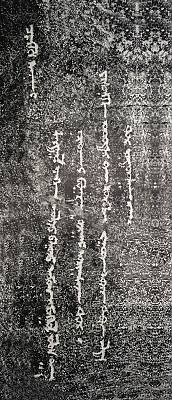
• By Government Resolution No. 394 (2023), the year 2024 was declared the “Year of Traditional Script and Culture” to commemorate the 800th anniversary of the Chinggis Stone Inscription and the 400th anniversary of the Tsogt Prince’s Duut Black Stone Inscription.
• The Mongolian Children’s Central Library annually organizes the national calligraphy competition “Native Mongolian Language” to transmit and disseminate script culture.
• In 2023, Orkhon province’s Governor’s Office, Central Library, and Secondary School No. 14 jointly organized the national calligraphy competition “Living Script–2023” to improve the knowledge and skills of citizens and students, increase interest in learning calligraphy, and promote the talents of teachers and artists.
Training and Research:
• The Ministry of Culture implemented a policy to disseminate the traditional script to the public, aiming to raise language and script proficiency, ensure equal access to learning, deepen knowledge of language, script, history, and culture, and foster citizens who preserve and develop heritage.
• In the 2022–2023 academic year, 13 students of Secondary School No. 29 (special school) participated in a six-month calligraphy course. In 2023–2024, advanced-level training was continued for 10 students, to enable them to specialize and reach a level suitable for cultural industries.
• Calligraphers’ works were compiled and published in catalogues accompanying the “Script Culture” exhibitions.
• During the reporting period, three joint training sessions were organized in Ulaanbaatar, and the Language Policy Council arranged collaborative training for local teachers.
• In all 21 provinces, local language policy councils, schools, and formal and informal training programs organized activities based on their own resources.
Awards and Incentives:
Bearers were recognized through national exhibitions and competitions, such as the “Beautiful Mongolian Script” national competition, held annually in February among secondary school students and adults, with awards and incentives provided.
Best Practices in Khuvsgul Province:
During the reporting period, the education, culture, and language policy institutions of Khuvsgul province successfully implemented the following activities, serving as a model for other provinces and nationally:
1. Stabilized calligraphy clubs and training in all 23 secondary schools, increasing students’ interest and activity in learning the traditional script.
2. Organized the annual “Sueger” calligraphy competition, effectively increasing participation of students, civil servants, and the public.
3. Established sections in public libraries and soum cultural centers for publications in the traditional script, organized exhibitions on intangible cultural heritage, and conducted awareness campaigns.
4. Introduced bilingual official script and supported initiatives for all provincial government institutions to prepare documents and office signage in both scripts, promoting practical use of the traditional script.
5. Supported non-formal education by expanding training materials and utilizing online courses and tests in the traditional script.
B.3.c.
Participation of communities, groups or individuals in the safeguarding activities
Describe how communities, groups or, if appropriate, individuals as well as relevant non-governmental organizations have effectively participated, including in terms of gender roles, in the safeguarding measures. Describe the role of the implementing organization or body (name, background, etc.) and the human resources that were available for implementing safeguarding activities.
Participation of communities, groups or individuals in the safeguarding activities
During the reporting period, the participation of communities, groups, and individuals in safeguarding, preserving, transmitting, and promoting “Mongol Calligraphy” increased significantly, playing an essential role in ensuring the element's continuity. This participation was based on cooperation among government institutions, the education sector, NGOs, artists, citizens, and researchers. It was directed toward raising public awareness of the heritage’s value, preparing successors, and integrating it into cultural use.
At the national level, ministries, agencies, and nationwide programs actively engaged in safeguarding, preserving, transmitting, and promoting Mongolian Calligraphy, thereby consolidating its value and creating conditions for its viability.
The Ministry of Culture implemented the “National Comprehensive Program for the Safeguarding of Intangible Cultural Heritage” (2018–2025), working to protect, transmit, and promote calligraphy through the following directions:
1. Developing formal and non-formal education systems,
2. Supporting and encouraging bearers,
3. Integrating calligraphy into creative industries,
4. Supporting research and publication activities.
The Ministry of Education and Science worked to gradually integrate traditional script and calligraphy content into school curricula, train teachers, and develop teaching materials. In some provinces, calligraphy clubs were regularly organized, enhancing students’ knowledge and skills, which contributed significantly to strengthening transmission systems nationwide.
The National Council on Language Policy and the National Statistics Office jointly conducted surveys on civil servants’ knowledge and use of the traditional script. In Govi-Altai province, 74.7% of civil servants were found capable of working bilingually, demonstrating the effectiveness of policies to increase the use of the traditional script at the state level.
The National Center for Cultural Heritage carried out registration, evaluation, methodological support, exhibitions, competitions, and training, playing a key role in introducing calligraphy heritage to the public.
Non-governmental organizations (such as the “Titem-Art” Academy and “Script Culture” Center) initiated and organized competitions, clubs, international cooperation, and creative activities, contributing to the dissemination of the element in living form.
Tourism organizations integrated calligraphy into souvenirs and cultural programs, using it as a tool to introduce Mongolian heritage to foreign visitors.
This national-level participation has had a crucial impact on safeguarding, transmission, and use, public awareness, as well as strengthening cultural resilience, laying the foundation for ensuring the viability of Mongolian Calligraphy.
NGOs, bearers, and communities played a leading role in safeguarding, preserving, transmitting, and promoting Mongol Calligraphy, making important contributions to its living continuity. During the reporting period, their participation became more regular, creative, and inclusive, implementing concrete steps to raise awareness of the heritage’s value, prepare successors, and integrate it into cultural use, while actively engaging the public.
To ensure gender balance, policies were implemented to equally involve male and female participants in training, competitions, exhibitions, clubs, and programs, and to support bearers regardless of age or gender.
B.3.d.
Timetable
Indicate in a timetable when each activity was implemented.
Timetable
During the reporting period, a range of safeguarding, transmission, and promotion activities for “Mongolian Calligraphy” were implemented step by step at national and local levels. The timeline of activities unfolded as follows:
2022
• “Nomadic World Cultural Festival”: Special calligraphy events were organized to promote the heritage to the public.
• Sukhbaatar Province: The international competition “Land of Jaakhan Sharga” was held for the third time, with participants from Kalmykia, Tuva, Buryatia, and Inner Mongolia.
2023
Bayankhongor Province: National Beautiful Script Competition, 75 students from 19 soums and 9 schools participated.
Tuv Province: “Path of Kings–2023” calligraphy exhibition.
Khuvsgul Province: Within the “Wisdom Leading to Books” program, 250 students were trained in calligraphy, and Traditional Script Day began to be celebrated weekly.
“Eternal Heaven Script–2023” International Exhibition: Organized at the initiative of the President, presenting works of teachers, students, and artists to the public.
2024
“Marvel of Vertical Script” competition: A careful writing contest with 286 participants.
“Traditional Script Day–2024”: Celebrated nationwide on the first Sunday of May, with exhibitions, competitions, and training under the theme “Intellectual Heritage of Script Masters.”
“Eternal Heaven Script–2024” International Exhibition: Jointly organized by the Office of the President, Ministry of Culture, Sports, Tourism and Youth, National Council on Language Policy, National University of Mongolia, and Mongolian Academy of Sciences.
“Khalkh Tsogt Prince’s Rock Inscription” competition: Held in Delgerkhaan soum, Tuv province, centered on the Duut Rock heritage site.
2025
“Time of Brush Strokes” exhibition, readings, and competitions: Introduced brush-script heritage to the public.
“Land of Jaakhan Sharga” competition: Organized for the fifth time, with expanded international participation.
“Native Mongolian Language” National Calligraphy Competition (10th edition): Top students from 21 provinces and the capital competed; first place was awarded to S. Sukhbat from Govi-Altai province.
“Traditional Script Day–2025”: The Mongolian Children’s Central Library organized two nationwide competitions, “Best Reader of Mongolian Script” and “Calligraphy Competition.”
“Eternal Heaven Script–2025” International Exhibition: Held in Ulaanbaatar from 21 October to 14 November, dedicated to Mongolian Pride Day, showcasing the talents and works of teachers, students, and artists to the public.
B.3.e.
Budget expenditures
Provide the detailed amounts of the funds used for the implementation of each activity (if possible, in US dollars), identifying the funding source for each (governmental sources, in-kind community inputs, etc.).
Budget
During the reporting period, each activity implemented to safeguard and promote “Mongolian Calligraphy” was supported by a specific budget, with funding sources being diverse.
From the Government Budget:
• Within the framework of the National Program for the Safeguarding of Intangible Cultural Heritage (2018–2025), annual funding of USD 30,000–40,000 was allocated for calligraphy training, exhibitions, competitions, and research.
• The “Eternal Heaven Script” international exhibitions (2023, 2024, 2025) were jointly organized by the Office of the President, Ministry of Culture, National Council on Language Policy, National University of Mongolia, and the Mongolian Academy of Sciences. For the 2025 exhibition, a budget of USD 50,000 was approved.
From Local Budgets:
• Provincial administrations and language policy councils in Govi-Altai, Khuvsgul, Sukhbaatar, and Tuv allocated USD 5,000–10,000 annually for training, competitions, clubs, signage, and library programs.
• For example, Khuvsgul province spent USD 6,500 in 2023 and USD 7,200 in 2024 on the “Wisdom Leading to Books” program.
From NGOs and Community Contributions:
• Organizations such as the “Titem-Art” Academy, “Script Culture” Center, and “World of Book Culture” NGO raised USD 3,000–5,000 annually through voluntary donations and sponsorships to organize competitions, training, and events.
• The “Land of Jaakhan Sharga” international competition was implemented between 2022–2025 with a total budget of USD 12,000, funded by participant registration fees, local support, and NGO contributions.
Overall Funding (2022–2025):
Approximately USD 185,000–210,000 was spent on safeguarding, transmission, and promotion activities for Mongolian Calligraphy. Funding sources included the government budget, local resources, NGO initiatives, community donations, and international support.
B.3.f.
Overall effectiveness of the safeguarding activities
Provide an overall assessment of the effectiveness of the activities undertaken to achieve the expected results and of the efficiency of the use of funds for implementing the activities. Please indicate how the activities contributed to achieving the results and whether other activities could have contributed better to achieving the same results. Also indicate whether the same results could have been achieved with less funding, whether the human resources available were appropriate and whether communities, groups and individuals could have been better involved.
Overall effectiveness of the safeguarding activities
Between 2022 and 2025, the activities implemented to safeguard, transmit, and promote “Mongolian Calligraphy” made a significant contribution to achieving the intended results. Competitions, exhibitions, training, clubs, and programs were directed toward safeguarding the element in living form, raising public awareness, preparing successors, and integrating it into cultural use. They were regularly and effectively implemented at the local level.
In provinces such as Khuvsgöl, Govi-Altai, Sukhbaatar, Tuv, and Dornogovi, annual training, clubs, competitions, and exhibitions were organized, involving more than 2,000 students, teachers, and citizens. International events such as the “Land of Jaakhan Sharga” competition, the “Eternal Heaven Script” exhibition, and the “Sueger” competition played an important role in promoting the heritage internationally, honoring bearers, and increasing creative participation.
While these activities were relatively well organized and coordinated, in some cases, the linkage between local initiatives and central policies was weak, and information exchange was limited. Overlaps between programs, frequency of events, and duplication of participants posed risks of reducing effectiveness.
Some activities incurred relatively high costs but achieved limited results, while others with smaller budgets but creative approaches proved more effective. For example, school clubs and library programs engaged large numbers of students at low cost, supporting living transmission.
In terms of human resources, the number of bearers, teachers, and researchers remained limited, and their capacities varied, affecting the quality of training. Nevertheless, the active participation of local communities, NGOs, artists, and teachers compensated for these shortcomings and enhanced the impact of activities.
Looking ahead, broader community involvement, a more systematic training framework, more efficient budget allocation, and improved coordination will provide greater opportunities to achieve similar or stronger results.
C
Tserendorj
C. Update of the safeguarding measures
C.1.
Updated safeguarding plan
Please provide an update of the safeguarding plan included in the nomination file or in the previous report. In particular provide detailed information as follows:
- a. What primary objective(s) will be addressed and what concrete results will be expected?
- b. What are the key activities to be carried out in order to achieve these expected results? Describe the activities in detail and in their best sequence, addressing their feasibility.
- c. How will the State(s) Party(ies) concerned support the implementation of the updated safeguarding plan?
Updated safeguarding plan
With the inscription of Mongolian Calligraphy on the List of Intangible Cultural Heritage in Need of Urgent Safeguarding, Mongolia began to set clear objectives in national development documents, both long-term and short-term, to ensure effective planning for future progress.
In the Vision-2050 Policy Document of Mongolia:
1.3.8. Increase the use of the national Mongolian script, establish publishing houses to expand the number of books, newspapers, and magazines printed in Mongolian script, and at the same time enhance the digital use of the Mongolian language and script. To achieve the goals of Vision-2050, implement the Law on the Mongolian Language, and fulfill the National Program on Mongolian Script III, the government plans to pay significant attention to language policy, develop scientifically grounded strategies, and produce knowledge based on evidence and reliable research to enlighten citizens. Two main directions are emphasized: providing Mongolian language and cultural education to citizens abroad and to international learners interested in Mongolian language and culture.
Additionally, efforts will be made to:
• Establish a database of script monuments, considered cultural treasures, and create conditions to use this database in cultural tourism.
• Systematically provide children with knowledge of their mother tongue from an early age by compiling the “Vocabulary Wealth of Mongolian Children” by age groups.
Therefore, between 2025–2029, safeguarding activities for Mongolian Calligraphy should focus on education, creative use, international cooperation, research, and digital archiving. These areas aim to ensure the living continuity of the heritage, prepare successors, and integrate it into public cultural practice.
Strategic Directions
1. Deepen the education system
• Systematically introduce calligraphy lessons into secondary schools, universities, and teacher development centers.
• Institutionalize non-formal education through libraries, cultural centers, and NGOs.
• Implement phased programs to train bearers and teachers.
2. Expand creative industries and usage environment
• Integrate calligraphy into souvenirs, publications, design, and tourism products.
• Organize the “Eternal Heaven Script” exhibition annually as tradition, involving outstanding local creators.
• Develop technical models (TIG) of calligraphy and apply them in print and digital use.
3. Strengthen research, archives, and digital repositories
• Deepen studies of historical sources, script forms, and techniques.
• Digitally preserve bearers’ works and make them publicly accessible.
• Compile TIG models, classifications of script types, glossaries, and instructional resources.
4. Enhance international cooperation
• Implement exchange programs with bearers from Inner Mongolia, Kalmykia, Tuva, and Buryatia.
• Promote Mongol script heritage internationally, develop TIG models, and disseminate them.
5. Ensure policy and financial sustainability
• Enhance the legal environment for supporting practitioners of this heritage element.
• Increase participation of NGOs, the private sector, and international donor organizations.
• Plan budget allocations efficiently, targeting specific groups for maximum impact.
C.2.
Timetable for future actitivies
Provide a timetable for the updated safeguarding plan (within a time-frame of approximately four years).
00310,00311,00312,00543,00871,01061
Timetable
The updated safeguarding plan for Mongol Calligraphy is being implemented by relevant ministries and institutions over four years, focusing on four main directions: research, training, documentation, and promotion. From 2022 to 2025, competitions and events already established in previous reporting years continued annually. The main planned measures are as follows:
Research:
• Specialized foundational and supplementary studies on calligraphy.
• Research on developing Mongol calligraphy typefaces and fonts.
• Academic conference on “Defining the Development of Calligraphy.”
• Academic conference on “Sustainable Development of Mongolian Calligraphy.”
Training:
• In line with the National Program on Mongolian Script III, calligraphy training was organized for three groups: beginners, secondary school students, and professionals.
• Publication of books, textbooks, manuals, and teaching aids on calligraphy.
• Training up to 10 calligraphers to master level and preparing trainer-teachers.
• Advanced-level training (Master’s, Doctoral programs).
Documentation:
• Production of short digital content, clips, and promotional programs on Mongolian calligraphy.
• Establishment of a database of bearers’ repertoires and artists’ works.
Promotion (2026–2029)
Professional art promotion through calligraphy photo exhibitions and catalogues.
Organization of voluntary activities responding to contemporary needs and social demand.
At the local level, provinces also planned safeguarding activities annually. For instance, Khuvsgul province scheduled a phased, stable implementation of safeguarding measures over four years.
• 2026 (Year One): Focus on improving the quality of traditional script education and training. Emphasis on teacher preparation and retraining, updating curricula, developing e-learning platforms, and ensuring calligraphy clubs operate regularly in both urban and rural schools. Teacher capacity-building programs will be organized.
• 2027 (Year Two): Expand the traditional “Sueger” calligraphy competition, broaden participation, and concentrate on public events to promote calligraphy culture among youth. Increase use of the traditional script in cultural centers and libraries, expand resources, and disseminate them widely.
• 2028 (Year Three): Strengthen safeguarding by increasing local budget allocations, expanding cooperation between government and NGOs, and stabilizing funding. Greater investment will be made in teaching methodology, training materials, and technical resources.
• 2029 (Year Four): Evaluate the outcomes of all activities, prepare reports, and develop recommendations for future improvements. Support the use of the traditional script and transmission in informal settings, increase public participation, and thereby enhance the element's viability.
During this period, potential challenges such as budget shortages and a lack of professional teachers are anticipated. To overcome these, cooperation and exchange of experiences will be expanded. In this way, conditions will be created to ensure the stable preservation and continuation of Mongolian Calligraphy for future generations.
5. Ensure policy and financial sustainability
• The “Law on Supporting Practitioners of Intangible Cultural Heritage” will be elaborated and adopted in 2026.
C.3.
Budget for future activities
Provide the estimates of the funds required for implementing the updated safeguarding plan (if possible, in US dollars), identifying any available resources (governmental sources, in-kind community inputs, etc.).
Budget
1. Conduct specialized foundational and supplementary research on calligraphy. 8,000 $
2. Research to develop Mongol calligraphy typefaces and fonts. 6,000 $
3. Organize an academic conference on “Defining the Development of Calligraphy.”
3,000 $
4. Organize an academic conference on “Sustainable Development of Mongolian Calligraphy” 3,000 $
5. In line with the National Program on Mongolian Script III, organise calligraphy training for three groups: beginners, secondary school students, and professionals. 7,000 $
6. Publish books, textbooks, manuals, and teaching aids on Mongolian calligraphy.
2,000 $
7. Train up to 10 calligraphers to a master level and prepare trainer-teachers. 9,000 $
8. Conduct advanced-level training (Master’s, Doctoral programs). 2,000 $
9. Produce short digital content, clips, and promotional programs on Mongolian calligraphy. 4,500$
10. Establish a repertoire archive and database of bearers and artists of Mongolian calligraphy. 3,500 $
11. Organize professional promotional photo exhibitions of calligraphy and publish catalogues. 6,000 $
12. Organize voluntary activities as required by contemporary needs and social demand. 4,000 $
Total: 58,000 USD
C.4.
Community participation
Please describe how communities, groups and individuals, as well as relevant non-governmental organizations have been involved, including in terms of gender roles, in updating the safeguarding plan, and how they will be involved in its implementation.
00147
Community participation
The process of preparing the report and updated safeguarding plan for “Mongolian Calligraphy” was of particular importance due to the active participation of communities, bearers, teachers, students, non-governmental organizations, local cultural workers, researchers, and artists. Their involvement was not limited to gathering information, but also played a crucial role in assessing the actual condition of the element, identifying needs, and planning future activities more effectively.
The updated action plan was jointly developed by the Ministry of Culture, Sports, Tourism and Youth, the Government Implementing Agency Cultural and Arts Authority, the National Center for Cultural Heritage, the “AS” Calligraphy Studio, the “Script Culture” Center, the Association of Contemporary Calligraphers, the “Khumuun Script” Newspaper, representatives of both elder and younger generations of bearers, relevant government institutions, and scholars, in alignment with national policies and programs implemented by the Government of Mongolia.
Looking ahead, participation of communities, groups, and individuals in safeguarding and promoting Mongolian Calligraphy will be expanded in the following ways:
• Formally include local bearers, teachers, and cultural workers in the teams implementing the plan.
• Support NGO initiatives and increase funding for jointly implemented projects.
• Highlight and support the leadership of female bearers, and promote their works to the public
• Increase youth participation by institutionalizing school clubs, competitions, and creative programs.
• Strengthen the involvement of researchers and calligraphy specialists, deepening studies of typefaces, script varieties, and historical sources, and assigning them a leading role in planning digital archives and publications.
Expanded participation in these directions will remain decisive in preserving Mongolian Calligraphy as a living heritage, increasing public awareness and use, and preparing successors to transmit it.
C.5.
Institutional context
Please report on the institutional context for the local management and safeguarding of the element inscribed on the Urgent Safeguarding List, including:
- a. the competent body(ies) involved in its management and/or safeguarding;
- b. the organization(s) of the community or group concerned with the element and its safeguarding.
2005-06-29
Institutional context
A. Ministry of Culture, Sports, Tourism and Youth
Address: Ministry of Culture of Mongolia, 7th khoroo, Sukhbaatar District, Ulaanbaatar, Mongolia
Specialist: Tserendorj Tsolmon
Specialist responsible for coordinating the implementation of intangible cultural heritage policy
Phone: +976-51-265617
Fax: +976-
Email: tsolmon@moc.gov.mn
Mobile: +976-99057308
Email: info@moc.gov.mn
Website: moc.gov.mn
B. Government Implementing Agency Culture and Arts Authority
Address: Mongolia, Ulaanbaatar City, Sukhbaatar District, 8th khoroo, Cultural Palace, Building G, 6th floor
Senior Specialist: Jargalsaikhan Nasanjargal
Responsible for intangible cultural heritage affairs
Mobile: +976-99086285
Email: nasaa08@gmail.com
C. National Center for Cultural Heritage
Address: Mongolia, Ulaanbaatar City, Khan-Uul District, 21st khoroo, Buyant Ukhaa 2 residential area, National Center for Cultural Heritage
Head of Registration and Information Department: Arslan Saruul
Phone: +976-99030405
Email: a.saruul@ncch.gov.mn, saku_tuntic@yahoo.com
D
Tsolmon
D. Participation of communities in preparing this report
Describe the measures taken to ensure the widest possible participation of the communities, groups and, where applicable, individuals concerned as well as relevant non-governmental organizations during the process of preparing this report.
Participation of communities in preparing this report
To ensure broad participation of communities, groups, individuals, and non-governmental organizations in preparing the periodic report, organized measures were undertaken. Based on Article 14, Clause 14.1.10 of the Law on the Protection of Cultural Heritage of Mongolia, Working Group Order A/51 of 2025 was issued by the Director of the Government Implementing Agency – Cultural and Arts Authority, establishing a working group to prepare the “UNESCO Periodic Report on Intangible Cultural Heritage in Need of Urgent Safeguarding.”
The working group included representatives from the Cultural and Arts Authority, the National Center for Cultural Heritage, relevant scholars and researchers, bearers, and NGOs, who collaborated in drafting the report. The content of the report was developed by analyzing information submitted by the Departments of Culture, Arts, Tourism, and Youth of all 21 provinces of Mongolia, as well as soum cultural centers and research institutions.
Representing bearers and communities, Mongolia’s master calligrapher D. Batbayar, together with his disciples and the collective of artists from the “AS” Calligraphy Studio, the “Script Culture” Center, the Association of Contemporary Calligraphers, master T. Jamyansüren, and the team of the “Khumuun Script” Newspaper, actively contributed to the safeguarding and promotion of the heritage.
E
Coordination Officer for Policy Implementation of Intangible Cultural Heritage
Department of Cultural Heritage
Ministry of Culture
E. Signature on behalf of the State Party
The report should be signed by an official empowered to do so on behalf of the State, and should include his or her name, title and the date of submission.
Name
Mr. DAVAATSEREN Byambasuren
Title
The State Secretary of the Ministry of Culture, Sports, Tourism and Youth of Mongolia
Date
15-12-2025
Signature
Upload signed version in PDF