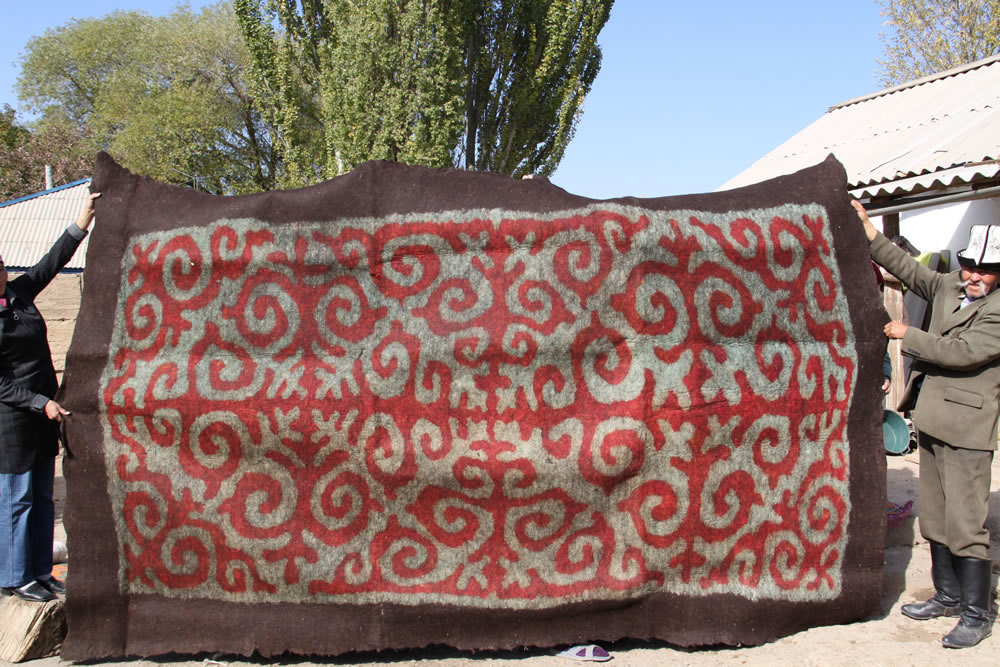
Ala-kiyiz y Shyrdak: arte tradicional kirguís de fabricación de alfombras de fieltro


Inscrito en 2012 (7.COM) en la Lista del Patrimonio Cultural Inmaterial que requiere medidas urgentes de salvaguardia
© 2011 by Murat Mambetov/CACSARC-kg

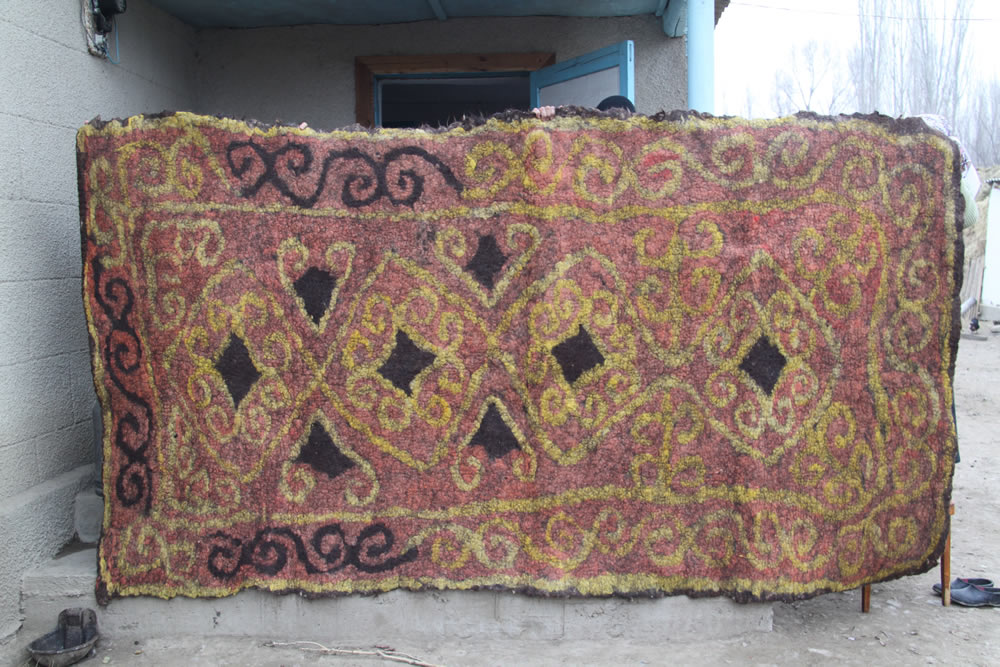
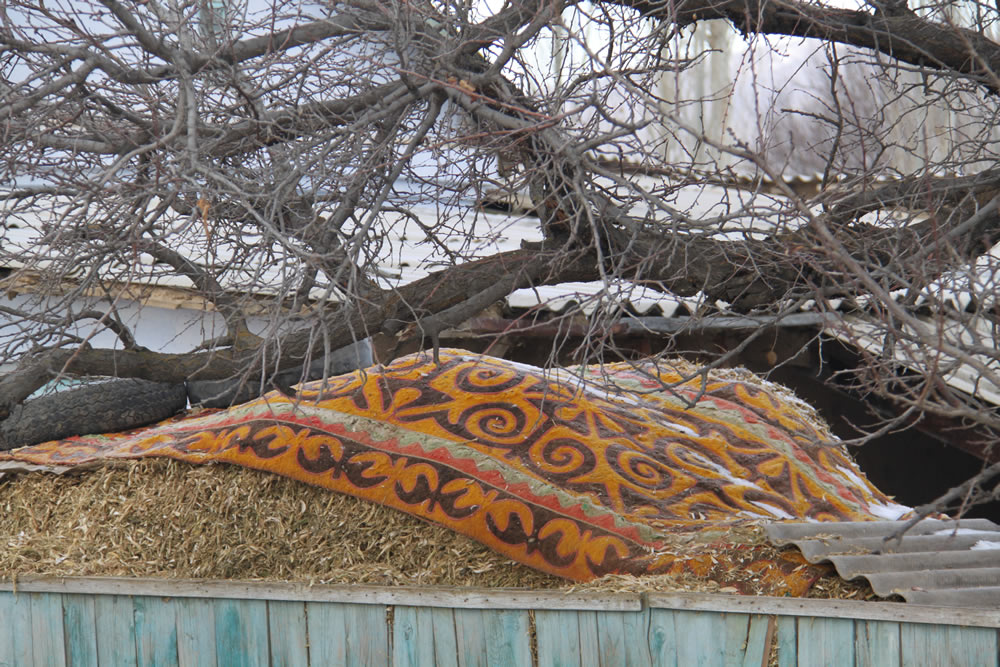
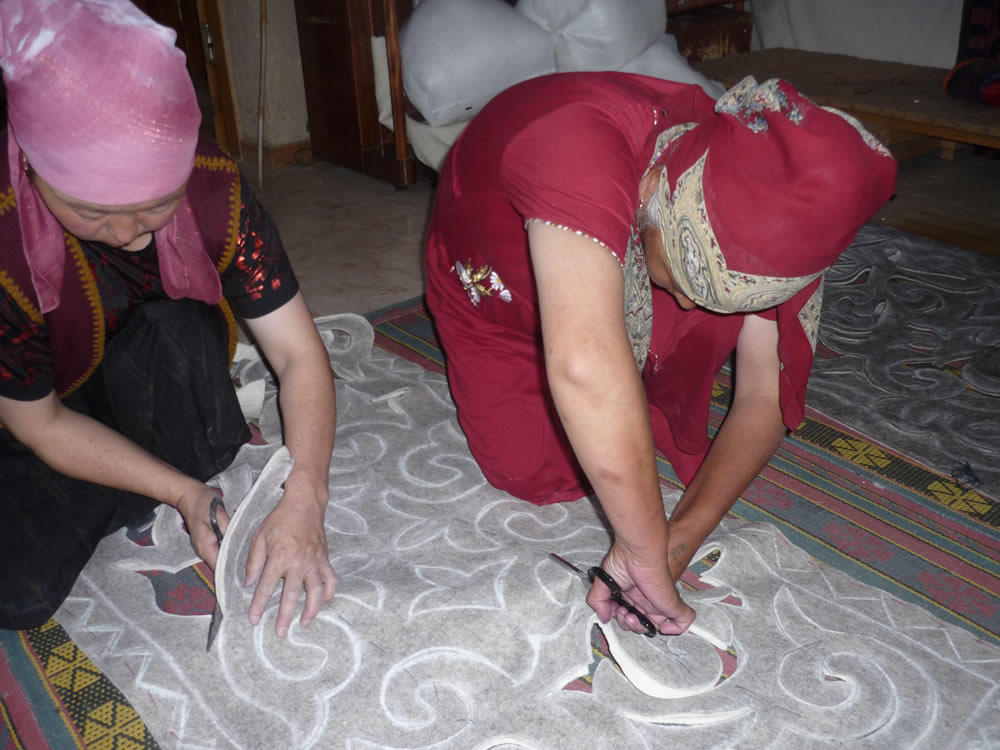
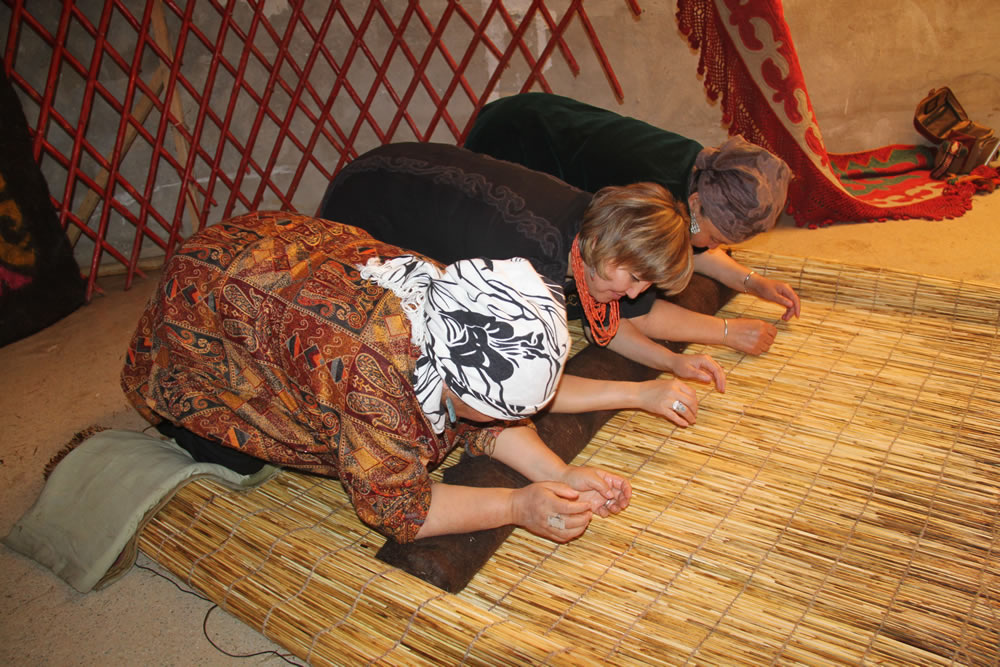
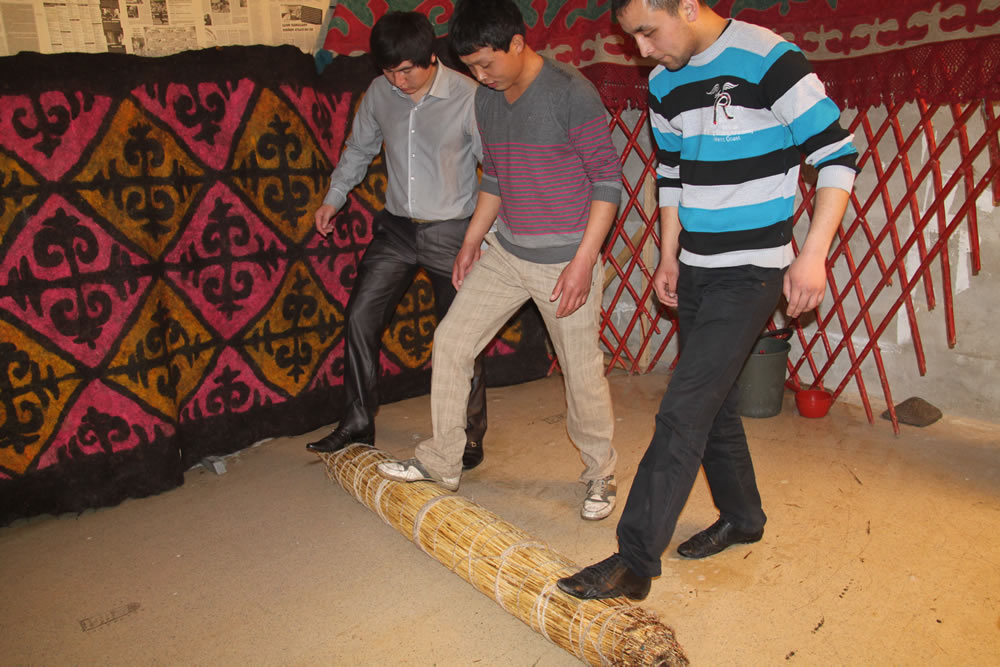
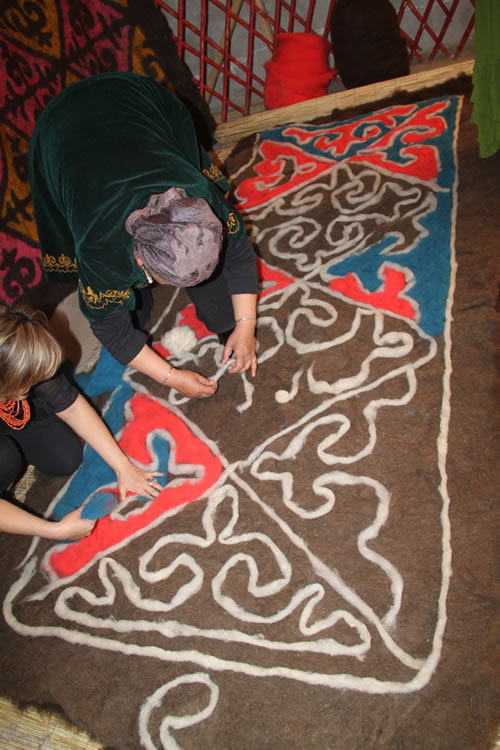
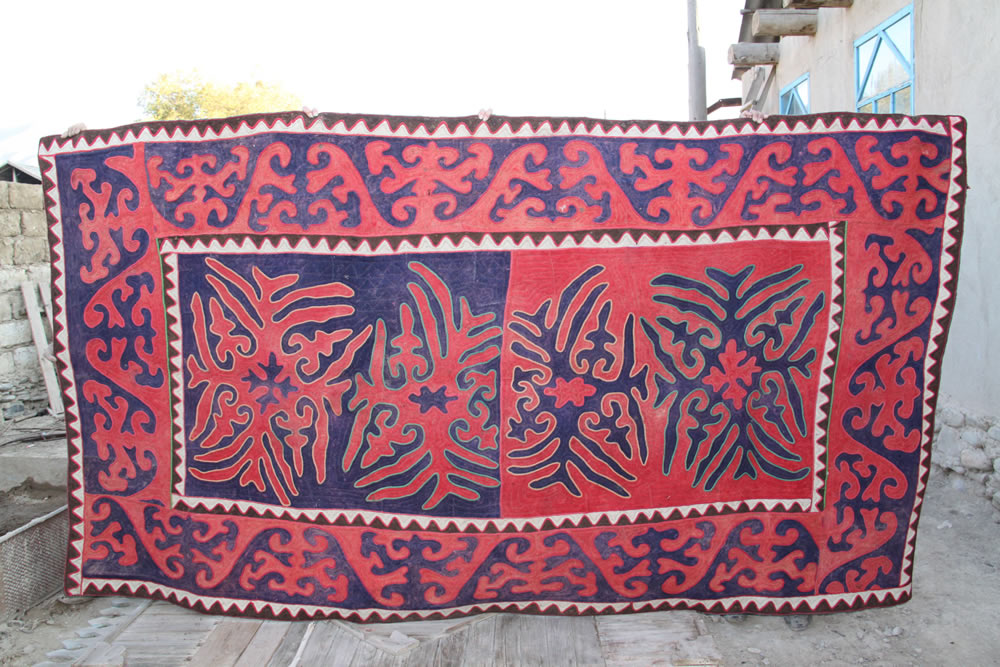
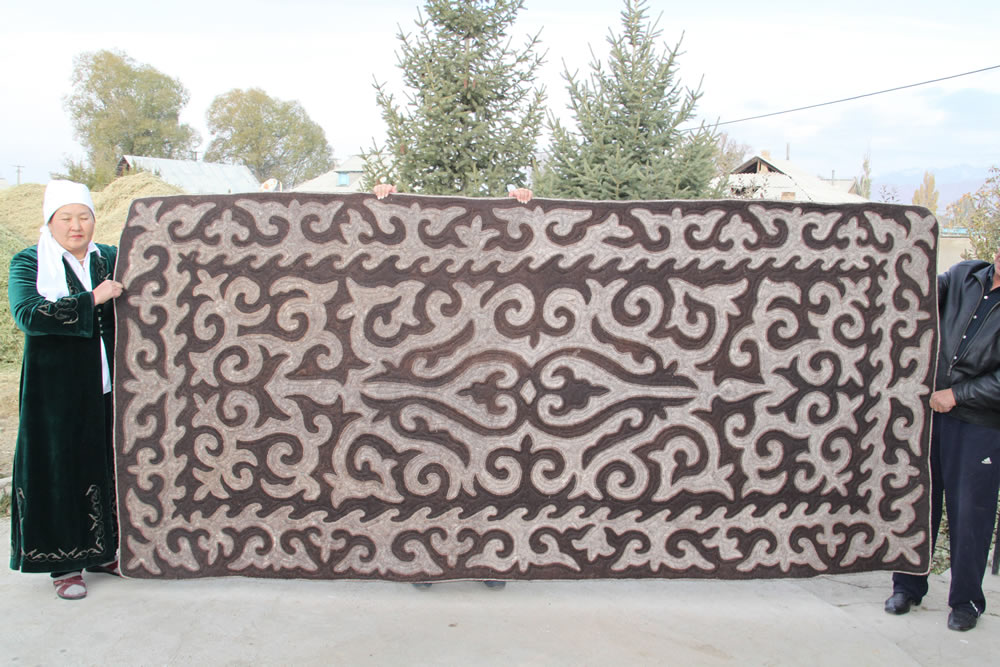
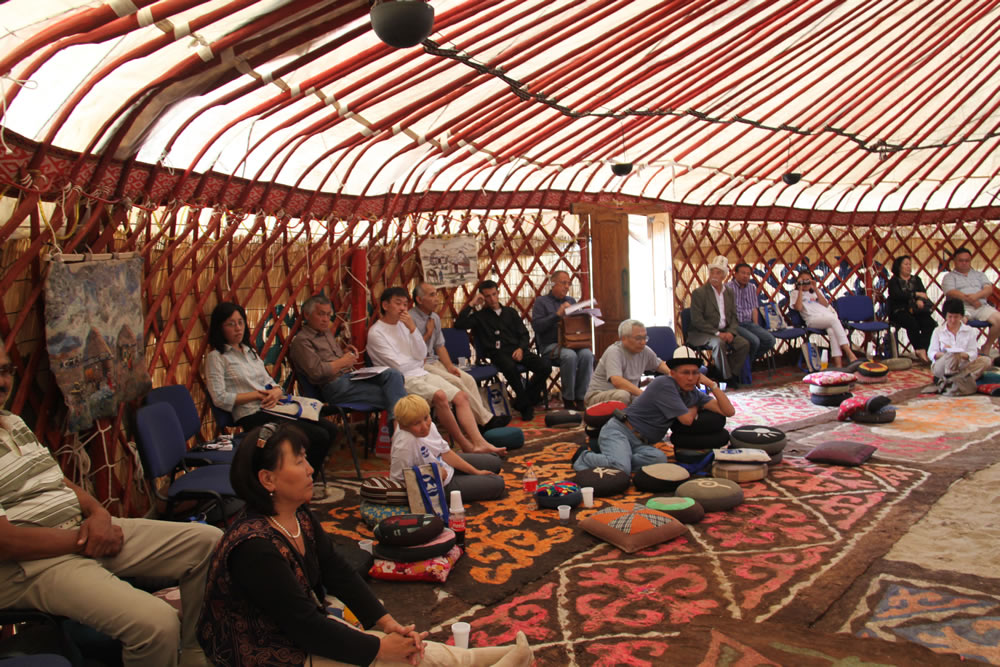
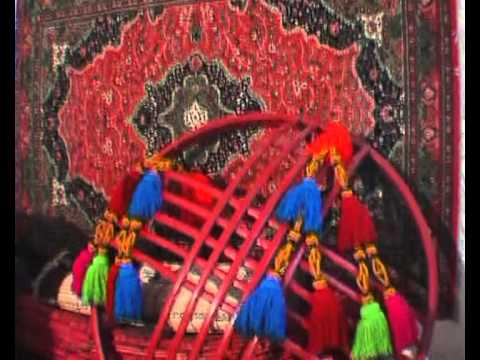
La confección tradicional de alfombras de fieltro es una de las artes ancestrales más importantes del pueblo kirguís y forma parte de su patrimonio cultural. Los kirguises fabrican tradicionalmente dos clases de alfombras de fieltro: ala-kiyiz y shyrdak. Los conocimientos, técnicas, variedades, significados de las ornamentaciones y rituales relacionados con esta actividad artesanal confieren a los kirguises un sentimiento de identidad y continuidad. La fabricación de las alfombras de fieltro kirguises está indisolublemente unida a la vida diaria de los nómadas, que las utilizan para protegerse contra el frío y ornamentar sus hogares. La creación de alfombras de fieltro es una tarea que exige una sólida unidad de la comunidad y que fomenta la transmisión de los conocimientos tradicionales. Por regla general, son las mujeres de más edad de las zonas rurales montañosas las que transmiten las técnicas de fabricación a las muchachas jóvenes de sus familias. Sin embargo, hoy en día este arte tradicional corre el peligro de desaparecer. En efecto, el número de personas que lo practica está disminuyendo y la mayoría de ellas tienen más de 40 años de edad. Esta situación se está agravando debido a la falta de medidas de salvaguardia gubernamentales, el desinterés de las generaciones más jóvenes, el predominio de las alfombras sintéticas baratas en el mercado y la baja calidad y escasez de las materias primas necesarias. El resultado de todo ello es que las alfombras ala-kiyiz han desaparecido casi por completo de los hogares kirguises, mientras que las alfombras shyrdak corren un serio peligro de desaparición.
Informe periódico

Report on the status of an element inscribed on the list of intangible cultural heritage in need of urgent safeguarding

A. Cover sheet

A.1.

State Party

Name of State Party

Kyrgyzstan

A.2.

Date of deposit of the instrument of ratification, acceptance, approval or accession

This information is available online.

Date of deposit of the instrument of ratification, acceptance, approval or accession

2006-11-06

A.3.

Element inscribed on the Urgent Safeguarding List that is the subject of this report

Name of element

Ala-kiyiz and Shyrdak, art of Kyrgyz traditional felt carpets

Inscribed in

2012

Submitting State(s)

Kyrgyzstan

A.4.

Reporting period covered by this report

Please indicate the period covered by this report.

Reporting period covered by this report

15-12-2017 - 15-12-2025

A.5.

Other elements inscribed on the Urgent Safeguarding List, if any

Please list all other elements from your country inscribed on the Urgent Safeguarding List, together with the year of inscription; for multinational elements, please indicate the other States concerned.

A.6.

Executive summary of the report

Please provide an executive summary of the report that will allow general readers to understand the current status of the element, any positive or negative impacts of inscription, the implementation of safeguarding measures during the reporting period and their possible update for the following years.

Executive summary of the report

During the reporting period (2018–2025), the safeguarding of Shyrdak and Ala-kiyiz – the traditional Kyrgyz art of felt carpet-making – progressed from stabilizing a fragile practice to consolidating a dynamic, self-sustaining form of living heritage. Since their inscription on UNESCO’s List of Intangible Cultural Heritage in Need of Urgent Safeguarding in 2012, both practices have evolved from primarily household production into widely valued expressions of cultural identity, women’s creativity, and community well-being across the country.

Today, felt carpets are among the most esteemed handmade products in Kyrgyzstan and increasingly visible internationally. Their production continues to rely on local wool, natural dyes, and manual techniques that preserve environmental knowledge and maintain the cultural symbolism of traditional motifs associated with harmony, prosperity, and protection. For many rural women, felt-making has become a stable and dignified source of income. A national mapping and digital documentation project (2024-2025) identified 1,791 artisans, including 685 Shyrdak and 75 Ala-kiyiz makers, whose average age is now about ten years younger than at the time of inscription – clear evidence of generational renewal. (See Table 1).

Safeguarding measures implemented between 2018 and 2025 were highly effective. Transmission was strengthened through over 600 apprenticeships, regional workshops, museum programmes, and newly developed teaching materials documenting 55 traditional Shyrdak patterns. Annual “Kyrgyz Shyrdagy” and “Oimo” festivals became major national platforms, attracting hundreds of artisans each year and contributing more than twenty exemplary carpets to museum collections. Media features, documentaries, and digital content expanded public recognition, while tourism-based master classes connected safeguarding with sustainable rural livelihoods.

Market development advanced considerably as cooperatives improved their production management, export partnerships expanded, and training in design, natural dyes, marketing, and e-commerce increased artisans’ economic resilience. Institutional reforms, including the Law on Crafts (2022), Law on Creative Industries (2022), and Presidential decrees establishing the National Programme for the Preservation and Development of National Traditions (2022-2027), created a stronger policy environment. In 2019, the World Crafts Council designated Naryn Province as the “World Craft City for Felt Carpet” reinforcing both national pride and international visibility.

A bilateral Official Development Assistance (ODA) project “Promoting Cultural Tourism Industry by Capacity Building for Production and Digital Marketing of Traditional Craft in the Kyrgyz Republic” (2023-2026), implemented by the Korea Heritage Service and ICHCAP with the Ministry of Culture and the National Commission for UNESCO, reinforces training, policy frameworks, and digital marketing while creating regional craft centres that benefit women and youth.

No negative impacts of inscription have been reported. Instead, inscription has increased national visibility, strengthened women’s leadership in cultural industries, expanded interregional cooperation, and reinforced community pride. Transmission systems remain strong, market demand is steady, and safeguarding actions are now embedded in both community practice and national policy.

Given the significant progress achieved and the strengthened institutional foundations, Shyrdak and Ala-kiyiz have evolved into resilient, widely practiced traditions fully aligned with sustainable development and cultural-tourism priorities. The element is increasingly well positioned for future consideration for transfer from the List of ICH in Need of Urgent Safeguarding to the Representative List of the Intangible Cultural Heritage of Humanity or the Register of Good Safeguarding Practices. Therefore, a working group was established to discuss the transfer of the element and prepare related forms

A.7.

Contact person for correspondence

Provide the name, address and other contact information of the person responsible for correspondence concerning the report.

Title (Ms/Mr, etc.)

Ms

Family name

Soltongeldieva

Given name

Sabira

Institution/position

Secretary-General, National Commission of the Kyrgyz Republic for UNESCO

Address

720040, Erkindik Blvd. 54, Bishkek, Kyrgyz Republic

Telephone number

+996312626761

E-mail address

natcomunesco.kg@gmail.com

Other relevant information

B

Ms

B. Status of element inscribed on the Urgent Safeguarding List

Refer to the nomination file or to previous reports, if any, as the basis for reporting on the current status of the element, and report only on relevant changes since the date of inscription on the List or since the previous report. Nomination files, specific timetables and earlier reports, if any, are available at https://ich.unesco.org or from the Secretariat, upon request.

The State Party shall pay special attention to the role of gender and shall endeavour to ensure the widest possible participation of the communities, groups and, where applicable, individuals concerned as well as relevant non-governmental organizations during the process of preparing this report, and is asked to describe how it has done so in point D below.

B.1.

Social and cultural functions

Please explain the social and cultural functions and meanings of the element today, within and for its community, the characteristics of the bearers and practitioners, and any specific roles or categories of persons with special responsibilities towards the element, among others. Attention should be given to any relevant changes related to inscription criterion U.1 (‘the element constitutes intangible cultural heritage as defined in Article 2 of the Convention’).

Social and cultural functions

Shyrdak and Ala-kiyiz continue to hold an essential social and cultural role in contemporary Kyrgyz society. Rooted in nomadic history yet actively practiced today, they provide communities with a strong sense of identity, continuity, and belonging. The making of felt carpets brings together families, neighbours, and community groups in shared creative work, reinforcing cooperation, mutual support, and intergenerational dialogue.

The practice remains fundamentally collective. Women are the principal bearers and transmitters of knowledge, responsible for designing patterns, selecting colours, felting, stitching, and teaching. Learning occurs informally within families, most often between mothers, grandmothers, and daughters, and within women’s cooperatives that have become central hubs of transmission. These settings convey not only technical skills but also cultural values such as patience, mutual respect, and social responsibility.

Men contribute to complementary stages like sheep shearing, wool preparation, heating water, felt pressing, and occasionally marketing and transportation. Thus, helping maintain an inclusive production system in which different generations and genders participate. In many communities, work is initiated or concluded with blessings or good wishes from elders, reaffirming the spiritual and social significance of the practice.

The ornaments and motifs applied to Shyrdak and Ala-kiyiz express ideas of harmony, prosperity, and protection through stylized representations of horns, wings, spirals, and ecological forms. These visual languages link people to their environment and to collective memory, functioning as narratives of identity and shared heritage. Felt carpets continue to be widely used in domestic, official and ceremonial contexts, including weddings and gift exchanges, echoing the enduring notion that “Kyrgyz are born and die wrapped in felt.”

Today, felt carpets also carry economic and social value, especially for rural women. The growth of community cooperatives, tourism workshops, social enterprises, and national festivals has strengthened the craft’s relevance as a source of livelihood. This integration of creativity and income-generation reinforces pride in local heritage and increases youth interest in learning traditional techniques.

A range of actors supports the practice: family workshops and cooperatives safeguard knowledge; national craft associations maintain design standards and facilitate markets; NGOs and museums contribute to documentation, teaching, and community outreach; and government bodies provide policy support and funding. Designers and ornament specialists hold particular responsibility for maintaining stylistic diversity and ensuring that motifs retain cultural meaning even as new forms and markets develop.

In contemporary Kyrgyzstan, Shyrdak and Ala-kiyiz therefore function as living expressions of creativity, community cohesion, and sustainable livelihood, embodying a dynamic relationship between people, their environment, and their heritage. Their continued practice demonstrates a strong and evolving system of social and cultural functions.

B.2.

Assessment of its viability and current risks

Please describe the current level of viability of the element, particularly the frequency and extent of its practice, the strength of traditional modes of transmission, the demographics of practitioners and audiences and its sustainability. Please also identify and describe the threats, if any, to the element's continued transmission and enactment and describe the severity and immediacy of such threats, giving particular attention to any strengthening or weakening of the element’s viability subsequent to inscription.

Assessment of its viability and current risks

The current viability of Shyrdak and Ala-kiyiz is strong and has improved significantly since their 2012 inscription. Both practices are widely transmitted, regularly enacted, and closely integrated into cultural, social, and economic life across Kyrgyzstan, though with different dynamics for each component.

Shyrdak has developed into a highly visible and firmly established practice. It is produced year-round in six provinces and supported by hundreds of women artisans working in family workshops, community cooperatives, and professional enterprises. Its use in household decoration, wedding dowries, ceremonial exchanges, and public cultural events ensures continued relevance. Especially shyrdak is highly valued these days, being presented at high-level governmental events. Demand remains stable and growing, supported by local buyers, tourists, and expanding export markets. Cooperatives such as “Urmat” and “Nakhta,” as well as professional craft enterprises, contribute to consistent quality, reliable orders, and broader outreach, while annual festivals provide nationwide platforms for visibility and exchange.

Ala-kiyiz, though used less frequently in its traditional domestic form, remains viable through functional and artistic adaptation. Its flexible felting technique is increasingly used in contemporary wall panels, garments, accessories, and design projects, allowing artisans, designers, and students to maintain technical knowledge while exploring new applications (see Table 2).

This diversification has become essential for sustaining its creative potential and economic relevance.
A clear sign of strengthened viability is the generational renewal of practitioners: most active artisans today are between 35 and 50 years old – approximately ten years younger than at the time of inscription. Transmission continues primarily through intergenerational family learning and women’s cooperatives, where shared production reinforces both technique and cultural values. Community-based tourism, workshops, and social enterprises further support transmission by engaging youth and linking learning with income-generation.

Felt-making transmission is supported through both formal and informal education. The element is integrated into school, vocational and higher-education curricula, complemented by extracurricular clubs and specialized courses. Informal education is dynamic, with NGOs, master-artisans and community networks organizing workshops, demonstrations and seminars that ensure hands-on transmission. Ongoing efforts by public institutions and communities aim to further strengthen educational integration and expand support mechanisms, contributing to the element’s sustainable safeguarding.

External support remains important. Programmes by NGOs and private craft enterprises help strengthen product development and marketing, while international partners, including UNESCO, UNDP, USAID, JICA, and ICHCAP, provide training, documentation, and market-support tools. The Kyrgyz-Korean ODA project (2023-2026) enhances viability by improving legal frameworks, building marketing and design capacity, establishing a national crafts database, supporting youth residencies, and creating three regional craft centers that connect artisans, cultural tourism, and creative industries.

Overall, Shyrdak demonstrates high resilience, while Ala-kiyiz maintains moderate but stable viability through innovation and cross-sector collaboration. Public recognition, youth engagement, and diversified markets have expanded notably since inscription. Transmission is strong in practice and spirit, and remaining risks can be mitigated through the planned national craft strategy and long-term institutional measures.

B.3.

Implementation of safeguarding measures

Please report on the safeguarding measures described in the nomination file, and previous report, if any. Describe how they have been implemented and how they have substantially contributed to the safeguarding of the element during the reporting period, taking note of external or internal constraints such as limited resources. Include, in particular, information on the measures taken to ensure the viability of the element by enabling the community to continue to practise and transmit it. Include the following detailed information concerning the implementation of the set of safeguarding measures or safeguarding plan:

B.3.a.

Objectives and results

Indicate what primary objective(s) were addressed and what concrete results were attained during the reporting period.

Objectives and results

Between 2018 and 2025, the safeguarding of Shyrdak and Ala-kiyiz focused on consolidating the viability of both practices and strengthening the conditions for their continued transmission. The overarching objective was to support the transition of the element from requiring urgent safeguarding toward becoming a stable and representative expression of Kyrgyz living heritage. This was pursued through four interconnected goals: enhancing intergenerational transmission, raising awareness, improving livelihoods, and reinforcing institutional frameworks.

Strengthening transmission and education yielded significant results. More than 1020 young women completed practical apprenticeships under master craftswomen, while additional learners participated in regional workshops, museum-led programmes, and elective vocational courses. The documentation of 55 traditional Shyrdak patterns and the development of illustrated teaching manuals facilitated more structured and consistent instruction across producing regions. As a result, the average age of practitioners has shifted downward by roughly a decade, confirming renewed youth engagement.

Raising awareness and visibility achieved wide reach. The annual “Kyrgyz Shyrdagy”, “Ala-Kiyiz Fest” and “Oimo” festivals grew into major national events drawing several hundred artisans and thousands of visitors each year. These platforms strengthened interregional exchange, public understanding, and cultural pride. More than twenty exemplary carpets were incorporated into national museum collections, while extensive media and digital storytelling expanded the audience beyond festival grounds and reinforced the recognition of felt-making as a key component of Kyrgyz cultural identity. Both carpets have been presented at international exhibitions dedicated to crafts as key artworks e.g. Cheongju Craft Biennale 2025 held in Korea.

Improving livelihoods and market development resulted in increased economic resilience. Cooperatives strengthened their production capacity and marketing skills, while the provision of over 1,000 m² of workshop and retail space improved working conditions and access to domestic markets. Stable and expanding demand both in Kyrgyzstan and abroad, enabled reliable income generation for rural women. Export-oriented cooperatives achieved annual earnings exceeding USD 45,000, and the average price of Shyrdak rose from USD 22/m² in 2012 to approximately USD 70/m² by 2022. Ala-kiyiz, though less widely practiced, maintained relevance through diversification into contemporary design, accessories, and interior décor.

Reinforcing institutional and legal frameworks created a more secure enabling environment. Adoption of the Law on Crafts (2022), the Law on Creative Industries (2022), and national policy instruments on creative economy and traditional heritage strengthened institutional recognition and coordination mechanisms. In 2019, Naryn Province received the designation of “World Craft City for Felt Carpet,” contributing to international cooperation and regional identity.

Overall, the implementation of the safeguarding plan substantially improved the viability of Shyrdak, which now demonstrates strong resilience, while Ala-kiyiz maintains stable practice through ongoing innovation and adaptation. Together, these results indicate sustained progress toward long-term safeguarding.

B.3.b.

Safeguarding activities

List the key activities that were carried out during this reporting period in order to achieve these expected results. Please describe the activities in detail and note their effectiveness or any problems encountered in implementing them.

Safeguarding activities

Safeguarding activities implemented between 2018 and 2025 built directly upon the objectives and results outlined above, translating them into sustained community-led action supported by national institutions and international partners. These activities strengthened transmission, enhanced visibility, expanded economic opportunities, and consolidated the policy environment, collectively contributing to the improved viability of Shyrdak and Ala-kiyiz.

Transmission and education activities are carried out through diverse pathways, combining both formal and informal approaches to ensure continuity of the element. Felt-making is integrated into the curricula of primary, secondary and vocational schools, as well as extracurricular activities and clubs. These classes are enriched by the participation of craftspeople, who engage with students through presentations and hands-on practice.

Another important aspect of transmission is the strengthening of traditional apprenticeship while expanding access to structured learning. Master craftswomen in producing regions conducted multi-month apprenticeships that trained young women in wool processing, felting, stitching, and ornament application. Village cooperatives facilitated these cycles, typically involving 5–15 learners, ensuring continuity within family and community settings. Between 2018 and 2025, regional workshops held in Naryn, Issyk-Kul, Osh, Talas, and Chui introduced UNESCO 2003 Convention, intensive technique-based training and design sessions.

Museums contributed through public education programmes; notably, the Frunze Museum hosted a UNESCO-supported heritage school in 2019 combining hands-on learning with lectures and study of historical Shyrdak examples, while the Fine Arts museum supported UNESCO-led special exhibition and the movie screening for Ala-Kiyiz in 2024 to raise the awareness of public general.

During the COVID-19 period, artisans and cooperatives adapted by producing video tutorials, livestreamed demonstrations, and step-by-step digital teaching materials. These became valuable tools for youth and urban learners and remain in use today. Illustrated teaching manuals and the documentation of traditional patterns supported the standardization of basic learning materials.

Awareness-raising and visibility initiatives were anchored in the annual “Kyrgyz Shyrdagy”, “Ala-Kiyiz Fest” and “Oimo” festivals, which served as the main national platforms for showcasing craftsmanship, fostering exchange, and presenting new works. Each festival brought together several hundred artisans and involved competitions, design laboratories, live demonstrations, and themed exhibitions. Community volunteers, local cultural departments, and cooperatives jointly organized these events, ensuring cost-effective implementation. Regional cultural centres supported year-round engagement through pre-festival training sessions and community exhibitions.

Mass media and digital outreach expanded the impact of festivals and everyday practice. Television and radio features profiled artisans and explained the cultural significance of ornament systems, while documentaries and online storytelling increased public engagement. Artisans and cooperatives regularly produced social media videos demonstrating techniques or sharing family histories, reaching domestic and international audiences. Museum acquisitions of newly produced carpets further strengthened visibility and provided institutional recognition. Documentaries and PR videos created with close cooperation and consultation with craftspeople.

Market development and livelihood support were advanced through training, cooperative strengthening, and improved access to production and retail spaces. Entrepreneurship workshops covered cost calculation, quality standards, branding, and online sales skills. Natural dye workshops offered environmentally sustainable colouring methods. Cooperatives benefited from guidance on internal governance, bulk procurement of wool, and collective marketing strategies.

Production and retail premises provided through craft associations expanded artisans’ ability to work collectively and sell directly to consumers. Several cooperatives developed export pathways through participation in curated exhibitions and trade fairs. Professional craft enterprises contributed to value-chain consolidation by offering design mentoring, product review, and guaranteed purchase orders, which enabled rural artisans to access broader markets. Integration with community-based tourism created additional income opportunities and enhanced visitor engagement. Although Shyrdak benefitted most from these developments, Ala-kiyiz required continual support in promotion.

Institutional, policy, and international cooperation activities reinforced the enabling environment for safeguarding. Following the adoption of national laws and policy instruments, awareness sessions were conducted to present the ICH Convention, explain national registration procedures and legal provisions to artisans and cooperatives. Coordination with regional authorities strengthened support for festivals, exhibitions, and training initiatives.

International cooperation expanded substantially from 2023 onward with the launch of the Kyrgyz-Korean ODA Project. The project established regional Craft Centers equipped for training, exhibitions, and design development; delivered capacity-building on digital marketing and product innovation; facilitated participation in the Cheongju Craft Biennale; and supported policy-development workshops and the piloting of a national artisan database. These efforts significantly enhanced national capacity and strengthened the integration of felt-making into cultural tourism and the creative economy.

Overall, activities carried out during this period were effective in addressing the safeguarding objectives. Transmission diversified and strengthened; public awareness expanded; livelihoods improved; and policy foundations were reinforced. Remaining challenges include the more limited visibility and viability of Ala-kiyiz and the need for systematically integrated craft education. Nonetheless, the combined efforts of communities, institutions, and partners have positioned Shyrdak and Ala-kiyiz as resilient and dynamic components of Kyrgyz cultural heritage.

B.3.c.

Participation of communities, groups or individuals in the safeguarding activities

Describe how communities, groups or, if appropriate, individuals as well as relevant non-governmental organizations have effectively participated, including in terms of gender roles, in the safeguarding measures. Describe the role of the implementing organization or body (name, background, etc.) and the human resources that were available for implementing safeguarding activities.

Participation of communities, groups or individuals in the safeguarding activities

The safeguarding of Shyrdak and Ala-kiyiz during 2018-2025 remained deeply rooted in the participation and leadership of communities. Because felt-making is inherently collective, intergenerational, and gender-inclusive, all safeguarding measures were implemented through structures that reflect the internal organization of the craft tradition itself.

Across producing regions, community craft groups and village cooperatives served as the primary drivers of safeguarding. Usually composed of 10-30 members, these groups bring together elder masters, experienced practitioners, and younger learners. Elder women lead training, transmit pattern knowledge, and set quality standards, while younger artisans contribute to product diversification, digital content creation, and marketing. Men continue to support wool shearing, pressing, heating water, transport, and tool production, ensuring that the wider household and community remain integrated into the process. This division of responsibilities helped maintain a balanced gender dynamic and a resilient intergenerational learning environment.

Women’s cooperatives and community-based enterprises emerged as important engines of safeguarding, as increased market relevance strengthened women’s roles in family income generation and community decision-making. Social enterprises and private craft companies collaborated with rural artisans on design mentoring, product development, and guaranteed purchase orders, reinforcing the link between safeguarding and sustainable livelihoods.

A network of national organizations further supported and coordinated community initiatives. The Crafts Council of Kyrgyzstan guided national-level actions, including festivals, training programmes, and advocacy. The “Shyrdakchy” and “Altyn Choichok” associations contributed to peer-to-peer mentoring, ornament research, and preservation of regional styles. The National Association “Kyyal” provided production and retail spaces that enabled cooperatives to work consistently throughout the year. NGOs including CACSARC-kg, Kiyiz Duino, and Felt Art Studio contributed research, documentation, community workshops, and media materials, strengthening both visibility and knowledge transfer.

The Ministry of Culture acted as the central coordinating body, providing partial funding for festivals, facilitating cooperation with regional administrations, and ensuring communication with UNESCO and the World Crafts Council. Museum specialists, teachers, and cultural workers played a key role by curating exhibitions, hosting workshops, and creating public education programmes in both urban and rural settings.

International partners like UNESCO, UNDP, USAID, JICA, ICHCAP, and others offered training, technical expertise, and support for entrepreneurship, digital marketing, and policy development. Their contributions enhanced community capacities while respecting community leadership.

Since 2023, communities, groups, individuals, NGOs, craft associations, researchers, and state institutions have been actively engaged in the planning, consulting and implementing the Kyrgyz-Korean ODA Project aimed at safeguarding and promoting traditional Kyrgyz crafts.

Most safeguarding activities relied on voluntary labour from artisans, community organizers, and local trainers, complemented by modest state and donor support. This strong sense of ownership, motivation, and cooperation has been central to the revitalization of Shyrdak and Ala-kiyiz. As a result, safeguarding has evolved into a shared, inclusive process, led by communities and reinforced by institutional and international partnerships, ensuring the element’s continued vitality as a dynamic form of living heritage.

B.3.d.

Timetable

Indicate in a timetable when each activity was implemented.

Timetable

The safeguarding measures implemented in 2018 -2025 followed a phased and cumulative timetable, reflecting the objectives and activities outlined in the safeguarding plan.

1.2018-2019 – Establishing institutional foundations and strengthening training frameworks
•Consultations held to develop the Law on Crafts, granting legal recognition to artisans and cooperatives and enabling their formal participation in safeguarding measures.
•Integration of the "Oimo" and "Kyrgyz Shyrdagy" festivals into the state cultural calendar, ensuring annual budget allocations and signaling state commitment to promoting felt-making.
•UNESCO-supported exhibition and three-day training at the M. Frunze Museum (2019), introducing structured instruction for artisans, students, and teachers and strengthening museum-led education.
•Documentation of 55 traditional Shyrdak patterns and publication of teaching manuals by Felt Art Studio, supporting systematic learning across regions.
•Designation of Naryn Province as "World Craft City for Felt Carpet " (2019) by the World Crafts Council, enhancing regional pride and international recognition.

2.2020-2021 - Expanding transmission and safeguarding networks
•Regular workshops and intergenerational apprenticeships implemented by cooperatives, museums, and community-based tourism networks across five provinces.
•Continuation of craft transmission during the COVID-19 pandemic through online tutorials and video-based teaching produced by artisans and cooperatives.
•Completion of the 2018-2021 safeguarding plan, resulting in strengthened transmission, increased visibility, and improved incomes for rural women.

3.2022-2023 - Policy consolidation and digital expansion
•Adoption of the Law on Crafts (2022), the Law on Creative Industries (2022) and the Presidential Decree on the National Programme for the Preservation and Development of National Traditions (2022-2027), embedding safeguarding within national development strategies.
•Entrepreneurship, design, and digital marketing trainings delivered through cooperation between the Crafts Council, USAID, UNDP, and regional partners.
•Launch of the Kyrgyz-Korean ODA Project (2023-2026), implemented by the Korea Heritage Service, ICHCAP, and the Ministry of Culture. The project initiated work on new craft centres, digital tools, and policy development.

4.2024-2025 - Nationwide documentation and strengthened community engagement
•National mapping and digital documentation initiative (Oct 2024-July 2025) recorded 1,791 artisans, including 685 Shyrdak and 75 Ala-kiyiz makers, confirming practitioner rejuvenation and countrywide practice.
•Annual festivals continued to gather several hundred artisans, enabling exchange, innovation, and museum acquisitions of exemplary carpets.
•Cooperatives deepened engagement with tourism, online markets, and social-enterprise collaborations, creating more stable income streams and encouraging youth participation.

5.2026 and beyond - Institutionalization and long-term sustainability
•Development of the State Programme for the Development of the Craft Sector (2026-2030) by the Ministry of Culture, with expected inclusion of Shyrdak and Ala-kiyiz within broader national craft strategies.
•Continued activities by the Ministry of Culture to further promote the element, enhance the database, establish the certification system and strengthen educational system
•Ongoing implementation of the ODA Project through 2026, including the expansion of craft centres, continued capacity-building trainings and youth residencies, and support for policy and certification systems.

Together, these measures form a coherent safeguarding trajectory that progressively strengthened transmission, visibility, market viability, and institutional support.

B.3.e.

Budget expenditures

Provide the detailed amounts of the funds used for the implementation of each activity (if possible, in US dollars), identifying the funding source for each (governmental sources, in-kind community inputs, etc.).

Budget

The safeguarding expenditures between 2018 and 2025 correspond directly to the activities and timeframes described in Sections B.3a-B.3d, reflecting a balanced combination of state funding, donor programmes, private-sector support, and substantial in-kind contributions from communities and cooperatives. Based on consolidated national and partner records, total estimated spending for the period is approximately USD 750,000.

1.2018-2019 – Establishing institutional and training foundations (≈ USD 80,000)
Activities in this period focused on building the policy base and preparing teaching resources. This investment laid the groundwork for structured learning and consistent national coordination. Funding included:
•USD 35,000 – national budget (legal implementation, coordination);
•USD 25,000 – UNESCO Participation Programme (documentation of 55 Shyrdak patterns, training);
•USD 20,000 – in-kind inputs from community groups and NGOs (workshop venues, facilitation, materials).

2.2020-2021 – Expanding transmission and public outreach (≈ USD 130,000)
Expenditures reflected the shift to multi-province workshops, festival integration into the cultural calendar, and digital learning during COVID-19. These resources ensured uninterrupted transmission and strengthened community visibility. Funding sources:
•USD 45,000 – national and local authorities (workshops, festival preparations);
•USD 50,000 – development partners (training, outreach, online content);
•USD 35,000 – community and private in-kind support (volunteer labour, wool, tools).

3.2022-2023 — Market and institutional reinforcement (≈ USD 220,000)
This period aligned with new national policies expanded training in entrepreneurship and e-commerce, and provided workspace for cooperatives. Funding strengthened value chains and supported participation in international showcases. Funding consisted of:
•USD 85,000 – government allocations (infrastructure, festivals, coordination);
•USD 75,000 – international partners (business skills, digital marketing, design innovation);
•USD 60,000 – private sector and community contributions (materials, cooperative management, travel for exhibitions).

4.2024-2025 – Consolidation and digital promotion (≈ USD 320,000)
This phase corresponds to mapping activities, festival continuation, and the acceleration of digital and creative-economy measures through the Kyrgyz-Korean ODA Project. These investments introduced digital platforms, established three regional craft centres, and expanded tourism linkages. Funding:
•USD 70,000 – national and municipal budgets (events, coordination, local infrastructure);
•USD 180,000 – Korean ODA and ICHCAP inputs (craft centres, digital tools, training, international exchanges);
•USD 70,000 – cooperative reinvestment and community in-kind support (production spaces, demonstrations, training).

Overall Funding Summary (2018-2025)
Source Estimated Total (USD) Share (%)
Government of Kyrgyz Republic 230,000 31%
International partners 305,000 41%
NGOs, private sector, and community in-kind contributions 215,000 28%
Total ≈ 750,000 100 %

Safeguarding measures were implemented efficiently through cost-sharing between the government, international partners, private actors, and communities. Compared with the USD 1.12 million budgeted for 2013-2017 (as recorded in the previous report 38902-EN_USL), the 2018-2025 period reflects a more targeted and digitally oriented approach, achieving strong results with moderate but well-coordinated resources.

B.3.f.

Overall effectiveness of the safeguarding activities

Provide an overall assessment of the effectiveness of the activities undertaken to achieve the expected results and of the efficiency of the use of funds for implementing the activities. Please indicate how the activities contributed to achieving the results and whether other activities could have contributed better to achieving the same results. Also indicate whether the same results could have been achieved with less funding, whether the human resources available were appropriate and whether communities, groups and individuals could have been better involved.

Overall effectiveness of the safeguarding activities

Between 2018 and 2025, safeguarding activities for Shyrdak and Ala-kiyiz proved highly effective in meeting the objectives set out in the 2018-2021 plan and continued through subsequent years. The element progressed from a practice once considered vulnerable to a stable and self-sustaining tradition supported by strong transmission systems, active market demand, and favourable policy frameworks. The effectiveness of safeguarding derives from the coherent interaction of community-based transmission, national coordination, targeted training, and efficient use of funds, as outlined in previous sections.

A key factor in overall success was the community-driven transmission model, which remained the backbone of safeguarding. Apprenticeships conducted by master craftswomen, cooperative-based learning, and intergenerational workshops ensured regular, hands-on knowledge transfer across five provinces. This approach required minimal external intervention and remained fully functional even during the COVID-19 pandemic, when artisans adapted by producing digital tutorials and maintaining crafting from home. As a result, more than 1020 young women received direct training, and the average age of practitioners decreased significantly – clear evidence of renewed youth involvement and strengthened continuity.

Awareness-raising and visibility measures also demonstrated strong impact. Annual festivals, particularly “Kyrgyz Shyrdagy”, “Ala-Kiyiz Fest” and “Oimo,” evolved into cost-efficient platforms that combined exhibitions, competitions, training sessions, and sales opportunities. Supported by modest state funding and substantial community contributions, they consistently attracted several hundred artisans, showcased more than 1,000 felt items annually, and provided national visibility. Media reporting, museum exhibitions, and digital storytelling expanded audiences and strengthened public appreciation, validating the activities and outputs described in B.3b and B.3d.

Economic and market-oriented activities significantly enhanced artisans’ livelihoods. Training in entrepreneurship, natural dyeing, design adaptation, and e-commerce enabled cooperatives to diversify their products and secure predictable income streams. Allocated production spaces, mentorship from professional craft enterprises, and trainings conducted by private sector strengthened value chains by improving product quality, marketing, and access to export opportunities. These outcomes confirmed that effective safeguarding must align cultural goals with economic sustainability.

Institutional and policy reforms reinforced these achievements as they provided a coherent long-term framework for safeguarding. Coordination between the Ministry of Culture, the National Commission for UNESCO, and civil-society partners enabled more systematic support and ensured that safeguarding activities aligned with national development priorities. The timeline described in B.3d shows that policy advances occurred at key moments when community momentum was already strong by maximizing their impact.

A strengthening factor was the Kyrgyz-Korean ODA Project (2023-2026), which substantially increased national capacity through training, international exchange, digital marketing development, and the establishment of three regional craft centres. Its policy-development component supported work on a national strategy for 2026-2030, helping to institutionalize safeguarding for the long term. These investments, reflected in B.3e, significantly expanded the scale and modernity of safeguarding tools without requiring disproportionately high financial resources.

Overall, funds were used efficiently. With approximately USD 750,000 invested over eight years, the programme relied heavily on cost-sharing, volunteer labour, and existing infrastructure. This allowed a wide range of activities to be implemented with moderate but well-coordinated resources. Human resources were sufficient and became increasingly professionalized through training and partnerships.

However, some gaps remain and Ala-kiyiz still requires targeted promotion. Nevertheless, strong community ownership, active cooperatives, and new policy mechanisms have been effectively contributing for its safeguarding efforts.

In conclusion, safeguarding activities met and exceeded expected results. Transmission practices strengthened, market demand expanded, and institutional support deepened.

C

Kenzhetaeva

C. Update of the safeguarding measures

C.1.

Updated safeguarding plan

Please provide an update of the safeguarding plan included in the nomination file or in the previous report. In particular provide detailed information as follows:

  1. a. What primary objective(s) will be addressed and what concrete results will be expected?
  2. b. What are the key activities to be carried out in order to achieve these expected results? Describe the activities in detail and in their best sequence, addressing their feasibility.
  3. c. How will the State(s) Party(ies) concerned support the implementation of the updated safeguarding plan?

Updated safeguarding plan

The updated safeguarding plan for Shyrdak and Ala-kiyiz builds directly on the results of 2018-2025 and reflects the gradual transition of the element from one requiring urgent safeguarding to a stable and representative practice of Kyrgyz living heritage. It aligns national efforts with the bilateral Kyrgyz-Korea ODA project, funded by the Republic of Korea via Korea Heritage Service and implemented by ICHCAP in cooperation with the Ministry of Culture and the National Commission of the Kyrgyz Republic for UNESCO.

The plan pursues four main objectives:
1.Improvement of the legal and policy framework for traditional crafts (TC);
2.Capacity-building for stakeholders in the TC sector;
3.Strengthening value chains and cultural tourism based on TC;
4.Creation and operation of Traditional Craft Centers (TCCs);

Expected results by the end of the planning period include:
1.An adopted strategic plan (2026-2030);
2.A functioning certification system for TC;
3.An operational crafts database;
4.Three working TCCs with pilot programmes;
5.New tourism products based on carpets and other TC;
6.Strengthened capacities of around 130 key stakeholders and at least 50 graduates with full capacity to train further at least 5 apprentices each in the future.

The ODA project structures activities in four components (legal framework; capacity-building; value-chain development; infrastructure and TCCs), implemented mainly between 2024 and 2026. Policy work and certification are developed in parallel with training and product-development activities, while the database is tested together with marketing content and new tourism products. Infrastructural work on the three TCCs (design, renovation, equipment, opening) is accompanied by the design of pilot programmes, which will include carpet exhibitions and master classes in Ala-kiyiz techniques.

In parallel, the Ministry of Culture is preparing a State Programme for the Development of the Craft Sector for 2026-2030, drafts being expected by the end of 2025. Cooperation on craft development will be maintained at the international level, based on the agreements and MOUs signed between the Ministry and other member states. At the national level, promotional activities will be continued through digital tools and strengthened integration into educational curricula with support of the Ministry of Education.

The Ministry of Culture leads implementation on the Kyrgyz side, ensures policy coordination, and works on the new State Programme and the longer-term strategic plan. The National Commission for UNESCO supports coordination with national, regional and international partners. Local administrations in Chui, Naryn, and Issyk-Kul provide logistical and infrastructural support for the TCCs. Community-based organizations, cooperatives, and NGOs remain responsible for local implementation.

C.2.

Timetable for future actitivies

Provide a timetable for the updated safeguarding plan (within a time-frame of approximately four years).

Timetable

The updated safeguarding plan is implemented within the timeframe of the bilateral ODA project (2023-2026) and the subsequent national strategic and programme frameworks (2026-2030 and 2026-2030). The timetable emphasizes a phased approach that connects policy, capacity-building, value-chain development, and infrastructure.

1.2022-2023 – Project launch and coordination
•Design of the ODA project and establishment of cooperation mechanisms between the Korea Heritage Service, ICHCAP, the Ministry of Culture, and the National Commission for UNESCO;
•Preparatory work for legal, training, database, and infrastructure components.

2.2024 – Start of implementation and groundwork for all four components
•Initiation of work on the strategic plan (2026-2030) for TC and preparatory steps for a certification system;
•Launch of capacity-building activities for civil servants, specialists, and communities in TC policy, marketing, and design;
•Beginning of work on the TC database and tourism products using traditional crafts, including carpets;
•Start of design and planning for three Traditional Craft Centers at the National Museum of Fine Arts (Bishkek), “AS” Gallery (Naryn), and the Nomadic Civilization Center (Issyk-Kul).

3.2025 – Intensified capacity-building, product development, and promotion
•Continuation of training programmes in marketing, design, and product development for stakeholders (approximately 60 beneficiaries, including decision-makers, traders, and artisans);
•Implementation of the "Creative Lab" programme, resulting in around 420 graduates and jointly/individually created craft works;
•Further development and testing of the TC database, new tourism products (such as "Shyrdak" seat-cushions), and multilingual promotional content (video materials, leaflets, card news, etc.);
•Participation of Kyrgyz carpets and TC in the Cheongju Craft Biennale 2025 and related exchanges;
•Progress in reconstruction and equipping of the three TCCs and preparation of pilot programmes (exhibitions, master classes).

4.2026 – Consolidation of systems and transition to national frameworks
•Finalization of the strategic plan (2026-2030), proposals for amendments to the 2022 law on Crafts, and introduction of the crafts certification system;
•Completion and testing of the database;
•Operationalization of the three TCCs with pilot activities supporting transmission and cultural tourism;
•Continuation of training and exchanges as the ODA project concludes and its results are handed over to national institutions.

5. 2026 and beyond
•Adoption and implementation of the State Programme for the Development of the Craft Sector (2026-2030), currently being prepared by the Ministry of Culture and expected to include Shyrdak and Ala-kiyiz;
•Use of the strategic plan, certification system, database, digital platform, and TCCs as long-term tools for safeguarding and for integrating felt-making into cultural tourism and the creative economy.
•Further strengthening safeguarding efforts between communities and various stakeholders including museums, NGOs and associations, educational institutions, etc. to ensure continued practice and transmission.
•Implementation of cooperative projects with the youth from Association of Creative Industries and the High Technology Park to integrate and further promote carpets and other crafts among the public general.

C.3.

Budget for future activities

Provide the estimates of the funds required for implementing the updated safeguarding plan (if possible, in US dollars), identifying any available resources (governmental sources, in-kind community inputs, etc.).

Budget

The updated safeguarding plan for Shyrdak and Ala-kiyiz focuses on ensuring the long-term sustainability of the element and completing its transition from urgent safeguarding to full representativity within Kyrgyz living heritage. The approach is based on partnership, shared responsibility, and the gradual integration of safeguarding into national policy and economic frameworks rather than on large-scale external funding.

The principal financial backbone continues to be the Kyrgyz-Korean ODA Project (2023-2026), which already provides significant investment in training, infrastructure, and digital development. Future activities will be financed through a balanced mix of governmental support, international cooperation, and community participation. The Government of the Kyrgyz Republic, through the Ministry of Culture will provide the institutional foundation, including policy coordination and maintenance of regional Craft Centers.

National and local non-governmental organizations such as the Crafts Council of Kyrgyzstan, “Shyrdakchy”, “Altyn Choichok”, CACSARC-kg, and others will contribute through community-based training, marketing initiatives, and festival organization. Their in-kind participation, combined with volunteer engagement and cost-sharing practices, ensures that safeguarding activities remain community-led and financially efficient.

Private businesses, tourism networks, and artisan cooperatives will continue to invest in value-chain development and marketing, helping to secure local livelihoods. International partners, including UNESCO and the World Crafts Council, will provide complementary technical assistance, and visibility support.

The emphasis in the coming years will shift from emergency safeguarding toward sustainability, focusing on:
•Institutional consolidation through national legislation, certification systems, and the adoption of a strategic plan for traditional crafts (2026-2030);
•Educational expansion through the enhanced inclusion of craft skills in vocational and higher education;
•Market resilience via digital promotion, innovation, and fair-trade practices;
•Cultural visibility through festivals, exhibitions, and cross-border cooperation.

The financial model thus rests on long-term cooperation rather than short-term funding. It relies on the community’s strong motivation, institutional capacity already in place, and the gradual assumption of full state and local ownership.

By sustaining this approach, Shyrdak and Ala-kiyiz will continue to thrive as living traditions that connect creativity, identity, and livelihood.

C.4.

Community participation

Please describe how communities, groups and individuals, as well as relevant non-governmental organizations have been involved, including in terms of gender roles, in updating the safeguarding plan, and how they will be involved in its implementation.

00116

Community participation

The updating of the safeguarding plan for Shyrdak and Ala-kiyiz was carried out through broad and inclusive community consultation. Artisans, cooperatives, and local associations from all producing regions actively contributed to defining priorities, identifying needs, and shaping future actions. Meetings and discussions were facilitated by the Crafts Council of Kyrgyzstan in cooperation with the Ministry of Culture and regional authorities, ensuring that community perspectives guided the process from the outset. Women artisans, who constitute the majority of practitioners, played a central role in consultations, emphasizing the importance of intergenerational teaching, fair access to markets, and recognition of their creative and economic contribution. Their leadership continues to shape both the design and implementation of activities.

Young artisans, designers, and students were engaged through consultations organized by the Ministry of Culture, ensuring that the updated plan reflects new perspectives and technological innovation.

NGOs and community-based groups remain responsible for implementing most field activities, while government institutions provide coordination, technical support, and partial funding, ensuring that local voices are connected to broader safeguarding networks.

The updated safeguarding plan thus reflects the same participatory spirit as the craft itself – collective, inclusive, and intergenerational. Through shared responsibility among women, men, youth, NGOs, and state institutions, the safeguarding of Shyrdak and Ala-kiyiz remains firmly grounded in community initiative, ensuring its continuity.

C.5.

Institutional context

Please report on the institutional context for the local management and safeguarding of the element inscribed on the Urgent Safeguarding List, including:

  1. a. the competent body(ies) involved in its management and/or safeguarding;
  2. b. the organization(s) of the community or group concerned with the element and its safeguarding.

2006-11-06

Institutional context

The institutional context for safeguarding Shyrdak and Ala-kiyiz combines governmental, non-governmental, and international bodies.

Competent governmental bodies:
•The Ministry of Culture, responsible for national safeguarding policy and coordination, including the preparation of the State Programme for the Development of the Craft Sector (2026-2030)
•The National Commission for UNESCO, supports coordination with UNESCO and other various partners;
•Museums operating as Craft Centers strengthen cooperation with craft communities and raise the awareness;
•The Ministry of Education supports crafts integration into educational curricula
•The Tourism Department under the Ministry of Economy responsible for cultural tourism development with crafts communities involvement;
•The State Enterprise “Kyyal” National Association of Folk Handicrafts under the Presidential Administration, provides production and sales premises and supports promotion of traditional crafts;
•The State Agency for Intellectual Property and Innovation (Kyrgyzpatent), contributes to the legal protection and branding of traditional designs.

Community and NGO organizations concerned with the element:
•The Crafts Council of Kyrgyzstan, CACSARC-kg (initiator of the original nomination), “Kiyiz Duyno”, “Shyrdakchy”, and “Altyn Choichok” associations, organize training, documentation, research, and festivals;
•Local cooperatives and community groups such as “Kyrgyz Uz” (Dostuk), “Altyn Kol” (Kochkor), “Tolgonai Ene” (Karakol), and others, maintain production, mentoring, and local safeguarding initiatives.

International partners within the ODA framework:
•The Korea Heritage Service and ICHCAP, which implement the 2023-2026 ODA project.

Together, these institutions provide a coherent structure that links community-based safeguarding with national policy and international cooperation, ensuring the continued transmission, visibility, and practice.

D

Kamila

D. Participation of communities in preparing this report

Describe the measures taken to ensure the widest possible participation of the communities, groups and, where applicable, individuals concerned as well as relevant non-governmental organizations during the process of preparing this report.

Participation of communities in preparing this report

The preparation of this periodic report followed the same community-driven approach that characterizes the safeguarding of Shyrdak and Ala-kiyiz. From the outset, the Ministry of Culture ensured broad participation by coordinating consultations with community groups, cooperatives, national craft associations, and relevant NGOs across all producing regions. This process guaranteed that the report reflects the lived experience, priorities, and expectations of the practitioners themselves.

Regional consultations were conducted in Naryn, Issyk-Kul, Osh, Talas, and Chui, facilitated by the Crafts Council of Kyrgyzstan in cooperation with local cultural departments. Artisans, cooperative leaders, pattern specialists, and teachers, including members of “Shyrdakchy,” “Altyn Choichok,” “Kyyal,” CACSARC-kg, and “Kiyiz Duyno”, contributed through group discussions, interviews, and feedback on safeguarding results, ongoing challenges, and post-2025 needs.

Women, who remain the primary bearers and transmitters of the craft, played a central role. Their perspectives shaped the report’s emphasis on intergenerational teaching, community-based learning spaces, and sustainable market access. Young artisans, designers, and students were engaged through digital surveys and workshops conducted by the Ministry of Culture and within the framework of the Kyrgyz-Korean ODA Project (2023–2026), ensuring that emerging voices and creative approaches were included.

NGOs contributed data from workshops, mapping initiatives, and training programmes. Museum educators and local experts provided information on exhibitions, educational events, and transmission activities. The Ministry of Culture and the National Commission for UNESCO reviewed and consolidated all inputs, ensuring accuracy and alignment with national safeguarding policy.

This wide and inclusive participation reaffirmed community ownership of safeguarding efforts and strengthened the shared vision for transitioning Shyrdak and Ala-kiyiz from urgent safeguarding toward sustained, representative living heritage.

E

Culture programme specialist
National Commission of the Kyrgyz Republic for UNESCO

E. Signature on behalf of the State Party

The report should be signed by an official empowered to do so on behalf of the State, and should include his or her name, title and the date of submission.

Name

Sabira Soltongeldieva

Title

Secretary-General, National Commission of the Kyrgyz Republic for UNESCO

Date

18-12-2025

Signature

signed

Upload signed version in PDF

Report on the status of an element inscribed on the list of intangible cultural heritage in need of urgent safeguarding

A. Cover sheet

A.1.

State Party

Name of State Party

Kyrgyzstan

A.2.

Date of deposit of the instrument of ratification, acceptance, approval or accession

This information is available online.

Date of deposit of the instrument of ratification, acceptance, approval or accession

2006-11-06

A.3.

Element inscribed on the Urgent Safeguarding List that is the subject of this report

Name of element

Ala-kiyiz and Shyrdak, art of Kyrgyz traditional felt carpets

Inscribed in

2012

A.4.

Reporting period covered by this report

Please indicate the period covered by this report.

Reporting period covered by this report

05-12-2012 - 15-12-2017

A.5.

Other elements inscribed on the Urgent Safeguarding List, if any

Please list all other elements from your country inscribed on the Urgent Safeguarding List, together with the year of inscription; for multinational elements, please indicate the other States concerned.

A.6.

Executive summary of the report

Please provide an executive summary of the report that will allow general readers to understand the current status of the element, any positive or negative impacts of inscription, the implementation of safeguarding measures during the reporting period and their possible update for the following years.

Executive summary of the report

Ala-kiyiz and Shyrdak - art of Kyrgyz traditional felt carpets manufacturing is one of the most outstanding arts of the Kyrgyz people and an integral part of their cultural heritage. The knowledge, skills, diversity and ornament semantics, as well as carpets creation ceremony are important components of the culture ensuring Kyrgyz people's sense of identity and continuity. Kyrgyz felt carpets manufacturing is an integral part of the nomads' everyday life that have been used for house warming and decoration.
Shyrdak is one of the most complicated felt products in terms of technology. "Shyrdak" comes from the word "shyryk", which means stitching - this is one of the main processes in this carpet manufacturing, which makes it solid and durable. Ala-kiyiz is manufactured using imbedding technique and compared to Shyrdak, it is easier to manufacture. It is used mostly for everyday life, rather than for decoration. Shyrdaks are deemed as more durable than Ala-kiyiz. The average life of Ala-kiyiz is approximately 20 years, while Shyrdak can be kept for up to a hundred years.
Traditional knowledge and skills of felt carpets making transmitted from older to younger generation through joint practical work. However, the number of practitioners was gradually reducing, most of whom are above 40 years old, because of the insufficient state protection, lack of interest among younger generation, prevalence of inexpensive synthetic carpets and its poor quality and etc. Therefore, inscription of the art of Kyrgyz traditional felt carpets on the USL was extremely important for the revival and safeguarding of the Kyrgyz traditional felt culture.
Inscription of Shyrdak and Ala-kiyiz on the USL has positively resonated in the minds and hearts of all Kyrgyzstani citizens and was a powerful impetus for a more active handicraft movement in all regions of the country.
The following changes were entailed by inscription of this element on the USL:
• Traditional felt carpets are now perceived by the local population not only as a 'product' of the past nomad life, but also as an important cultural heritage and national symbol;
• The young generation started to be interested in manufacturing felt carpets, mastering secrets of craftmanship, thereby, increasing the number of practicioners and followers of this tradition;
• Awareness about the art of traditional felt carpets among other ethnic groups in Kyrgyzstan has increased, as well as among youth;
• Demand for felt carpets has increased both in local and export markets. Accordingly, the incomes, living standards and status of craftsmen - felt carpets makers have increased as well;
• The Government and local authorities now allocate more funds for promotion and safeguarding of the element.
Measures aimed to safeguard this element undertaken during the reporting period:
• To improve the current normative legal acts and other documents related to intangible cultural heritage;
• To create the Craft Council of the KR including the bearers and practitioners of this element;
- To open community-based training and practicing centers for felt carpets making in all regions of the country;
• To conduct training sessions on various Shyrdak and Ala-kiyiz traditional manufacturing techniques, as well as festivals, contests and master classes;
• To conduct field research for element inventorization;
• To conduct a research on traditional technologies of the Kyrgyz sheep rough wool processing and training in these technologies;
• To promote the element at the international level through participation in international exhibitions and fairs.

A.7.

Contact person for correspondence

Provide the name, address and other contact information of the person responsible for correspondence concerning the report.

Title (Ms/Mr, etc.)

Ms

Family name

Chochunbaeva

Given name

Dinara

Institution/position

Director, Central Asian Crafts Support Association's Resource Centre in Kyrgyzstan (CACSARC-kg)

Address

162A, Manaschi Sagynbai Street
Bishkek

Telephone number

+ (996 312) 62 41 80 / 62 03 85

E-mail address

dinara.chochun@gmail.com

Other relevant information

B

Ms

B. Status of element inscribed on the Urgent Safeguarding List

Refer to the nomination file or to previous reports, if any, as the basis for reporting on the current status of the element, and report only on relevant changes since the date of inscription on the List or since the previous report. Nomination files, specific timetables and earlier reports, if any, are available at https://ich.unesco.org or from the Secretariat, upon request.

The State Party shall pay special attention to the role of gender and shall endeavour to ensure the widest possible participation of the communities, groups and, where applicable, individuals concerned as well as relevant non-governmental organizations during the process of preparing this report, and is asked to describe how it has done so in point D below.

B.1.

Social and cultural functions

Please explain the social and cultural functions and meanings of the element today, within and for its community, the characteristics of the bearers and practitioners, and any specific roles or categories of persons with special responsibilities towards the element, among others. Attention should be given to any relevant changes related to inscription criterion U.1 (‘the element constitutes intangible cultural heritage as defined in Article 2 of the Convention’).

Social and cultural functions

Shyrdak and Ala-kiyiz felt carpets are the important part of the Kyrgyz traditional culture. Up to now, joint creation of felt carpets by skilled craftsmen, young women and girls, men and boys is continuously an important socializing factor. Traditional felt processing knowledge and skills, the variety and meaning of patterns on felt carpets, as well as ways of knowledge transmitting from the older generation to young people ensure sense of identity and continuity among the element bearers’ and practitioners’, as well as the entire Kyrgyz people.
Fashion for synthetic carpets in modern Kyrgyz society has been declining and interest in environmentally friendly and traditional felt carpets is reviving again. They are used for warming and decorating the interiors of houses, flats and hotels. The tradition of preserving old felt carpets as a family relic, memory of the mothers and inclusion into the set of traditional bride's dowry is reviving again.
The modern way of transmitting Ala-kiyiz and Shyrdak felt carpets manufacturing knowledge and skills from the older to the younger generation remained traditional: young people master all stages of production during joint practical work with experienced craftsmen.
Bearers and practicioners of the traditional knowledge of Ala-kiyiz and Shyrdak are usually women above 40 years old from rural areas, though, in recent years some craftsmen emerged in urban areas as well. Usually, the young generation were children's of craftsmen, but in recent years young people, whose families do not relate to this sphere, increasingly showing their interest as well. Training sessions, seminars and master-classes organized by various NGOs and communities encourage interest in tradition of creating felt carpets among young people.
Special attention should be paid to the bearers knowledge, who create patterns for felt carpets, memorizing their wide varieties. Sometimes, men also act as bearers and practitioners.
It should be noted that men and boys also participate in the process of felt carpets manufacturing: performing hard physical work such as shearing, firewood harvesting, felt pressing, and selling felt carpets in the markets.
Felt products manufacturing, including carpets, is the main type of craftsmanship in Kyrgyzstan. Nowadays, traditional felt carpets are made by craftsmen in all seven regions of Kyrgyzstan. But the main bearers and practitioners of the element are concentrated in Naryn and Issyk-Kul regions.
Community-based craftsmen and supportive NGOs led by the Craft Council of Kyrgyzstan are major stakeholders interested in maintaining felt carpets manufacturing knowledge and skills and who bear specific responsibility for this element

B.2.

Assessment of its viability and current risks

Please describe the current level of viability of the element, particularly the frequency and extent of its practice, the strength of traditional modes of transmission, the demographics of practitioners and audiences and its sustainability. Please also identify and describe the threats, if any, to the element's continued transmission and enactment and describe the severity and immediacy of such threats, giving particular attention to any strengthening or weakening of the element’s viability subsequent to inscription.

Assessment of its viability and current risks

Following the inscription of the felt carpet art on the USL and intensifying efforts to safeguard this heritage, viability of this element has been greatly improved. Awareness of the art of traditional felt carpets among the population, especially, young people, has increased. Currently, young generation tend to be increasingly interested in felt carpets manufacturing, thus, increasing the number of practitioners of this tradition. In addition to the knowledge transmitting within families from one generation to another, training takes place through the creation of training and practicing centers that provide wider access to this type of traditional craftsmanship.
In addition, demand for felt carpets in local and export markets has increased, thus, contributing to incomes, living standards, and the status of felt carpets makers.
The Government and local authorities now allocate more funds for activities aimed to promote and safeguard felt carpets.
Traditional felt carpets are currently made by craftsmen in all seven regions in Kyrgyzstan, but the main bearers and practitioners of the element are concentrated in Naryn and Issyk-Kul regions. According to the latest database, there were 2,350 element bearers and practitioners throughout the country as of June 2017.
The current age of felt carpets manufacturers is 30-70 years old, which is on average 10 years younger than before element inscription on the USL. Traditional ways of transmitting felt carpets creation knowledge and skills have extended from family to the community. This is due to the fact that rural craftsmen are now engaged in felt carpets making in community-based groups. Thus, knowledge is transmitted and acquired while working in groups uniting 2-3 generations from several families.
However, the element still faces certain threats and risks:
1. Viability:
Viability of two different types of felt carpets is currently different. During the reporting period, Shyrdak gradually was taking its place in modern everyday life.
In contrast, traditional felt carpet Ala-kiyiz is not as popular as Shyrdak and is rarely produced. Technologically, Ala-kiyiz is much less labor-intensive than Shyrdak. At the same time, although aesthetically this element meets all market requirements, it is less solid when used as a floor carpet, so it is not in great demand.
Some craft organizations, such as “Kiyiz Duino”, “Altyn Oymok” and “Felt Art Studio” hold special activities: exhibitions, contests, master classes aimed to draw public attention to this problem and Ala-kiyiz revival as a traditional floor carpet. Nevertheless, pattern imbedding technique, which is typical for Ala-kiyiz traditional felt carpet, is widely used today by craftsmen when manufacturing a wide range of felt products, from clothing to toys. So, current realities contribute to this element transformation into other forms.
2. The lack of the state craftsmanship strategy:
Representatives of the younger generation of craftsmen have currently no privileges and support at the state level: subsidies, grants, loans, government orders, preferential taxation, permanent, well-advertised and centrally organized shops for selling traditional carpets, which would ensure quality, continuity and help to safeguard the element.
In addition, the Government does not respond to craftsmanship associations’ demand for the protection of local producers of natural felt (for example, by increasing taxes on traders importing synthetic felts and carpets that imitate traditional felt carpets).
3. Over commercialization of the Kyrgyz felt carpets
Kyrgyz traditional felt carpets entered the international market: in 2015, a store "Shyrdak Avenue" was opened in Zurich selling felt carpets and souvenirs. Shyrdak is also being sold in the prestigious salon L'Aviva Home in New York. This gives bearers and practicioners a new impetus to continue their tradition.
In this context, dual role of the private business should be mentioned, which on the one hand contributes to the element stability and growth of the bearers and practicioners welfare, and on the other, threat of over commercialization of the element. Some felt carpet makers striving for profit, use cheap synthetic factory- ready-made felt instead of the local expensive natural hand-made felt, this significantly reduces the cost, but damages felt carpets quality and image.
Traditional Kyrgyz natural felt carpets have the following qualities: they protect from cold and keep heat, thus protecting people from cold. Natural felt is nice to touch and safe for children.

B.3.

Implementation of safeguarding measures

Please report on the safeguarding measures described in the nomination file, and previous report, if any. Describe how they have been implemented and how they have substantially contributed to the safeguarding of the element during the reporting period, taking note of external or internal constraints such as limited resources. Include, in particular, information on the measures taken to ensure the viability of the element by enabling the community to continue to practise and transmit it. Include the following detailed information concerning the implementation of the set of safeguarding measures or safeguarding plan:

B.3.a.

Objectives and results

Indicate what primary objective(s) were addressed and what concrete results were attained during the reporting period.

Objectives and results

Main goal is to safeguard and ensure sustainable development of the Kyrgyz traditional felt carpets.
The following primary objectives were specified in the nomination:
1. To strengthen the existing legal instruments in the craft sector:
A number of activities aimed to improve the existing state regulations and other documents related to intangible cultural heritage were implemented during the reporting period to fulfill assumed obligations;
2. To elaborate the state strategy on safeguarding of intangible cultural heritage:
Development and adoption of the National Program for the Safeguarding, Research and Promotion of Intangible Cultural Heritage;
3. To create training and practicing centers for the element knowledge transmission to the next generations:
Recently, in Kyrgyzstan was created association of craftsmen and were opened the traning and practicing centers in all regions of the country. They play an important role in enhancing the element sustainability, safeguarding and transmitting the knowledge to the young generation. Various international and national organizations and business communities support the production of felt carpets in rural areas of Kyrgyzstan through funding training projects. The number of craftsmen is steadily growing throughout the country and is currently 2,350 people.
The Government also encourages felt carpet makers. There were 7 masters of felt carpets who received State Awards in 2016 - for the first time in the history of Kyrgyzstan.
4. To improve the quality of wool;
Field surveys were conducted to identify bearers and practitioners of the traditional rough and fatty wool processing technology and training sessions on traditional technological cycle of wool treatment and processing. Currently, wool database creation is under elaboration and preparation of methodical manual on the technologies for rough and fatty wool treatment and its processing into felt products is being completed.
In addition, to improve the quality of wool of the local sheep breeds used by craftsmen as raw materials for the production of traditional felt carpets, research on insemination and improvement of local sheep breeds is being conducted. As well as, the "Program for Agricultural Development in the KR for 2017-2020" aimed to support rural handicraft activities to obtain high-quality wool varieties.
5. To document, safeguard and promote the knowledge and skills related to the production of traditional felt carpets;
To identify and systematize various types of traditional techniques for felt carpets manufacturing, the Ministry of Culture, the National Academy and craftsmen conducted field surveys which resulted in the creation of the craftsmen database and included additional information concerning the element to the National List of ICH.
After inscription, traditional Kyrgyz carpets became more widely known to the public both in Kyrgyzstan and abroad. Nowadays, there is more information on traditional felt carpets and knowledge bearers and practicioners in the national mass media (newspapers, Internet sites and on TV). Various festivals, master classes, and etc. were conducted. For example, the National Museum has replenished its collections of traditional felt carpets with 20 new exhibits as a result of the contest at the Felt Carpets Festival.
6. To develop local and international markets for the Kyrgyz traditional felt carpets.
Demand for felt carpets (mainly for Shyrdak) significantly increased in the local and international markets during the reporting period and is steadily growing. Visits to training and practicing centers of craftsmen, master classes on Shyrdak and Ala-kiyiz manufacturing have sustainable success among the local population, as well as among foreign guests, thus contributing to increase awareness of the element among international community.

B.3.b.

Safeguarding activities

List the key activities that were carried out during this reporting period in order to achieve these expected results. Please describe the activities in detail and note their effectiveness or any problems encountered in implementing them.

Safeguarding activities

Main activities were conducted to achieve the intended results:
1. To improve the existing state regulations and other documents related to intangible cultural heritage:
On 27th of October 2015, the Government adopted the 2020 Culture Development Program aimed to develop culture related industries, in particular, identification, safeguarding, usage and promotion of cultural heritage.
On 27th of September 2017, the Intangible Cultural Heritage Law was amended and supplemented with provisions of ICH safeguarding.
In 2015, the Law on Historical and Cultural Heritage Protection and Use was amended to include measures for safeguarding and use of ICH elements located on the territory of historical and cultural sites. They are even more adapted to the provisions of the 2003 Convention and are consistent with its objectives.
Governmental Resolution has adopted the National Program for Safeguarding, Research and Promotion of the Intangible Cultural Heritage for 2012-2017. This program was developed by an expert group composed from the representatives of all governmental and non-governmental stakeholders, including the bearers and practicioners of ICH.
ICH capacity safeguarding and its development was also enclosed to the Draft National Strategy for Sustainable Development of the KR for 2018-2040 "Taza koom – Jany door".
In 2013, the Craft Council of Kyrgyzstan was created aimed to unite craftsmen based on common interests for safeguarding and further development of the national craftsmanship in the Kyrgyz Republic, at the national and international levels. The craftsmen were also included to the Craft Council.
Development and improvement of the normative and legal acts created a solid and favorable basis for ICH safeguarding and development as a whole, and the felt carpets manufacturing tradition in particular. Implementation of the National Program for ICH safeguarding facilitated the realization of certain activities outlined in the element safeguarding plan. However, despite of measures undertaken to strengthen and improve ICH regulatory framework, the Government has not yet developed the state strategy for craftsmanship development in the Kyrgyz Republic. It should be based on the principle of traditional craftsmanship continuity, and in particular, safeguarding and development of felt carpets manufacturing traditions, increasing the number of followers of this heritage, protection of the rights of craftsmen. Creation of the national committee for the element safeguarding would also facilitate more activities in this area.
In addition, nowadays there is a need to support craftsmen at the state level in the field of taxation, lending, subsidizing and granting.
2. Creation of craftsmen associations, opening of training and practicing centers in all regions of the country:
Currently, community-based training and practicing centers are opened in each region of Kyrgyzstan. From 2012 to 2017, felt carpets craftsmen trained more than 700 pupils. About 500 women and girls were trained in traditional wool processing technologies and felt carpets art making. Also, crafts training courses were opened at schools and vocational schools. For example, in 2016 at the vocational lyceum No. 58 was opened such courses in Nookat (Osh region).
The inscription of the element on the USL makes our craft heritage significant not only among felt carpets makers, but also among all craftsmen in the country. Following element inscription, they held several meetings at the local and national levels, and decided to create a Craft Council, which was established in 2014.
Opening of the training and practicing centers allowed to increase the number of element practitioners to 2,350 people throughout the country.
At the same time, insufficient inclusion into the formal education system – schools and vocational lyceums curricula to bring-up new generation of craftsmen to be able to continue craftsmanship traditions and use knowledge and skills in modern reality is still a problem.
3. To conduct training sessions on different types of Shyrdak and Ala-kiyiz manufacturing, as well as festivals, contests, master classes and awareness raising:
In order to raise awareness and attract young people to felt carpets making art, the community jointly with the Craft Council, the Ministry of Culture and other interested organizations and individuals continuously conduct various activities.
For example, since 2013 the Felt Carpets Festival is held annually. Felt carpets fairs, best felt carpet contests among craftsmen, contest for the best carpets safekeeping as a family relic and contests among young people for the best felt technologies mastering are held during the festival. In addition, as part of this Festival, Altyn Choychok - the felt carpets manufacturers association of the At-Bashi district awards scholarships named after the professional Janyl Alibekova for the talented youth.
Training sessions on mastering skills to determine wool quality and qualitative processing of raw materials are periodically held for craftsmen in different regions of the country so that to increase the competitiveness of their production in the local and international markets.
The number of TV programs about felt carpets and their bearers and practitioners has increased on public and private channels of Kyrgyzstan to raise the awareness of the wider public. In 2015, 12 TV programs "Portrait of a Master" were aired on the "Sanat" channel.
In 2016, the Public Foundation CACSARC-kg published a colorful 360-page album "Shyrdak, Kyrgyz Traditional Felt Carpet" in Kyrgyz, Russian and English languages. The book was provided to the national museums, public libraries, universities, as well as to the relevant organizations abroad: handicraft associations and museums of Central Asia and the Pacific countries and to the office of the World Craft Council.
4. To promote the carpets made of Kyrgyzstan craftsmen’s felt at the international level through participating in international exhibitions and fairs.
The craftsmanship groups made great efforts to develop the felt carpets market in the country and abroad. They supply Kyrgyz traditional felt carpets to the European countries and the USA.
Kyrgyz traditional felt carpets entered to the international market: in 2015, a store "Shyrdak Avenue" was opened in Zurich selling felt carpets and souvenirs. Shyrdak is also represented in the prestigious salon L'Aviva Home in New York.
In 2016 and 2017 Kyrgyz researches and collectors of traditional textile visited the State Carpet Museum in Baku, Azerbaijan that aimed to introduce the Art of Kyrgyz Felt carpets. To increase public awareness of the Kyrgyz felt carpets abroad, several Kyrgyz NGOs, working in cultural sphere in partnership with the Carpet Museum in Baku started to develop a joint project “International Felt Cross-roads” Festival in Baku in October of 2018.
5. Inventorization and creation of the felt carpets database
In order to identify and systematize traditional knowledge of the Kyrgyz people related to craftsmanship technologies, felt carpets and ornaments manufacturing, as well as the use of natural resources as raw material, the Ministry of Culture, the National Academy and NGOs conducted field surveys, which resulted in the creation of the craftsmen database and included additional information concerning the element to the National List of ICH. This database can be used by craftsmen, artists, ethnographers, historians, art historians, teachers, students, as well as all stakeholders.
The Public Foundation "Felt Art Studio" created a database on ancient Shyrdak patterns, which contains 55 Shyrdak patterns and uses them for training the young generation.
Field surveys were conducted to identify bearers and practitioners, who use traditional rough and fatty wool processing technology, as well as training sessions on traditional wool treatment and processing technological cycle. Preparation of a methodical manual on rough and fatty wool treatment and its processing into felt products is being completed.

B.3.c.

Participation of communities, groups or individuals in the safeguarding activities

Describe how communities, groups or, if appropriate, individuals as well as relevant non-governmental organizations have effectively participated, including in terms of gender roles, in the safeguarding measures. Describe the role of the implementing organization or body (name, background, etc.) and the human resources that were available for implementing safeguarding activities.

Participation of communities, groups or individuals in the safeguarding activities

Element bearers and practitioners directly took part in organizing and conducting the following activities to safeguard and promote the element:
Community representatives were included in the working group for the development of the 2020 Culture Development Program and the working group on amending the Intangible Cultural Heritage Law and the Law on the Historical and Cultural Heritage Protection and Use;
Traning and practiing centers were opened in each region of Kyrgyzstan for young generation;
In addition, master classes were held as part of various events, for example, at the World Nomad Games in 2015 and 2016 and in the Almalau ethno village from April to October approximately 20-25 master classes monthly with 4 - 30 people in a group.
Festivals are organized and held, for example, during the Felt Carpets Festival, the community of the element bearers and practitioners from the At-Bashi district was fully engaged in management issues: negotiated with the local authorities and the Ministry of Culture; conducted fundraising events; organized the work of the jury and master classes on felt technologies, and etc.
They took an active part in preparing publication of the book "Shyrdak, the Kyrgyz Traditional Felt Carpet". They shared knowledge, helped to collect information and photo materials and participated in the creation of the Shyrdak classifier. During the book presentation they organized felt carpets exhibition with a demonstration and participated on TV programs about the book creating process.
They also make efforts to promote the element at the domestic and foreign markets. For example, one group consisting of 27 women and 4 men produces 350-400 Shyrdak and Ala-kiyiz for export annually. Approximate annual income is up to 70-90 thousand euro.
The Aigine Cultural Research Center jointly with the Craft Council conducted researches and trainings on traditional rough wool processing technologies.
Activities to safeguard and promote the element were implemented by the Craft Council of Kyrgyzstan, the Public Foundation CACSARC-kg and the Ministry of Culture.
The Craft Council of Kyrgyzstan is the craftsmen association has united more than 5000 craftsmen throughout Kyrgyzstan and with the representatives of all regions in the country. It also includes felt carpets makers.
CACSARC-kg is the Public Foundation registered in 2009 engaged in the revival, safeguarding and development of traditional crafts and culture of Kyrgyzstan and Central Asia. This Foundation also includes NGOs who engaged in felt carpets safeguarding.
To organize activities for the element safeguarding, implementing organizations also involved the representatives of the civil society, academicians, experts and business communities.

B.3.d.

Timetable and budget

Indicate in a timetable when each activity was implemented and the funds that were used for its implementation, identifying the source of funding for each (governmental sources, in-kind community inputs, etc.).

Timetable and budget

Funds from the state budget were used to develop and prepare various regulatory and legal documents related to ICH safeguarding; it took two years, while the approval in the Government and the Parliament.
By now, 130,000 USD were spent for activities aimed to improve wool quality, research and disseminate traditional techniques of rough wool processing. Active work started in 2014 and is still under elaboration. Measures to improve wool quality were implemented in Naryn region, field research on the traditional coarse wool processing technique was conducted in 3 regions. These activities were funded by the international organizations, business communities and the Union of Craftsmen. In addition, the Ministry of Agriculture has been making efforts to improve the breed of the local sheep.
Approximately 140,000 USD were spent for field work and research, inclusion of additional information on the element to the National List, creation of the database of the element bearers and practitioners and other activities in this field.
Approximately 700,000 USD were spent in total for opening community-based training and practicing centers and in vocational schools. The funding were covered by the Government, international organizations and communities. In some areas, local authorities and business communities provided for free their premises for opening training and practicing centers.
Awareness raising activities (festivals, master classes, educational excursions, and etc.) were funded by the Government, private organizations, CACSA-kg and the Craft Council. Approximately 1 million USD were spent for these events from 2013 to 2017, taking no account of the voluntary contribution of the communities and some organizations.
Two big books to popularize the element - ''Shyrdak'' and ''Felt Carpets'' were published during the reporting period using private funds amounting to 150,000 USD. In 2016, the book “Shyrdak” was awarded a Diploma at the International Book Fair in the "Cognitive Book" nomination.

B.3.e.

Overall effectiveness of the safeguarding activities

Provide an overall assessment of the effectiveness of the activities undertaken to achieve the expected results and of the efficiency of the use of funds for implementing the activities. Please indicate how the activities contributed to achieving the results and whether other activities could have contributed better to achieving the same results. Also indicate whether the same results could have been achieved with less funding, whether the human resources available were appropriate and whether communities, groups and individuals could have been better involved.

Overall effectiveness of the safeguarding activities

Inscription of the element on the USL contributed to raise the awareness and value of the element, not only among craftsmen, but also among the wider population in general. The implementation of the approved safeguarding plan also helped to promote this element and make it more visible.
People now showing their active interest in this traditional art and buying felt carpets; the tradition of mandatory Shyrdak and Ala-kiyiz as bride’s dowry has revived; hotels and offices now using felt carpets as a decoration; excursion routes of the tourist companies now include visiting workshops of craftsmen - felt carpets manufacturers. All these activities contributed in strengthening the element transmitting and improving the well-being of the communities.
Government’s assistance as part of creating the ICH related regulatory framework enabled to establish a solid and favorable basis for safeguarding and development of ICH as a whole and felt carpets making tradition in particular.
Activities that helped to raise the awareness and attract young generation to the carpets making art include opening training and practicing centers, organizing training sessions, master classes, contests, festivals, publishing books, media coverage both in the country and abroad.
Significant role and assistance of youth organizations in the element popularization should be mentioned as well. For example, they helped to conduct master classes, educational excursions to training and practicing centers and organized computer training for elderly craftsmen, advertised felt carpets on social networks, for example, they opened pages on Facebook, Instagram, and etc., which also helped them to find new markets for felt carpets.
The assumed obligations are performed due to close cooperation of the Government, communities and non-governmental organizations. Active participation of all stakeholders have increased the viability of this element. Although, contribution of each party to implementation of certain safeguarding activities varies, their efforts are equally necessary for this element safeguarding.
Contribution of international organizations, business communities and NGOs to safeguard this element is funding of various short- and long-term programs for the development of income-generating craftsmanship activities in rural areas using local agricultural raw materials. This approach contributes not only on safeguarding, but also to further development of traditional craftsmanship knowledge and technologies concentrated in the rural environment, taking into account careful attitude towards local ecosystems and their reproduction.
The production and tourism businesses, for which traditional crafts in particular, the felt carpets making art, are a cultural phenomenon attracting clients and tourists, actively engaging in advertising felt carpets and contributing to maintain interest in this element at the international level.
Mass media also contributed to the promotion and awareness raising about the element both at the national and international level.
While contribution of each of these parties to implementation of certain safeguarding measures varies and is unbalanced, their efforts are equally necessary for safeguarding this element.
Given wide public response to the above activities, it can be summarized that the total utilization of funds from various sources were effective.
However, it should be recognized that compared to funds allocated by the community, NGOs, international organizations and private foundations, the Government's contribution to some activities is insignificant and should be increased in the nearest future.
Increasing public financial investments, as well as targeted management involving more government human resources could ensure much more efficiency from the planned element safeguarding activities. With the greater involvement of local authorities, namely local administrations in supporting current element safeguarding initiatives of individual craftsmen and felt carpets making communities, more distinct results can be achieved.
Government’s control and more active assistance to efforts of various players in the craft sector could ensure in the future not only safeguarding, but also sustainable development of felt carpets that would allow the element transfer from the ICH List in need of Urgent Safeguarding to the Representative List of ICH.
Accordingly, it is necessary to continue active efforts aimed to revive and popularize Kyrgyz traditional felt carpets by all the above interested players in close cooperation with each other.

C

Chochunbaeva

C. Update of the safeguarding measures

C.1.

Updated safeguarding plan

Please provide an update of the safeguarding plan included in the nomination file or in the previous report. In particular provide detailed information as follows:

  1. a. What primary objective(s) will be addressed and what concrete results will be expected?
  2. b. What are the key activities to be carried out in order to achieve these expected results? Describe the activities in detail and in their best sequence, addressing their feasibility.
  3. c. How will the State(s) Party(ies) concerned support the implementation of the updated safeguarding plan?

Updated safeguarding plan

Table - see word document for correctly formatted information

Safeguarding plan
Goal: Further, enhance and expand the activities aimed to safeguard and ensure sustainable development of the element.
Expected results: To increase the number of the element bearers and practitioners, especially, those who engaged in Ala-kiyiz felt carpet making; to develop sustainable market for felt carpets; to increase the awareness of the element.


No.

Activities

Expected results Organizations involved in management and implementation
Time frame
Estimated budget
(USD)
1 Elaborate state strategy for craftsmanship development
To create legal framework for the craft sector, protection of the rights of craftsmen and state support Ministry of Culture, Information and Tourism of the Kyrgyz Republic, craft community, NGO 2018-2019 2000
2 Strengthen Ala-kiyiz making practice (conduct training sessions, festivals, and etc.)

To increase the number of Ala-kiyiz felt carpet makers Ministry of Culture, Information and Tourism of the Kyrgyz Republic, the community of felt carpets makers and NGOs
2018-2020 50000
3 Enhance the work of training and practicing centers; conduct training sessions
To increase the number of element practitioners and bearers Ministry of Culture, Information and Tourism of the Kyrgyz Republic, the community of felt carpets makers and NGOs
2018-2020 80000
4 Develop and include felt carpets making courses in the school and university curricula To raise the awareness of the element and increase the number of young practitioners Ministry of Education and Science of the Kyrgyz Republic, Ministry of Culture, Information and Tourism of the Kyrgyz Republic, the community of felt carpets makers and NGOs
2019-2020 75000
5 Improve the wool quality and enhance traditional rough wool processing practice and dyeing methods To improve wool quality and felt carpets quality and solidity
The Ministry of Agriculture of the Kyrgyz Republic, the community of felt carpets makers and NGOs 2018-2021 100000
6 Hold festivals, contests and other activities To raise the awareness of the wider public Ministry of Culture, Information and Tourism of the Kyrgyz Republic, local authorities, the community of felt carpets makers and NGOs 2018-2021 500000
7 Publish felt carpet catalogues and manuals
To raise the awareness of the wider public and enhance transmitting practice
Ministry of Culture, Information and Tourism of the Kyrgyz Republic, the community of felt carpets makers and NGOs 2018-2021 250000
8 Support and promote bearers and practitioners of the element
To increase pride for their heritage and strengthened element related practice Ministry of Culture, Information and Tourism of the Kyrgyz Republic, local authorities and NGOs 2018-2021 -
9 Field work aimed to survey the element
New materials on various felt carpet making methods and element bearers and practitioners will be included into the database National Academy of Sciences of the Kyrgyz Republic, local authorities, the community of felt carpets makers and NGOs 2018-2019 15000
10 Participate in the regional and international fairs and exhibitions in order to find new sales markets
To increase the economic welfare of the community
Ministry of Culture, Information and Tourism of the Kyrgyz Republic, local authorities, the community of felt carpets makers and NGOs 2018-2021 -
11 Apply to the World Crafts Council Program for receiving the status “The Land of Felt Carpet” by Naryn region of the Kyrgyz Republic To raise the awareness of felt carpets at the international level
Ministry of Culture, Information and Tourism of the Kyrgyz Republic, Government of Naryn region 2018 7000

C.2.

Community participation

Please describe how communities, groups and individuals, as well as relevant non-governmental organizations have been involved, including in terms of gender roles, in updating the safeguarding plan, and how they will be involved in its implementation.

00116

Community participation

The Public Foundation CACSARC-kg - experienced implementer of a number of social and cultural projects, the Craft Council of Kyrgyzstan uniting craftsmen throughout the country, active craftsmen producing felt carpet, interested NGOs and representatives of the Ministry of Culture jointly discussed and drafted the updated plan for traditional felt carpets safeguarding. At the meetings organized during the reporting period, the participants shared their experiences of the element safeguarding and proposed some ideas on measures to ensure its sustainable development in the future.
Communities and NGOs outlined areas of their intended activities. For example, the community of felt carpets craftsmen "Kyrgyz Uz" is focused on organizing the annual Felt Carpets Festival as a tool for promoting the element. The Public Foundation "Kiyiz Duino" is working to strengthen the felt carpet making practice Ala-kiyiz and its promotion through organizing exhibitions and contests for young masters at the national level. The community of felt carpet makers Altyn Oymok and NGO “Felt Art Studio” are working to further strengthen knowledge and transmit skills to the young generation through regular seminars and master classes. The Public Foundation "Handicrafts and Traditional Knowledge" promotes safeguarding activities of the craft communities and raising public awareness through publications.
In addition, the community of craftsmen "Kyrgyz Uz" and Public Fund "Felt Art Studio" will further work to improve the quality of raw materials and wool processing as necessary for the production of good quality felt carpets. "Kyrgyz Uz" will focus on sheep breeding and "Felt Art Studio" - on natural dyes cultivation. In both cases, the role and participation of men is significantly increasing, because men are traditionally engaged in sheep breeding, felt pressing, and etc., which corresponds to maintenance of gender balance.
The Craft Council of Kyrgyzstan manages the work of communities and NGOs and their cooperation in implementing measures to safeguard the element with the support of CACSARC-kg.

C.3.

Institutional context

Please report on the institutional context for the local management and safeguarding of the element inscribed on the Urgent Safeguarding List, including:

  1. a. the competent body(ies) involved in its management and/or safeguarding;
  2. b. the organization(s) of the community or group concerned with the element and its safeguarding.

2006-11-06

Institutional context

The Ministry of Culture, Information and Tourism of the Kyrgyz Republic is engaged in the element safeguarding and promotion of partnership with the craft communities, NGOs and with the Institute of Cultural Heritage of the National Academy of Sciences.
List of partner organizations:
• Public Foundation CACSARC-kg, which has initiated the inscription of Kyrgyz traditional felt carpets on the USL;
• The Craft Council of the Kyrgyz Republic, which unites craftsmen throughout the country;
• Community of craftsmen - felt carpets manufacturers "Kyrgyz Uz";
• Altyn Kol, the Association of traditional felt carpets manufacturers in Naryn region;
• Altyn Choychok - community of craftsmen;
• The Public Foundation "Kiyiz Duino" promotes the Kyrgyz felt traditions at the national and international levels;
• Craft organizations ''Altyn Oymok'' and ''Felt Art Studio'';
• The Public Foundation "Crafts and Traditional Knowledge" focusing on promotion, training and research;
• Cultural Research Center "Aigine" focusing on research of the traditional technology of rough and fatty wool treatment and its processing into felt products.

D

Dinara

D. Participation of communities in preparing this report

Describe the measures taken to ensure the widest possible participation of the communities, groups and, where applicable, individuals concerned as well as relevant non-governmental organizations during the process of preparing this report.

Participation of communities in preparing this report

This report was prepared with joint efforts of the Ministry of Culture of the KR, the National Commission of the Kyrgyz Republic for UNESCO, the Public Foundation CACSARC-kg, the Craft Council, as well as the element bearers and practitioners.
All members of the Craft Council actively contributed to information collection, a response was also received from writers and public people, designers and photographers, youth organizations that were invited to the joint meeting of the working group to exchange information and materials. For example, the photographer Urmatbek Osmoyev provided his photos and videos, which depict element safeguarding and popularization activities by the craft communities throughout Kyrgyzstan. Special assistance in the report preparation was provided by the Chairperson of the Craft Council, bearer and practitioner of the element Jemby Karybekova and expert Dinara Chochunbaeva.
Financial support related information was provided by the Ministry of Culture, local authorities and various organizations.
Some information was collected during various events: crafts related conferences, festivals and fairs, meetings with donor organizations and NGOs working in the field of culture.

E

Director, Central Asian Crafts Support Association's Resource Centre in Kyrgyzstan (CACSARC-kg)

E. Signature on behalf of the State Party

The report should be signed by an official empowered to do so on behalf of the State, and should include his or her name, title and the date of submission.

Name

Sabira Soltongeldieva

Title

Secretary-General, National Commission of the Kyrgyz Republic for UNESCO

Date

31-01-2018

Signature

Upload signed version in PDF

Top