Report on the status of an element inscribed on the list of intangible cultural heritage in need of urgent safeguarding
A. Cover sheet
A.1.
State Party
Name of State Party
Mongolia
A.2.
Date of deposit of the instrument of ratification, acceptance, approval or accession
This information is available online.
Date of deposit of the instrument of ratification, acceptance, approval or accession
2005-06-29
A.3.
Element inscribed on the Urgent Safeguarding List that is the subject of this report
Name of element
Mongol Tuuli, Mongolian epic
Inscribed in
2009
Submitting State(s)
Mongolia
A.4.
Reporting period covered by this report
Please indicate the period covered by this report.
Reporting period covered by this report
16-12-2021 - 15-12-2025
A.5.
Other elements inscribed on the Urgent Safeguarding List, if any
Please list all other elements from your country inscribed on the Urgent Safeguarding List, together with the year of inscription; for multinational elements, please indicate the other States concerned.
Other elements inscribed on the Urgent Safeguarding List, if any
Coaxing ritual for camels (2015)
Folk long song performance technique of Limbe performances - circular breathing (2011)
Mongol Biyelgee, Mongolian traditional folk dance (2009)
Mongolian calligraphy (2013)
Mongolian traditional practices of worshipping the sacred sites (2017)
Traditional music of the Tsuur (2009)
A.6.
Executive summary of the report
Please provide an executive summary of the report that will allow general readers to understand the current status of the element, any positive or negative impacts of inscription, the implementation of safeguarding measures during the reporting period and their possible update for the following years.
Executive summary of the report
Since the inscription of the Mongol Epic on UNESCO’s List of Intangible Cultural Heritage in Need of Urgent Safeguarding, Mongolia has established favorable legal conditions for safeguarding. Targeted projects have been implemented to register and document epics and epic singers, while the national registry and database of cultural heritage continues to be refined to meet international standards.
As of 2025, 11 highly skilled bearers of the epic tradition are officially registered. Their participation as master teachers in apprentice training since 2013 has ensured continuity. Regular performances of heroic epics in the State Ceremonial Palace have strengthened public support for safeguarding, transmission, and promotion.
Achievements and Positive Results
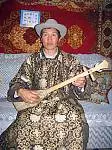
• Revival of traditions: Restoration of the Altai yatga (zither) and revival of epic chanting as a living practice.
• State-level recognition: Presidential decrees elevated the epic to national cultural policy.
• Academic advancement: One bearer defended a doctoral degree, introducing the epic into scientific discourse.
• Succession training: Over 1,000 students and 1,300 children engaged in training, competitions, and events, fostering a new generation of epic singers.
• International promotion: Performances disseminated in more than 100 countries, including stages at the UN, universities, and major festivals.
Challenges:
• Limited research support: Reliance on individual bearers, with weak institutional organization.
• Financial instability: Frequent reliance on personal funding for international participation.
• Training system weaknesses: Apprentice and children’s training sometimes interrupted, not fully integrated into formal curricula.
• Archiving gaps: Documentation exists, but comprehensive archives and systematic classification remain incomplete.
• Continuity risks: Lack of long-term policies to support new generations threatens succession.
Safeguarding Measures Implemented
• Participation of epic singer E. Baatarjav in major international productions (e.g., National Geographic), performing Altai Chingel Baatar.
• Revival and promotion of Jangar epic in New York and other global cities, alongside local festivals.
• Government-supported training of the first Jangar teachers, involving over 1,000 youths; apprentice trainings held in rural areas.
• Organization of the “Epic of Central Asia – III” Symposium-Festival by the Ministry of Culture, Sports, Tourism, and Youth.
• Launch of the “Nomadic World Cultural Festival”, featuring performances by Mongol epic bearers.
• Publication of compilations (Epic of Bum Erdene, Epic of Khan Kharangui) in 2025 by the “Tod Nomyn Gerel” Center.
• Presidential Decrees enshrining heroic epics (Argil Tsagaan Uvgun, Khan Khargui, Khilen Galzuu Baatar, Naran Khan Khuvuun) in the State Ceremonial Palace (2021.11.08).
• Presidential Decree No. 13 (2019.01.29) “On Honoring and Promoting Mongol Heroic Epics,” followed by performances of Altai Praise and Naran Khuvuun Khan (2022.02.10).
• First-ever performance of the Altan Khar Torts Epic at the Bogd Khaan Palace Museum on 2024.11.04, marking the 862nd anniversary of Chinggis Khaan’s birth and “Mongolian Pride Day.”
The safeguarding of the Mongol Epic has achieved significant revival, recognition, and international dissemination. However, challenges remain in research support, financial sustainability, archiving, and long-term succession planning. Continued collaboration between state institutions, bearers, and international partners is essential to ensure the vitality of this heritage for future generations.
A.7.
Contact person for correspondence
Provide the name, address and other contact information of the person responsible for correspondence concerning the report.
Title (Ms/Mr, etc.)
Ms
Family name
Tserendorj
Given name
Tsolmon
Institution/position
Coordination Officer for Policy Implementation of Intangible Cultural Heritage Department of Cultural Heritage Ministry of Culture
Address
Denver Street
7th Khoroo
Sukhbaatar District
Ulaanbaatar 210620a
Telephone number
+976 99057308; +976 51 265617
E-mail address
Tsolmon.ncch@gmail.com
Other relevant information
B
Ms
B. Status of element inscribed on the Urgent Safeguarding List
Refer to the nomination file or to previous reports, if any, as the basis for reporting on the current status of the element, and report only on relevant changes since the date of inscription on the List or since the previous report. Nomination files, specific timetables and earlier reports, if any, are available at https://ich.unesco.org or from the Secretariat, upon request.
The State Party shall pay special attention to the role of gender and shall endeavour to ensure the widest possible participation of the communities, groups and, where applicable, individuals concerned as well as relevant non-governmental organizations during the process of preparing this report, and is asked to describe how it has done so in point D below.
B.1.
Social and cultural functions
Please explain the social and cultural functions and meanings of the element today, within and for its community, the characteristics of the bearers and practitioners, and any specific roles or categories of persons with special responsibilities towards the element, among others. Attention should be given to any relevant changes related to inscription criterion U.1 (‘the element constitutes intangible cultural heritage as defined in Article 2 of the Convention’).
Social and cultural functions
Mongol Epic is a monumental poetic tradition that preserves the collective memory of Mongol people. Passed down orally through generations, it has been safeguarded by hereditary epic singers whose intellectual discipline, linguistic mastery, and ritual devotion sustain its vitality. At its core, the epic celebrates the vision of a stable state and a harmonious society, embodied in the figure of the mounted hero, a symbol of Mongol aspirations and values.
This art form represents the pinnacle of expression in the Mongolian language. Among the Oirat Mongols, epics often extend from 4,000 to 12,000 lines, while Khalkh versions average 1,000 lines. The most remarkable example is oral epic Bum Erdene, which reaches an astonishing 51,265 lines, all preserved and performed from memory. Such feats highlight the extraordinary skill and dedication of epic singers.
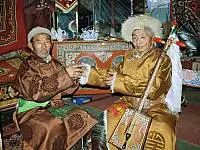
Mongol epics are not merely stories; they weave together ancient mythological thought, oral folklore, historical memory, ethnographic detail, customs, beliefs, aesthetics, morality, dialects, and music. In doing so, they embody the spiritual and artistic essence of the Mongol people and affirm their distinct cultural identity within the wider world. Performances are typically accompanied by traditional instruments such as tovshuur, morin khuur, or ikil, and delivered in a recitative style. These renditions are deeply purposeful, integrated into rituals of worship, devotion, and ceremonial respect. Epics are classified as “hard” or “soft,” each serving specific functions, whether blessing a marriage, preparing for a hunt, or marking other significant life events. Thus, the epic is both a verbal art and a vessel of ancient integrated artistry.
The heroic epics are inseparable from ritual devotion. Singers are ceremonially invited days in advance, their tovshuur adorned with a scarf and carried on horseback as a joyful announcement of the forthcoming event. The choice of epic, hard or soft, depends on the circumstances. For household peace and prosperity, Khaan Tsetsen Zurkhai is performed; for abundance, Bayas Tsagaan Övgen; for health and longevity, Argil Tsagaan Övgen or Naran Khövön Khaan; for fortune, Ezen Ulaan Bodon; and for fertility, Erkh Nachin Khartsaga or Naran Khaan Khövön. Newlyweds often turn to soft epics like Altan Khövch to bless their union. In contrast, during times of misfortune, curses, or war, hard epics such as Khaan Kharangui, Baatar Khar Jandalba, or Khüch Ikhtei Khürel Khaan are invoked to confront adversity.
Strict rules govern epic performance. For instance, Khaan Kharangui is a hard epic reserved for particular households and occasions. Seasonal rhythms also dictate practice: epics are not performed after summer, once celestial sounds are said to emerge. Instead, performances are concentrated in early winter, from December 25 until the Tsagaan Sar (Lunar New Year ). This timing reflects practical considerations, herders’ availability, livestock conditions, the land’s tranquillity, and the singer’s health, refined through centuries of tradition.
Epic singers embody the intellectual, spiritual, and artistic responsibilities of their communities. Through their preservation and performance, and the audience’s participation, Mongolia maintains one of the world’s few surviving living traditions of epic poetry, a testament to the enduring power of oral heritage.
B.2.
Assessment of its viability and current risks
Please describe the current level of viability of the element, particularly the frequency and extent of its practice, the strength of traditional modes of transmission, the demographics of practitioners and audiences and its sustainability. Please also identify and describe the threats, if any, to the element's continued transmission and enactment and describe the severity and immediacy of such threats, giving particular attention to any strengthening or weakening of the element’s viability subsequent to inscription.
Assessment of its viability and current risks
Efforts to strengthen the viability of the Mongol Epic have advanced in recent years through a variety of initiatives. Systems for registration and information management have been refined, the skills of epic singers have been systematically assessed, and inventory, surveys, and regional research have been organized. Scholarly volumes compiling the finest examples of epic heritage have been published, ensuring wider access and preservation. These undertakings have involved collaboration among state institutions, non-governmental organizations, researchers, and the singers themselves. Training quality for apprentices has been prioritized, academic conferences have provided platforms for exchange, and local-level promotion has expanded. Festivals such as ‘Jangar’ gatherings, designed to train and inspire younger performers, have become more stable. Importantly, epic singers are now invited to perform at rituals such as ‘ovoo’ worship ceremonies, signalling meaningful progress in integrating the tradition into contemporary cultural life.
Despite these achievements, significant challenges remain at the national level for safeguarding the Mongol Epic.
Traditional ritual practice under strain: Historically, epics were performed as acts of devotion, with herders inviting singers to chant for the prosperity of livestock, family happiness, fertility, or longevity. In rural areas, this practice is waning, while in urban settings epics are increasingly presented only in fragments, staged as artistic performances rather than full ritual acts. Although this adaptation introduces epics to younger generations and urban audiences, it risks distorting their original meaning and sacred function.
Competitions and festivals impacting tradition: Modern events often overlook the core of epic practice, held at unsuitable times or requiring group performances that break with custom. Novices are judged alongside masters, weakening the hierarchy of skill. Once free from ranking, singers now face contests with large prizes, shifting focus from ritual and cultural roles to competition. Recognition should be based on inherited talent, deep knowledge of Mongol customs and language, moral integrity, and service to society. Though festivals have boosted public interest, the rise of new professional singers remains limited, which is a pressing concern.
Documentation and research gaps: Mongolia has made progress in publishing oral traditions, reprinting manuscripts, and disseminating them to the public. Nevertheless, research remains insufficient, with relatively few scholars dedicated to epic studies. Greater economic, educational, financial, and psychological support for singers is urgently needed to sustain the tradition.
Decline of epic centers: Once widespread across ethnic groups, epic traditions were anchored in strong centers of transmission. Social, historical, and political changes have caused many of these centers to fade. Research indicates that in areas considered “extinct,” elderly individuals still exist who, though not professional singers, know epics by heart and recite them within families. Many of these individuals do not fully recognize the heritage value of their knowledge, often viewing it as a practice confined to groups with stronger preservation. Reviving epic traditions among communities considered “forgotten” and ensuring equitable recognition across all groups is therefore essential.
In sum, while Mongolia has made notable progress in revitalizing the Mongol Epic, sustaining its tradition and ensuring its transmission across diverse communities remain pressing challenges.
B.3.
Implementation of safeguarding measures
Please report on the safeguarding measures described in the nomination file, and previous report, if any. Describe how they have been implemented and how they have substantially contributed to the safeguarding of the element during the reporting period, taking note of external or internal constraints such as limited resources. Include, in particular, information on the measures taken to ensure the viability of the element by enabling the community to continue to practise and transmit it. Include the following detailed information concerning the implementation of the set of safeguarding measures or safeguarding plan:
B.3.a.
Objectives and results
Indicate what primary objective(s) were addressed and what concrete results were attained during the reporting period.
Objectives and results
After the inscription of the Mongol Epic on UNESCO’s List of Intangible Cultural Heritage in Need of Urgent Safeguarding, the President of Mongolia issued a decree “On Honoring and Promoting Heroic Epics,” and the Government adopted the National Program for the Safeguarding of Intangible Cultural Heritage, along with its subsidiary sub-programs, which continue to be implemented.
In Mongolia’s long-term development policy document Vision 2050, cultural values, cultural resilience, and the dissemination and enhancement of national culture are defined, including stages of implementation, scope, cultural spaces, and methods of dissemination. This has become highly significant for the heritage, tradition, and transmission of the Mongol Epic.
In 2021, the Government of Mongolia decided to establish Departments of Culture and Arts in the provinces. Previously, cultural issues were handled by only a few staff within the “Education, Culture and Arts Department” under provincial governors’ offices. This restructuring has improved the safeguarding of intangible cultural heritage, enhanced the quality and accessibility of cultural services, and created opportunities to implement state cultural policy at the local level. It is considered that this has already had a positive impact on the Mongol Epic element and will continue to be effective under the Ministry of Culture, Sports, Tourism, and Youth.
During the previous reporting period, the Government’s National Program for Safeguarding Intangible Cultural Heritage set out the following main objectives, which remain relevant and effective in the current reporting period:
1. Creating a cultural environment for the epic, preparing listeners and readers, enhancing knowledge of minor oral genres, emphasizing the ritual functions of the epic, and ensuring that learners acquire broad knowledge about the epic; safeguarding and preserving this environment.
2. Promoting the three great Mongol epics, Geser, Jangar, and the Heroic Epics, as representative large-scale epics to be widely recognized, studied, and disseminated, while honoring epic singers.
Within these objectives, the following specific tasks were pursued:
• Continuing to implement new targeted projects to safeguard the Mongol Epic and its cultural environment, and to promote it widely among the public.
• Regularly organizing academic and theoretical-practical conferences to study and promote the Mongol Epic, epic singers, and the cultural environment.
• Improving the methodology of epic registration and information systems, developing unified standards at the soum, district, provincial, and national levels, documenting schools and repertoires of highly skilled epic singers, and establishing classification systems to rank singers as national-level, provincial-level, or beginners.
• Re-launching the “Epic” sub-program, supporting epic centers, and organizing campaigns directed at bearers of the tradition.
As a result, concrete activities have been undertaken to safeguard the Mongol Epic as a ritual of devotion and worship, and to protect the cultural space of the nomadic people’s epic tradition. Epic training has been regularly organized, the viability and scope of practice have expanded, and the unified epic archive continues to be enriched
B.3.b.
Safeguarding activities
List the key activities that were carried out during this reporting period in order to achieve these expected results. Please describe the activities in detail and note their effectiveness or any problems encountered in implementing them.
Safeguarding activities
By Presidential Decree “On Promoting Mongol Heroic Epics,” it was legislated that honoring, safeguarding, registering, researching, transmitting, internationally promoting, and supporting the activities of epic singers, researchers, and bearers shall be a collective responsibility of society.
The Government of Mongolia has incorporated multifaceted policies on safeguarding, transmission, and promotion of the Mongol Epic into the country’s main development directions, policy documents, and the National Program for Safeguarding Intangible Cultural Heritage. These demonstrate the tangible results achieved in safeguarding the Mongol Epic.
International Projects Implemented
• As a model for safeguarding, the large epic Jangar, which spans the territories of three countries (Mongolia, the Kalmyk community of the Russian Federation, and Altai Prefecture in Xinjiang, China), was selected. Several projects were successfully implemented at international, national, and local levels, jointly carried out by state and non-governmental organizations, with the participation of epic singers and researchers.
National Safeguarding Activities
• From the “Palace of the King of Epics,” the tradition was established of broadcasting live epic chanting nationwide on Bituun Night (the eve of Lunar New Year, the last day of the lunar calendar’s final winter month, when people traditionally stay awake, chant epics, tell stories, and play games). This practice has been institutionalized. By Presidential decree, heroic epics are now performed annually in the State Ceremonial Palace during Lunar New Year and Mongolian Pride Day.
• Previously, people sought blessings for health and happiness by visiting Buddhist temples to have Tibetan scriptures read. Now, with the revival of ancient ritual practice, many prefer to attend epic chanting ceremonies. Epic singers explain the meaning of the epic before chanting, which helps preserve its essence. Therefore, safeguarding the traditional practice of chanting and narration requires strong cooperation among cultural institutions, NGOs, singers, and researchers.
Projects in Cooperation with NGOs
• In 2023, the “Tod Nomyn Gerel” Center organized the international conference “T. Jamts-90: Issues in Jangar Studies and ‘Tod’ Script Studies.”
• In 2025, together with the Buddha Dharma Institute for Religion and Cultural Studies, the international conference “Parchin and Issues in the Historical Development of the Mongol Epic” was held (co-organized with the Institute of Language and Literature, Mongolian Academy of Sciences).
• In 2025, the “Tod Nomyn Gerel” Center published new volumes in the Oirat Studies Library Series to mark the 170th anniversary of epic singer M. Parchin’s birth:
• Volume 138: Epic of Khaan Kharangui (edited by N.A. Sukhbaatar, prepared with introduction, glossary, and modern Mongolian translation by B. Tuvshintugs).
• Volume 139: Epic of Bum-Erdene (edited by N.A. Sukhbaatar, prepared with introduction, glossary, and modern Mongolian translation by B. Tuvshintugs).
Individual Initiatives and Contributions
• Epic singer E. Baatarjav staged Mongol Cultural Heritage Around the World concerts (Parts 4 and 5) from 2022 to 2025, presenting epic performances in more than ten countries across America, Africa, and Europe. At home, he opened the 100th and 101st anniversaries of the People’s Revolution during the Naadam festivals of 2022–2023 with epic chanting, led the ritual performance of Bayan Tsagaan Uvgun at the “Nomadic” International Festival in Ulaanbaatar, and featured in major National Geographic productions filmed in Mongolia, performing Altai Chingel Baatar. He further contributed to scholarship by presenting on “Features of Ancient Epics of the Avargas” at the Central Asian Epic Symposium, served as a judge in the epic category at the “Tea Road” Festival in Khovd, and co-produced the television series Epic Road with Mongolian National Television.• On December 21–22, 2023, at the “King of Epics Jangar-2023” event in Altai city, he chanted Jangar for two days together with 1,300 apprentices. State epic singer A. Baldandorj, representatives of the Ministry of Culture, and the Altai Ensemble also participated.
• In 2024, he performed at the state worshipping rituals of Burkhan Buudai, Tavan Bogd, and Suvaraga mountains, and was invited to Uvs province to chant in full the epics Bum-Erdene and Dani Khürel as transmitted by the renowned singer M. Parchin. He also organized an epic festival with Mandal Financial Institution, chanting Zul Aldar Khaan in full, and participated for the fifth time in the Altai Yatga ritual at “Umnukh’s Mouth” in Manhan soum, Khovd province, in 2025, as well as in the state ritual at Bogd Khaan Mountain.
• Epic singer A. Baldandorj conducted apprentice training beyond Govi-Altai province: in 2022, he trained 30 children at School No. 14 in Ulaanbaatar; in 2023, 25 children at School No. 53; in 2023, 15 learners in Ubain city, France; and in 2025, apprentices in Duut soum, Khovd province.
B.3.c.
Participation of communities, groups or individuals in the safeguarding activities
Describe how communities, groups or, if appropriate, individuals as well as relevant non-governmental organizations have effectively participated, including in terms of gender roles, in the safeguarding measures. Describe the role of the implementing organization or body (name, background, etc.) and the human resources that were available for implementing safeguarding activities.
Participation of communities, groups or individuals in the safeguarding activities
Between 2022–2025, efforts to revive the Jangar epic were initiated in Govi-Altai province, including teacher preparation. In 2022, phased training was conducted both online and in person through cultural centers and secondary schools in all soums of the province, involving more than 1,000 youths and students. In cooperation with the provincial governor’s office, the Department of Culture and Arts, and other organizations, the chanting of Jangar was successfully organized in Yesunbulag soum. At the end of 2022, students who had learned to chant Jangar received additional training in the epic Agiiin Ulaan Khaan.
Under the leadership of epic singer E. Baatarjav, the event was joined by S. Narankhuu, head of the “Das Ikher” Foundation from Ulaanbaatar, epic singer L. Baatarkhuu, researcher T. Bayasgalan, and Otgonbaatar from the Mongolian National University of Education. Together, they performed and disseminated chapters of Jangar in Khovd and Govi-Altai provinces.
Institutions “Tod Nomyn Gerel” Center for History, Culture, and the Philology and the Buddha Dharma Institute for Religion and Culture initiated and organized the international conference “Issues in Jangar Studies and Clear Script Studies” dedicated to the 90th anniversary of the renowned Chinese scholar Jamtsaa. In 2025, it published two research volumes: Epic of Bum-Erdene and Epic of Khaan Kharangui. The Buddha Dharma Institute organized an international conference in Kharigas soum, Uvs province, on “Parchin and Issues in the Historical Development of the Mongol Epic” to mark the 170th anniversary of the famous Bayad epic singer Mandikhany Parchin.
Cultural Merit Laureate, State Honored Epic Singer, and Doctor E. Baatarjav represented Mongolia at international oral heritage conferences from 2022 onwards. He launched “Mongol Cultural Heritage Around the World – 3” in Asia, Central Asia, and India, and collaborated with Bollywood singer Mohit Chauhan to create the first epic-themed song, reaching millions of viewers. In 2023, he organized “Mongol Cultural Heritage Around the World – 4” in America and Europe with his ensemble “Yazguur Ayalguu,” delivering lectures and demonstrating traditional rituals.
He performed at the UN Representative Office in New York and the annual meeting of the prestigious Explorers Club. He gave an interview on throat singing and epics to journalist J. Aileen’s online magazine, and in Mount Kisco.
In New York, at the initiative of John Saini, founder of “Grow Mongolia,” an Epic Day was organized, featuring Mongolian national costumes, epic chanting, and throat singing techniques, together with Washington resident G. Uranaa.
At Hungary’s Danube Carnival, marking the 200th anniversary of the national emblem, the epics Taliin Khar Bodon and Altai Chingel Baatar were performed, and the opening ceremony featured Praise of the Altai Mountains, earning the “Chain Bridge” award.
At the 12th Congress of World Mongol Scholars, E.Baatarjav presented a paper on “Scope and Spatial Features of the Mongol Epic.” In 2024–2025, he successfully organized “Mongol Cultural Heritage Around the World – 5” under the theme “Features of the Mongol Epic,” with lecture-concerts in Hong Kong, Singapore, and multiple Australian cities, as well as tours in nine African countries, Madagascar, Switzerland, Greece, and Egypt.
B.3.d.
Timetable
Indicate in a timetable when each activity was implemented.
Timetable
• On 20 December 2022, at the initiative of the Ministry of Culture, the III International Symposium-Festival on Central Asian Epics was organized in Ulaanbaatar.
• In November 2024, the Institute of Language and Literature of the Mongolian Academy of Sciences, in cooperation with Mongol Post LLC, created a postage stamp themed on the “Father of Mongol Epics – Erkhii Sain Khaan Kharangui.” Alongside this, a public discussion titled “Heritage of the Mongol Epic” was held with the National Center for Cultural Heritage, and an exhibition of Jangar epic drawings was opened.
• On 11 November 2024, a Jangar Studies event was organized; in 2023, the “Light of the Clear Script” Center held the international conference “T. Jamts-90: Issues in Jangar Studies and Clear Script Studies.” On 17 May 2025, the Buddha Dharma Institute for Religion and Cultural Studies organized the international conference “Parchin and Issues in the Historical Development of the Mongol Epic.”
• In June 2025, the “Tod Nomyn Gerel” Center published compilations of the Epic of Bum-Erdene and the Epic of Khaan Kharangui.
• In Galut soum, Bayankhongor province, the project “Blue Flame” was initiated and implemented between 2023–2024 to revive and transmit both tangible and intangible cultural heritage to future generations.
• Epic chanting events of the King of Epics – Jangar were organized in the center of Govi-Altai province on 12–13 February 2023 and 21–22 December 2023.
• Since 2021, Umnugovi province has conducted research to revive forgotten epics. In August 2022, the ensemble “Golden Heritage” was established by senior epic singers. In March 2024, apprentice training was organized for 20 students of Tsogt-Ovoo secondary school and 20 elders of Dalanzadgad soum (40 participants in total), focusing on the epic Eighteen-Year-Old Aryal Tumen Khaan. In 2022, apprentice training was also conducted for 32 children in Tsogt-Ovoo soum.
• On 2 February 2024, a ceremonial performance of Oirat heroic epics was held in Ulaangom city, Uvs province.
• In Khovd province, between 25–28 October 2023, the III “Tea Road Cultural Heritage Festival” was organized. Within its framework, a Mongol epic competition was held at the provincial Musical Drama Theatre. The festival, first launched in 2015, was held for the third time to introduce traditional epic art to younger generations, ensure transmission, and honor bearers. During the event, an academic conference on epic studies was also convened.
B.3.e.
Budget expenditures
Provide the detailed amounts of the funds used for the implementation of each activity (if possible, in US dollars), identifying the funding source for each (governmental sources, in-kind community inputs, etc.).
Budget
• In Bayankhongor province, the Institute of Language and Literature of the Mongolian Academy of Sciences, together with the Mongolian State Conservatory of Music and Dance, organized training on 21–22 June 2022 for more than 30 participants, including artists of the provincial Drama Theatre, folk talents, cultural workers, and monks of the Gandantegchinlen Monastery. The aim was to revive and transmit the forgotten intangible cultural heritage specific to the region, namely Gür Song and Khalkh Epic. A festival of epics and songs was held, with a budget expenditure of 1.3 million MNT.
• In Govi-Altai province, the chanting event “King of Epics – Jangar” held in February 2023 cost USD 45,713 in total: USD 8,571 from the state budget, USD 17,142 from the local budget, and USD 20,000 from donations. The December 2023 event was funded with USD 39,428 from the local budget, and the December 2024 event with USD 39,428 from the state budget. Altogether, the Jangar chanting events of 2023–2024 amounted to USD 124,569.
• In Umnugovi province, research to revive forgotten epics has been conducted since 2021. In August 2022, with the support of the provincial governor, the senior epic singers’ ensemble “Golden Heritage” was provided with musical instruments and costumes worth 8,740,000 MNT.
• In March 2024, apprentice training was organized for 20 students of Tsogt-Ovoo secondary school and 20 elders of Dalanzadgad soum (40 participants in total), transmitting the epic Eighteen-Year-Old Aryal Tümen Khaan. The local budget provided 1,000,000 MNT as an honorarium to the teaching master.
• In Nomgon soum, Ömnögovi province, in 2022, a performance was organized to honor intangible heritage bearers. Eight performers participated, including renowned bearer J. Dagvasambuu, who chanted three epics in full. The soum governor’s office allocated 500,000 MNT for the event.
• In Khovd province, during the IV “Jangar – Tea Road Cultural Heritage Festival” held in October 2023 in Khovd city, a total of 150 million MNT was spent. Of this, 37 million MNT was allocated specifically for the “Mongol Epic Festival” segment, aimed at introducing traditional epic art to younger generations, ensuring transmission, and honoring bearers.
B.3.f.
Overall effectiveness of the safeguarding activities
Provide an overall assessment of the effectiveness of the activities undertaken to achieve the expected results and of the efficiency of the use of funds for implementing the activities. Please indicate how the activities contributed to achieving the results and whether other activities could have contributed better to achieving the same results. Also indicate whether the same results could have been achieved with less funding, whether the human resources available were appropriate and whether communities, groups and individuals could have been better involved.
Overall effectiveness of the safeguarding activities
• In 2023, Uriankhai epic singer N. Damdindorj, who made an exceptional contribution to promoting and disseminating the Mongol Epic both nationally and internationally as a major representative of intangible cultural heritage, was recognized in Khovd Province as the “Best of the Best Heritage Bearer.” He was awarded an Honorary Certificate and a monetary prize, setting an important precedent for encouraging and supporting local heritage bearers.
• The comprehensive research project “Jangar – Epic Studies” intensified during the reporting period. In Khovd and Govi-Altai provinces, “Jangar” festivals, academic conferences, and training programs focused on epic studies and dissemination became regular and highly anticipated events among the public. Within Mongolia, the great epic Jangar has become the hallmark of epic training, promotion, and scholarship. Going forward, attention must be given to practical outcomes: clarifying the epic's traditional uses and ritual features, improving training, preparing a new generation of epic singers, and establishing a digital archive of epics for all Mongol peoples. Mongolian scholars have gained valuable experience collaborating with researchers of Mongol descent abroad, and a specialized team has now been formed to expand this work.
• Since 2022, epic singer E. Baatarjav has personally funded the project “Mongol Cultural Heritage Around the World”. This initiative has introduced Mongolian culture, especially the epic tradition, to diverse peoples worldwide, while inspiring Mongols living abroad to take pride in their history and heritage. Through themed concerts, lectures, demonstrations, and rituals, the project has required significant effort and has yielded meaningful results. However, such initiatives urgently need financial support. Moreover, given that in some regions of Mongolia, infrastructure is underdeveloped and heritage bearers cannot easily reach remote areas to perform epics in person, the project could also be implemented domestically to address these gaps.
• Publications on Mongol epic studies have been produced by the Institute of Language and Literature of the Mongolian Academy of Sciences, the ‘Tod Nomyn Gerel’ Center, other NGOs, and individual researchers. While these works contribute to scholarship, the number of researchers remains insufficient. Many scholars write monographs with minimal funding and publish them at their own expense, revealing the severe lack of resources and heavy workload in the field. At present, only about three to four specialized researchers are actively engaged in epic studies nationwide. Some have retired due to age, while others conduct epic research alongside other projects, with little change in the situation. There is an urgent need to train and prepare a new generation of epic scholars.
C
Tserendorj
C. Update of the safeguarding measures
C.1.
Updated safeguarding plan
Please provide an update of the safeguarding plan included in the nomination file or in the previous report. In particular provide detailed information as follows:
- a. What primary objective(s) will be addressed and what concrete results will be expected?
- b. What are the key activities to be carried out in order to achieve these expected results? Describe the activities in detail and in their best sequence, addressing their feasibility.
- c. How will the State(s) Party(ies) concerned support the implementation of the updated safeguarding plan?
Updated safeguarding plan
Objective 1
• Enhance legal environment
Objective 2
• Revive former epic centers across Mongolia.
• Deploy research teams to identify whether epic traditions remain among ethnic groups.
• Revive living traditions that have not yet been interrupted among Khalkh, Barga, Uzemchin, and Buryat groups, through collaboration between professional researchers and bearers, based on living evidence.
• Identify young people with lineage and aspiration to learn the epic, provide training, increase the number of epic singers, and expand coverage.
Objective 3
• Consolidate achievements of past projects and strengthen viability by improving apprentice training of Uriankhai, Zakhchin, Bayad, and Durvud epics, and supporting local bearers.
• Organize a national consultative meeting of epic singers, analyzing public opinion.
• Implement targeted projects to enhance the positive social impact of epic singers and support conditions for their cooperation.
Objective 4
• Continue safeguarding and promoting the cultural space of the epic.
• Expand regional relations to establish the Mongol epic’s cultural space. Neighboring peoples, Oirat, Buryat, Kalmyk, Inner Mongolian, Tuvan, Altai, Khakas, Yakut, Kyrgyz, share heroic epics of common origin that developed divergently. Comparative study of similarities and differences in structure, content, worldview, chanting styles, cultural safeguarding, training, and promotion will strengthen mutual learning and joint safeguarding.
• Organize the International Symposium and Festival “Central Asian Epic” under the auspices of the President of Mongolia at the regional level.
• To preserve the cultural environment of the Mongol epic, organize ritual festivals with epic singers in the western, central, and Gobi regions, combined with local cultural festivals.
• Provide state policy support to provinces and soums that revive and promote the epic.
Objective 5
• Deepen research on the epic.
• Establish a unified digital archive of Mongol ethnic epics, linked to the Cultural Heritage Center’s registry and database.
• Repatriate written manuscripts, audio, and video recordings of Mongol epics preserved abroad, and make them publicly accessible.
• Compile and publish epic works and oral history materials preserved by researchers, singers, and enthusiasts.
Expected Results
• The supporting mechanism for practitioners of intangible cultural heritage will be enhanced.
• Revival and safeguarding of epic centers among Khalkh, Barga, Uzemchin, Buryat, and Torguud groups.
• Increase in the number of interested individuals and researchers.
• Improved activity and attitudes of epic singers, enhancing their positive social impact.
• Greater public, institutional, and individual participation in safeguarding and promoting the epic.
• Strengthened cultural environment and space of the epic, leading to growth in cultural tourism, improved research, and higher recognition of epic singers.
Planned Activities to Achieve Results
• The “Law on Supporting Practitioners of Intangible Cultural Heritage” will be elaborated and adopted in 2026.
• Revive 2–4 epics among specific ethnic groups, strengthening the generations of singers.
• Support rural epic singers by addressing social issues, producing 2–3 documentary films for international promotion.
• Organize exhibitions and publish compilations based on epic materials preserved abroad or by researchers, singers, and enthusiasts.
• Conduct educational tours to learn from the safeguarding practices of neighboring countries and exchange experiences.
• Convene international academic conferences and national consultative meetings.
• Support NGOs and community associations working in the field of epics.
• Announce creative competitions for epic-related content among artists.
• Ensure policy, organizational, financial, and investment support from the Government of Mongolia, the Ministry of Culture, Sports, Tourism and Youth, the Ministry of Education and Science, the Agency for Cultural Heritage, Cultural Heritage Center, the UNESCO National Commission of Mongolia, NGOs, artists, bearers, apprentices, researchers, and citizens to implement the updated safeguarding plan.
C.2.
Timetable for future actitivies
Provide a timetable for the updated safeguarding plan (within a time-frame of approximately four years).
00311,00312,00543,00871,00873,01061
Timetable
2026–2027
A detailed plan will be developed in alignment with the objectives set out in Mongolia’s long-term development program and the strategic plan of the Ministry of Culture, Sports, Tourism, and Youth. This plan will incorporate the proposals of epic bearers, singers, and community groups.
• The supporting mechanism for practitioners of intangible cultural heritage will be enhanced, and the “Law on Supporting Practitioners of Intangible Cultural Heritage” will be elaborated and adopted in 2026.
• Professional institutions will appoint specialized research teams to conduct detailed studies on the distribution, heritage, melodies, and bearers of Mongol epics among ethnic groups, producing regional mapping.
• Based on research, experts will initiate revival of 1–3 epics among three ethnic groups (Khalkh, Buryat, Uzemchin), and re-document and preserve 3–5 previously chanted epics among three other groups (Uriankhai, Bayad, Durvud).
• Apprentice training will be enhanced, preparing disciples under the guidance of three to four master singers.
• Through cultural envoys abroad, diplomatic relations, and citizen cooperation, exhibitions will be organized and compilations published using epic materials preserved overseas. Connections will be established with organizations of Mongolian citizens living and studying abroad, involving them in safeguarding efforts.
• A consultative meeting of Mongol ethnic epic singers will be held in Ulaanbaatar.
• A creative competition for epic-related content will be announced among artists.
• At the national level, recordings of epics preserved by the Institute of Language and Literature of the Mongolian Academy of Sciences, the National Center for Cultural Heritage, the Bogd Khaan Palace Museum, Mongolian National Television, and individuals will be transcribed and published. The repertoires of contemporary epic singers will be fully documented.
2028–2029
• To support rural epic singers, measures will be taken to address and ease their social issues. At least two documentary films will be produced, showcasing Mongol epic singers, ritual environments, and authentic qualities, and promoted internationally.
• Educational tours will be organized in regions where living epic traditions are preserved or revived.
• The International Festival “Central Asian Epic” will continue to be organized.
• NGOs and community associations working in the field of epics will be supported with targeted assistance.
• Archives and databases of epic heritage will be established, research strengthened, and young scholars supported.
• Long-term policies and programs will be developed to provide stable support for new generations of epic singers.
• Assessment will be conducted on the viability of this heritage element based on the research and inventory.
C.3.
Budget for future activities
Provide the estimates of the funds required for implementing the updated safeguarding plan (if possible, in US dollars), identifying any available resources (governmental sources, in-kind community inputs, etc.).
Budget
1 Appoint specialized research teams from professional institutions to conduct detailed studies on the distribution, heritage, melodies, and bearers of Mongol epics among ethnic groups, and produce regional mapping. 2027 State budget 10,000
2 Based on research, initiate revival of 1–3 epics among two ethnic groups (Khalkh, Buryat, Uzemchin); re-document and preserve 3–5 previously chanted epics among three groups (Uriankhai, Bayad, Durvud). Enhance apprentice training and prepare disciples under 3–4 master singers. 2026–2027 State and local funding 10,000
3 Through cultural envoys abroad, diplomatic relations, and citizen cooperation, organize exhibitions and publish compilations using epic materials preserved overseas. Establish links with organizations of Mongolian citizens living and studying abroad, involving them in safeguarding. 2026–2027 State budget and project funding 7,500
4 Organize a consultative meeting of Mongol ethnic epic singers in Ulaanbaatar. 2026 Project funding and citizen contributions 10,000
5 Announce a creative competition for epic-related content among artists. 2027 State budget 6,000
6 At the national level, transcribe and publish epic recordings preserved by the Institute of Language and Literature (MAS), National Center for Cultural Heritage, Bogd Khaan Palace Museum, Mongolian National Television, and individuals. Fully document repertoires of contemporary epic singers. 2027 State budget 9,500
7 To support rural epic singers, address and ease their social issues. Produce at least two documentary films showcasing Mongol epic singers, ritual environments, and authentic qualities, and promote internationally. 2028 State and local funding 9,500
8 Organize educational tours in regions where living epic traditions are preserved or revived. 2029 State and local funding 7,500
9 Continue organizing the International Festival “Central Asian Epic.” 2029 State and other funding 7,000
10 Establish archives and databases of epic heritage, strengthen research, and support young scholars. 2029 State and other funding 6,000
Total (2026–2029): 10 activities, USD 83,000
C.4.
Community participation
Please describe how communities, groups and individuals, as well as relevant non-governmental organizations have been involved, including in terms of gender roles, in updating the safeguarding plan, and how they will be involved in its implementation.
00147
Community participation
The forthcoming plan will be jointly advanced by the Head of the Mongol Epic NGO, Epic Singer A. Baldandorj; Epic Researcher, Doctor of Cultural Studies, Cultural Envoy of Mongolia, and Honored Cultural Worker E. Baatarjav; Ethnographer, Doctor of History, and Advisor to the National Center for Cultural Heritage M. Ganbold; together with the Departments of Culture, Arts, Tourism, and Youth of all 21 provinces, and tradition bearers.
The initiative will be organized to promote training and awareness on the distribution, heritage, and custodians of the Mongol epic. Efforts will focus on reviving the tradition by engaging ethnic communities, consulting with cultural heritage NGOs, and fostering collaborative action.
Research institutions, epic singers, and independent scholars will be actively involved in documenting, analyzing, and disseminating knowledge related to the epic tradition.
Connections will be established with organizations of Mongolian citizens living and studying abroad. Apprenticeship training and teaching of the epic will be conducted online, aiming to safeguard knowledge of the mother tongue and provide opportunities to reconnect with native history and culture.
Special attention will be given to encouraging the initiatives of epic singers themselves. Recognizing that the number of NGOs in this field is limited and their activities irregular despite national registration, conditions will be created to ensure their active participation and sustainability.
Artists will be encouraged to promote the Mongol epic through creative initiatives, collaborating in the production of artistic content, and contributing to the development of cultural industries.
Cooperation will be expanded with foreign researchers, epic singers, and relevant institutions, strengthening international partnerships in safeguarding and revitalizing the tradition.
C.5.
Institutional context
Please report on the institutional context for the local management and safeguarding of the element inscribed on the Urgent Safeguarding List, including:
- a. the competent body(ies) involved in its management and/or safeguarding;
- b. the organization(s) of the community or group concerned with the element and its safeguarding.
2005-06-29
Institutional context
A. Ministry of Culture, Sports, Tourism and Youth
Address: Ministry of Culture of Mongolia, 7th khoroo, Sukhbaatar District, Ulaanbaatar, Mongolia
Specialist: Tserendorj Tsolmon
Specialist responsible for coordinating the implementation of intangible cultural heritage policy
Phone: +976-51-265617
Fax: +976-
Email: tsolmon@moc.gov.mn
Mobile: +976-99057308
Email: info@moc.gov.mn
Website: moc.gov.mn
B. Government Implementing Agency Culture and Arts Authority
Address: Mongolia, Ulaanbaatar City, Sukhbaatar District, 8th khoroo, Cultural Palace, Building G, 6th floor
Senior Specialist: Jargalsaikhan Nasanjargal
Responsible for intangible cultural heritage affairs
Mobile: +976-99086285
Email: nasaa08@gmail.com
C. National Center for Cultural Heritage
Address: Mongolia, Ulaanbaatar City, Khan-Uul District, 21st khoroo, Buyant Ukhaa 2 residential area, National Center for Cultural Heritage
Head of Registration and Information Department: Arslan Saruul
Phone: +976-99030405
Email: a.saruul@ncch.gov.mn, saku_tuntic@yahoo.com
D
Tsolmon
D. Participation of communities in preparing this report
Describe the measures taken to ensure the widest possible participation of the communities, groups and, where applicable, individuals concerned as well as relevant non-governmental organizations during the process of preparing this report.
Participation of communities in preparing this report
To ensure broad participation of communities, groups, individuals, and non-governmental organizations in preparing the periodic report, organized measures were undertaken. Based on Article 14, Clause 14.1.10 of the Law on the Protection of Cultural Heritage of Mongolia, Working Group Order A/51 of 2025 was issued by the Director of the Government Implementing Agency – Cultural and Arts Authority, establishing a working group to prepare the “UNESCO Periodic Report on Intangible Cultural Heritage in Need of Urgent Safeguarding.”
In preparing this report, meetings were held with responsible experts from the State Language Council under the Office of the President of Mongolia, the Ministry of Culture, Sports, Tourism and Youth, the Government Implementing Agency – Cultural and Arts Authority, and the National Center for Cultural Heritage, in order to review legal and related documents. Copies of the relevant documents were obtained.
The working group for compiling and drafting the report on “Mongol Epic” included the following individuals and organizations: the National Center for Cultural Heritage under the Ministry of Culture, Sports, Tourism, and Youth; the Departments of Culture, Sports, and Tourism of Gobi-Altai, Bayankhongor, Ömnögovi, Uvs, and Khovd provinces; the “Yazguur Ayalguu” ensemble (E. Baatarjav); and the “Mongol Tuul” NGO (A. Baldandorj).
References and related documents were consulted from the archives of the former Ministry of Education, Culture, and Science, as well as from the Science and Technology sector, and the Folklore Studies Division of the Institute of Language and Literature of the Mongolian Academy of Sciences. Meetings were held with researchers, and published books were reviewed.
Reports and materials sent electronically by all 21 provinces of Mongolia were analyzed, and the relevant information was incorporated into the report.
E
Coordination Officer for Policy Implementation of Intangible Cultural Heritage
Department of Cultural Heritage
Ministry of Culture
E. Signature on behalf of the State Party
The report should be signed by an official empowered to do so on behalf of the State, and should include his or her name, title and the date of submission.
Name
Mr. DAVAATSEREN Byambasuren
Title
The State Secretary of the Ministry of Culture, Sports, Tourism and Youth of Mongolia
Date
12-12-2025
Signature
Upload signed version in PDF