23 October 2025
The fourth meeting of the Bureau of the twentieth session of the Intergovernmental Committee for the Safeguarding of the Intangible Cultural Heritage (composed by France, Slovakia, Barbados, Ethiopia and Mauritania) took place on 23 October 2025. The meeting was chaired by H.E. Mr Vishal V. Sharma, Ambassador and Permanent Delegate of India to UNESCO.
Three International Assistance requests were examined and approved. A total of around US$300,000 has been granted from the Intangible Cultural Heritage Fund.
Egypt received a grant of US$99,840 for a project entitled Safeguarding and capacity-building for the intangible cultural heritage of Al-Aragoz traditional hand puppetry in Egypt. To be implemented by the Cultural Development Fund, the project will support the implementation of safeguarding measures to enhance the viability of an element inscribed in 2018 on the List of Intangible Cultural Heritage in Need of Urgent Safeguarding, the ‘Traditional hand puppetry’. A series of activities and workshops will be undertaken aiming to train new performers, artisans in puppet-making, document traditional knowledge, and enhance the educational and social functions of Al-Aragoz. In addition, the project will adopt an inclusive and gender-balanced approach, with women constituting at least 50 per cent of the trainees in all the training areas.
The Bureau approved a project submitted by Nepal which aims to support the Development of an inventory of intangible cultural heritage covering all seven provinces of the country, with a US$99,033 grant. To be implemented by the UNESCO Office in Kathmandu, in close collaboration with the Ministry of Culture, Tourism and Civil Aviation of Nepal, the project entails raising awareness of the 2003 Convention and promoting its implementation, building capacity for community-based inventorying, and developing an inventory of at least twenty intangible cultural heritage elements. The involvement of bearers and practitioners, including representatives from indigenous communities, will be central to the project, with a particular focus on empowering youth and women as future resource persons.
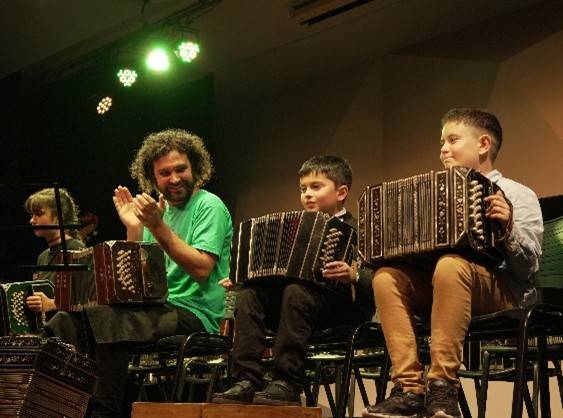
Finally, Uruguay will benefit from a US$89,969 grant to implement the third project approved by the Bureau entitled The sound of Tango – Phase II. The Cienarte Foundation will be responsible for this project aiming at promoting the intergenerational transmission of the Tango tradition through education, artistic activities and publications. It is the second phase of the project ‘The Bandoneon: sound of Tango’ which relates to the multinational element ‘Tango’ inscribed on the Representative List of the Intangible Cultural Heritage of Humanity (Argentina and Uruguay). This project will focus on Tango practice by increasing accessibility for people who are blind or have visual impairments, as well as by training mentors, raising awareness among students, and promoting bandoneon-making skills. The transcription of ‘Master Musician Raúl Jaurena’s Guide to Playing the Bandoneon’ into Braille will contribute to the national inclusion policy in Uruguay and beyond.
All three projects illustrate stronger links made between International Assistance and other international cooperation mechanisms of the 2003 Convention. The requests from Egypt and Nepal stem directly from their periodic reports. While the projects in Egypt and Uruguay will contribute to the safeguarding of elements inscribed on the Lists of the Convention. Furthermore, the activities planned in Uruguay will pilot a new safeguarding approach that explores inclusivity for groups of people with special needs.
The Intangible Cultural Heritage Fund provides dedicated resources for States Parties to implement a wide range of programmes, projects and activities dedicated to safeguarding intangible cultural heritage, such as community-based inventorying, awareness-raising or specific activities such as safeguarding living heritage in emergencies.
Event:
-
Fourth meeting of the 20.COM Bureau (23 October 2025 – 23 October 2025)