Nan Pa’ch ceremony


Your browser is not supported by this application. Please use recent versions of browsers such as Google Chrome, Firefox, Edge or Safari to access 'Dive' interfaces.

Inscribed in 2013 (8.COM) on the List of Intangible Cultural Heritage in Need of Urgent Safeguarding
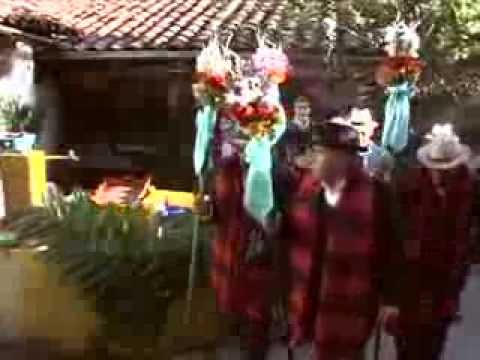
© 2010 by Ministry of Culture and Sports of Guatemala

The Paach ceremony is a corn-veneration ritual celebrated in San Pedro Sacatepéquez. The ceremony gives thanks for good harvests in a ritual that highlights the close connection between humans and nature and features prayers in the Mam language. The participants are mostly older farmers, both men and women, with extensive ties to the community and who are recognized as its leaders. Four prayer sayers, or parlamenteros, offer prayers during the ceremony, supported by four auxiliary parlamenteros; meanwhile four godmothers dress ceremonial corncobs and coordinate the preparation and serving of food. The Paach ceremony strengthens the identity of the community of San Pedro and its knowledge and respect for nature and its conservation. The transmission process is both oral and practical, with a group leader instructing new members at workshops and children accompanying their grandparents during the ceremony. In recent years, the Paach ceremony has decreased in frequency, with some young people seeing it as irrelevant, while economic insecurity has caused some bearers to withdraw from the practice. Furthermore, the advanced age of the elders, combined with diminished transmission, might result in the disappearance of this cultural expression.

Periodic reporting

Report on the status of an element inscribed on the list of intangible cultural heritage in need of urgent safeguarding

A. Cover sheet

A.1.

State Party

Name of State Party

Guatemala

A.2.

Date of deposit of the instrument of ratification, acceptance, approval or accession

This information is available online.

Date of deposit of the instrument of ratification, acceptance, approval or accession

2006-10-25

A.3.

Element inscribed on the Urgent Safeguarding List that is the subject of this report

Name of element

Nan Pa’ch ceremony

Inscribed in

2013

Submitting State(s)

Guatemala

A.4.

Reporting period covered by this report

Please indicate the period covered by this report.

Reporting period covered by this report

16-12-2021 - 30-11-2025

A.5.

Other elements inscribed on the Urgent Safeguarding List, if any

Please list all other elements from your country inscribed on the Urgent Safeguarding List, together with the year of inscription; for multinational elements, please indicate the other States concerned.

A.6.

Executive summary of the report

Please provide an executive summary of the report that will allow general readers to understand the current status of the element, any positive or negative impacts of inscription, the implementation of safeguarding measures during the reporting period and their possible update for the following years.

Executive summary of the report

The Nan Pa’ch Ceremony is an ancestral tradition of Mayan Mam people, whose main foundation is the cosmogonic connection between human beings, corn, and nature; it takes place in Guatemala, in the municipality of San Pedro Sacatepéquez, department of San Marcos. Its intangible cultural elements and annual representations show that respect for and conservation of Mother Earth are principles that strengthen community identity.
The inscription of the Ceremony on the List of Intangible Cultural Heritage in Need of Urgent Safeguarding in 2013 stemmed from the difficulties in carrying out the annual performance, the transmission of the ancestral tradition, and its intergenerational transfer, which had been weakened and fractured by multiple factors, including the internal armed conflict that occurred in the country from 1960 to 1996. Within this same context, the loss of Mayan Mam language, as well as changes in corn planting practices, are central issues.
Together with the culture bearers, the Ministry of Culture and Sports, through the Directorate of Intangible Heritage, from 2022 to 2025, has carried out participatory diagnostic work, situational analysis, and open participatory dialogue that contributed to strengthening the research and documentation of the cultural manifestation, its environment, and its material and intangible elements; as well as the actions promoted for its safeguarding.

The objective of the research was to systematize the information related to the meanings of the ceremony, the dates or periods of its performance, the participants, the phases, musical, symbolic, and gastronomic elements, the contexts, and the sacred places.

This report follows up on the activities carried out by the culture bearers integrated into the Ancestral Council Pro Mother Corn, who, together with the accompanying local and central public institutions, non-governmental organizations linked to the cultural sector, academic and educational centers, media outlets, and the community of San Pedro Sacatepéquez, San Marcos, among other private sector actors, have provided support for the strengthening of this cultural manifestation, significantly impacting its promotion and diffusion at national level.

One of the elements addressed that stands out during this period is related to the joint efforts undertaken for the recovery of practices and the revitalization of internal spaces, sacred places and hills, as well as the material elements used. The difficulties encountered in addressing this cultural manifestation remain linked to the revitalization and use of Mayan Mam language in the territory, the scarcity of economic resources, and the involvement of various social actors seeking prominence through the diffusion of the ceremonial practices.

A.7.

Contact person for correspondence

Provide the name, address and other contact information of the person responsible for correspondence concerning the report.

Title (Ms/Mr, etc.)

Mr

Family name

López Castellanos

Given name

Angel Manuel

Institution/position

Technical Director of Intangible Heritage, Ministry of Culture and Sport

Address

12 avenue 11-11 zone 1. Guatemala City, Guatemala.

Telephone number

+502 2208-6600

E-mail address

amlopezc@mcd.gob.gt

Other relevant information

It is important to note that the custodians of this culture are demanding that their cultural manifestation be addressed and safeguarded with a view to its possible inclusion on the Representative List of the Intangible Cultural Heritage of Humanity.

B

Mr

B. Status of element inscribed on the Urgent Safeguarding List

Refer to the nomination file or to previous reports, if any, as the basis for reporting on the current status of the element, and report only on relevant changes since the date of inscription on the List or since the previous report. Nomination files, specific timetables and earlier reports, if any, are available at https://ich.unesco.org or from the Secretariat, upon request.

The State Party shall pay special attention to the role of gender and shall endeavour to ensure the widest possible participation of the communities, groups and, where applicable, individuals concerned as well as relevant non-governmental organizations during the process of preparing this report, and is asked to describe how it has done so in point D below.

B.1.

Social and cultural functions

Please explain the social and cultural functions and meanings of the element today, within and for its community, the characteristics of the bearers and practitioners, and any specific roles or categories of persons with special responsibilities towards the element, among others. Attention should be given to any relevant changes related to inscription criterion U.1 (‘the element constitutes intangible cultural heritage as defined in Article 2 of the Convention’).

Social and cultural functions

This is a ritual of veneration of corn that is celebrated in the municipality of San Pedro Sacatepéquez, in the department of San Marcos. It highlights the close connection between human beings and nature. Thanks are given to corn, as a sacred food, and prayers are offered for good harvests and blessings through offerings and supplications.
The Nan Pa'ch ceremony has vital social and cultural functions for the Maya Mam people, primarily to give thanks for the corn harvest, reaffirm their identity and worldview, strengthen community ties through collective participation, and transmit ancestral knowledge to new generations, thus serving as a pillar of their cultural heritage. It is integrated with the structures of communal authority, strengthening the social order and shared roles that foster unity.
It is a key mechanism for cultural transmission, where elders pass on knowledge, cultivation techniques, and the Maya Mam philosophy to new generations through practice and oral tradition. The activity helps preserve traditions front external influences, such as the fight against chemical fertilizers and genetically modified corn.
It involves families, generating communion and community, with participants ranging from elders to children, reinforcing identity and a sense of belonging. The ceremonial elements, and rituals for coexistence, oral teaching, and the practical application of ancestral knowledge for the entire population, without distinction of age or gender.

B.2.

Assessment of its viability and current risks

Please describe the current level of viability of the element, particularly the frequency and extent of its practice, the strength of traditional modes of transmission, the demographics of practitioners and audiences and its sustainability. Please also identify and describe the threats, if any, to the element's continued transmission and enactment and describe the severity and immediacy of such threats, giving particular attention to any strengthening or weakening of the element’s viability subsequent to inscription.

Assessment of its viability and current risks

For the Ministry of Culture and Sports, through the Ancestral Council Pro Mother Corn, the ceremony remains active, with the participation and support of the communities. For several years, the current custodians of the culture have promoted community participation and the integration of young people and children in educational spaces that allow for the dissemination of the symbolic value of the ceremony and the importance of corn and Mother Nature within the Maya Mam identity, seeking to strengthen the collective identity of the people of San Pedro Sacatepéquez, in the department of San Marcos. Workshops are held in public and private educational centers; they also participate in community activities and celebrations, as well as in cultural events at the departmental, national, and international levels.
To keep the cultural manifestation alive, although they have required institutional support, for the most part, the custodians of the culture have managed year after year the associated costs related to their clothing, musical instruments, material elements, transportation, food, among others.
In San Pedro Sacatepéquez, San Marcos, there is a genuine interest in participation from the new generations and both formal and informal media. The risks to its viability, although minimal, lie in the economic difficulties and the expenses of preparation and participation.
The current challenges are linked to the modification, due to land use and ownership issues, of some inherent spaces where they carry out their ritual practices.
Another challenge is the intervention of other actors who seek prominence through the dissemination of the ceremony.

B.3.

Implementation of safeguarding measures

Please report on the safeguarding measures described in the nomination file, and previous report, if any. Describe how they have been implemented and how they have substantially contributed to the safeguarding of the element during the reporting period, taking note of external or internal constraints such as limited resources. Include, in particular, information on the measures taken to ensure the viability of the element by enabling the community to continue to practise and transmit it. Include the following detailed information concerning the implementation of the set of safeguarding measures or safeguarding plan:

B.3.a.

Objectives and results

Indicate what primary objective(s) were addressed and what concrete results were attained during the reporting period.

Objectives and results

The main objectives during this period were linked to the work of research, registration and participatory dialogue for the implementation of a situational diagnosis of the current state of the cultural manifestation in which the bearers of the culture were involved through the Pro Madre Maíz association, today called the Pro Madre Maíz Ancestral Council, and social actors who participate and show interest in strengthening the culture of San Pedro Sacatepéquez, San Marcos and especially the Pa'ch Ceremonial.
The objective of this diagnosis was to identify strengths and weaknesses around the Ceremonial and its Safeguard. The results of the diagnosis were presented to the bearers of the culture and related social actors, which generated debates about the participants, meanings, temporality, uses and material elements that are part of this cultural manifestation.
As a result, follow-up agreements were signed between the bearers of the culture of the Ceremonial, the Ministry of Culture and Sports, entities and related social actors; which was intended to give continuity to the work carried out regardless of the possible rotation of institutional personnel derived from a change in government administration.
The follow-up work included dialogue spaces, accompaniment, support and audiovisual documentation of the Ceremonial by the institutional technical team, as well as participant observation of the Ceremonial.
At the same time, joint actions were carried out with the bearers of culture for the recovery and revitalization of sacred places and hills, as well as material elements.

B.3.b.

Safeguarding activities

List the key activities that were carried out during this reporting period in order to achieve these expected results. Please describe the activities in detail and note their effectiveness or any problems encountered in implementing them.

Safeguarding activities

The period of this report coincides with two initial moments that delve into the safeguarding dynamics of the Nan Pa'ch Ceremonial.
The first moment refers to the administrative changes within the Directorate of Intangible Heritage of the Ministry of Culture and Sports, which were carried out in June 2022.
The second moment is carried out at the request of monitoring the safeguard measures of the Ceremonial, promoted by the Nan Jal Cultural Association (Madre Mazorca), which was the promoter of the declaration as intangible Cultural Heritage of the Nation of the “Ceremonial of the Pach, the Pregón and its parliaments”, according to Ministerial Agreement 524-2002 and which was also part, together with Pro Madre Maíz (bearers of the culture), of the registration process of the Ceremonial on the List of Intangible Cultural Heritage that requires urgent safeguarding measures promoted by UNESCO.
Based on the follow-up request of the Nan Jal Association, through the Ministry of Culture and Sports, during the year 2023, a technical workspace was established to monitor the safeguard measures of the Nan Pa'ch Ceremonial. The table was made up of the bearers of culture, the Ministry of Culture and Sports, the Municipality of San Pedro Sacatepéquez, the Nan Jal association, the Sampedrana’s Culture House, the Toj Chum cultural association and eventual actors interested in strengthening the cultural heritage of the municipality.
As the first joint action, the participatory diagnosis of the cultural manifestation was carried out, for which the Technical Directorate of Intangible Heritage developed a consultation instrument and promoted dialogue spaces for its execution and presentation of results in July 2023.
Among the most relevant results of this diagnosis, differences and similarities were identified regarding the meaning and symbolic value of the cultural manifestation, its effects linked to the weakening of the Mayan Mam language in the area and the use of spaces considered as sacred places. In addition, greater intervention and monitoring by the related public institutions was visualized and required.
Following the presentation of the diagnostic results, follow-up agreements were established in December 2023, anticipating a new change of government administration in January 2024.
During the year 2024, the follow-up work included dialogue spaces that made it possible to address the weaknesses and effects identified in the diagnosis and in parallel, participatory accompaniment, support and audiovisual documentation of the Ceremonial was carried out on the different dates, activities and routes that are currently part of it; all of this, with the aim of accompanying and promoting the revitalization of the cultural manifestation, through participant observation as part of a qualitative anthropological and sociological research process on the Nan Pa'ch Ceremonial.
In the year 2025, the research work continued to focus, above all, on the sacred places used for spiritual practice within the ceremonial, linked to four sacred “Guardian” hills and thirteen crosses, in spaces that represent the energies that articulate the human being. In parallel, it supported the management with the owners of the private facilities for the use of the spaces that required it, to carry out the ceremonial ritual in the coming years. They participated and provided economic and logistical assistance in the ceremonial activities. In addition, the active participation of the bearers of culture was documented in various events at the local level, such as in San Francisco Soche and San Juan del Pozo, also at the departmental and national level; In addition, the contributions provided to the ceremonial through entities linked to the Guatemalan cultural sphere were documented.

B.3.c.

Participation of communities, groups or individuals in the safeguarding activities

Describe how communities, groups or, if appropriate, individuals as well as relevant non-governmental organizations have effectively participated, including in terms of gender roles, in the safeguarding measures. Describe the role of the implementing organization or body (name, background, etc.) and the human resources that were available for implementing safeguarding activities.

Participation of communities, groups or individuals in the safeguarding activities

During the ceremonial activities, local and national public entities participated, including the Ministry of Culture and Sports, the Guatemalan Institute of Tourism -INGUAT- and the Municipality of San Pedro Sacatepéquez. Both institutions promoted activities to address the Ceremonial in other spaces at the national level or contributed resources to strengthen it.
In parallel, the civil organizations, Nan Jal, Toj Chum, Twi Chej and the Casa de la Cultura Sampedrana participated. Representatives and students from schools, private schools, public and private universities, the University of San Carlos of Guatemala and the Rafael Landívar University respectively joined the process and the ceremonial accompaniment. It should be noted that the members of social organizations and academic entities that participated in the different activities are part of the community and culture of San Pedro Sacatepéquez in San Marcos.
The ceremonial activities involve not only the community of male and female bearers, but also members of their families. The tours that are carried out involve the free participation of the community, who along the way provide offerings of fruits and vegetables, typical of the tradition.
At the end of the tour of the different points, hills and sacred places, the ceremony concludes with the traditional dance in the assigned space, which has been, during the period of this report, the Municipal Central Plaza, or the headquarters of the Pro Madre Maíz Ancestral Council. The community that participates in the event converges in this space, without distinction of age or gender.
Most of the technical tables and ceremonial activities were covered by local and municipal media.

B.3.d.

Timetable

Indicate in a timetable when each activity was implemented.

Timetable

During 2022, the Ministry of Culture and Sports held meetings with the Nan Jal association to follow up on the safeguarding measures for the ceremonial practice, establishing the need to form a technical working group together with the cultural practitioners.

In 2023, this technical group was established, integrating the cultural practitioners through the Pro Mother Corn Committee, public institutions, and social actors involved in or interested in strengthening the ceremonial practice. The Ministry of Culture developed a diagnostic tool, which was implemented within this working group, resulting in an analysis of the current situation of the ceremonial practice, including its strengths and weaknesses. This led to the signing of agreements establishing a work plan, which included research processes through the updating of the inventory of the cultural manifestation and subsequent working and discussion sessions aimed at strengthening and safeguarding the ceremonial practice.

The research, documentation, registration, and dialogue processes have been ongoing throughout 2024 and 2025. In parallel, institutional support was provided for the promotion and dissemination of the cultural manifestation. It is worth noting that during 2024, the monitoring of safeguarding measures focused on the practice of the ceremonial and its related activities, while in 2025, it was primarily focused on the protection of sacred sites considered inherent to the ceremonial practice.

B.3.e.

Budget expenditures

Provide the detailed amounts of the funds used for the implementation of each activity (if possible, in US dollars), identifying the funding source for each (governmental sources, in-kind community inputs, etc.).

Budget

According to Nery Orozco, president of the Ancestral Council Pro Mother Corn, the annual activities carried out as part of the Nan Pa’ch Ceremony involve an approximate expenditure of US$10,500.00, which is managed by the cultural bearers. Expenses include food, transportation, fuel, payment of basic services, contracting services for the events, clothing, purchase of flowers, fireworks, and in some cases, accommodation, among others.
Regularly, each year the Municipality of San Pedro Sacatepéquez provides a financial contribution ranging from US$1250 to US$3200.
The Ministry of Culture and Sports, during 2025, provided the equivalent of US$1200 for food and US$2000 to carry out workshops and dialogue spaces for the ceremonial activities. In previous years, it provided US$2000 to conduct participatory dialogues and document the activities.
Recently, in 2025, ADESCA, a decentralized entity linked to the Ministry of Culture and Sports, provided musical instruments to the Ancestral Council Pro Mother Corn, including a marimba and a double bass, valued at US$7500.
The Guatemalan Tourism Institute, during 2025, held a Gastronomic Congress and food fair from September 1st to 3rd, focusing on the Na Pa'ach, highlighting the central role of corn in the culture and cuisine. They invited the cultural bearers of the ceremony to discuss their cultural manifestation and perform the dance during the event held in Guatemala City.

B.3.f.

Overall effectiveness of the safeguarding activities

Provide an overall assessment of the effectiveness of the activities undertaken to achieve the expected results and of the efficiency of the use of funds for implementing the activities. Please indicate how the activities contributed to achieving the results and whether other activities could have contributed better to achieving the same results. Also indicate whether the same results could have been achieved with less funding, whether the human resources available were appropriate and whether communities, groups and individuals could have been better involved.

Overall effectiveness of the safeguarding activities

It is considered that the effectiveness in safeguarding the cultural heritage linked to the Nan Pa'ch Ceremonial has been achieved by promoting the active participation of communities and social actors linked and interested in the strengthening of local culture, constantly evaluating its strengths and weaknesses and working together for the generational transmission, promotion and dissemination of its cultural manifestation.
From 2022 to 2025, all actions carried out during the participatory diagnosis process, the evaluation of the results, the joint construction of the plan and the agreements for the establishment of safeguard actions in the short, medium and long term, have been addressed with the direction and support of the Ministry of Culture and Sports, through the Directorate of Intangible Heritage and the Department of Sacred Places, for the most part, there was the participation of all the actors of the so-called Table Technical, being the bearers of the culture, the Pro Madre Maíz Ancestral Council, the fundamental basis for safeguarding. The development of tools and methodologies adapted to local needs were vital for community management.
Informal teaching, which is intrinsic to the ceremonial, added to the actions in formal education spaces have been strengthened.
Culture bearers are considered to have led the identification and management of their ICH, being main actors in all phases to ensure that measures are relevant and sustainable.
The provision of funds, activities and collaborative projects between the different sectors has been essential for strengthening the cultural manifestation.
The continuity of the work, linked to the safeguarding actions of the Nan Pa'ch Ceremonial, is aimed at strengthening and promoting activities in the formal educational sector, both at the local level and at the national level, with the aim of establishing educational projects that link the school with the community and above all, making the Ceremonial known by addressing its essence, the legacy and importance of corn, the care of Mother Nature and the strengthening of the Mayan Mam identity.
It is considered that, at the beginning of this period and safeguarding process, the permanence of public institutions was vital. Currently, it is perceived that the bearers of culture are strengthened, in terms of management of their heritage, the generation of participatory processes. Furthermore, they are aware of the importance of its generational transfer and the integration of its cultural manifestation into the educational sector, strengthening its connection with the sustainable and cultural development of San Pedro Sacatepéquez.
It is anticipated that the foundations built during this process will promote participatory growth and community involvement within the cultural manifestation. As it grows and is revitalized, it will require a larger budget; However, it is considered that due to the importance of the cultural manifestation, the structure and the knowledge maintained by the bearers of the culture, the efforts will be carried out effectively.

C

López Castellanos

C. Update of the safeguarding measures

C.1.

Updated safeguarding plan

Please provide an update of the safeguarding plan included in the nomination file or in the previous report. In particular provide detailed information as follows:

  1. a. What primary objective(s) will be addressed and what concrete results will be expected?
  2. b. What are the key activities to be carried out in order to achieve these expected results? Describe the activities in detail and in their best sequence, addressing their feasibility.
  3. c. How will the State(s) Party(ies) concerned support the implementation of the updated safeguarding plan?

Updated safeguarding plan

The first objective is the enhancement of the internal spaces that are part of the ritual activities within the Nan Pa’ch Ceremony. Since the hills and crosses that are part of the ceremony have already been identified and georeferenced, and the historical and anthropological information linked to the ceremony has been systematized, it was agreed with the Ancestral Council Pro Mother Corn that it is opportune to work together so that the spaces and crosses that serve as ceremonial altars are restored and protected, thus elevating their status and ensuring that the community of San Pedro Sacatepéquez identifies them, connects them to the Ceremony, and recognizes them as part of their cultural heritage. To this objetive, the intervention and financial assistance of public institutions will be requested, specifically the Ministry of Culture and Sports and the Municipality of San Pedro Sacatepéquez, San Marcos.
The second objective refers to all the promotional and dissemination activities of the Ceremony, which will strengthen its integration and inclusion in public and private educational spaces, prioritizing the local level in San Pedro Sacatepéquez. This includes the reprinting of specific educational material about the Nan Pa’ch Ceremony, as well as the integration of the Ceremony into various events at the national level. The continuation of financial support and institutional dissemination mechanisms is also planned.
The bearers of this cultural tradition are considering the possibility that this Ceremony will be included soon in the Representative List of the Inmaterial Cultural Heritage of Humanity.

C.2.

Timetable for future actitivies

Provide a timetable for the updated safeguarding plan (within a time-frame of approximately four years).

Timetable

During 2026, all work related to the enhancement of the inherent spaces is planned. This will require the involvement of the Department of Pre-Hispanic Monuments, the Department of Conservation of Cultural Heritage, and the Department of Sacred Sites, all under the Ministry of Culture and Sports. These departments, together with the Municipality of San Pedro Sacatepéquez and the Ancestral Council Pro Mother Corn, will be responsible for the necessary improvement and construction work, taking into account that each space has different characteristics and administrative requirements.
It is anticipated that in all subsequent years, the ceremonial practices will be disseminated and promoted in San Pedro Sacatepéquez, as well as their safeguarding. To this objetive, the participating public institutions, the various social actors involved, and, of course, the bearers of the culture, will continue the training and awareness-raising efforts regarding the importance of this cultural manifestation. Awareness workshops, involvement in local activities, media dissemination, among others, are essential elements to keep the ceremony alive. The intersectoral approach currently maintained by the ceremonial practices must remain active. For its part, the Ministry of Culture and Sports remains committed to providing resources and tools to disseminate this tradition.
The great challenge during the 2028–2029 period will be to ensure the continuity of these processes, regardless of the governmental and administrative changes that the Ministry of Culture and Sports and the Municipality of San Pedro Sacatepéquez will undoubtedly undergo.

C.3.

Budget for future activities

Provide the estimates of the funds required for implementing the updated safeguarding plan (if possible, in US dollars), identifying any available resources (governmental sources, in-kind community inputs, etc.).

Budget

Due to administrative responsibilities within the public administration, it is expected that the budgets allocated to the various ceremonial activities will increase as the cultural manifestation grows and is embraced by the population and communities, or at least remain stable.
It is considered that achieving the objective of enhancing the inherent spaces will require greater involvement from technicians and professionals in the field, which will intrinsically necessitate increased public investment, especially in the renovation of the altars and ceremonial crosses.
In terms of promotion and dissemination, support will be needed for renewing the attire of the cultural bearers, which substantially increases the budget required for strengthening the ceremonial practices.
As more people integrate into and participate in the ceremonies, the expenses necessary for managing and coordinating the activities will also increase.
It is projected that, in the next four years, budgetary needs will increase by 25% annually. This will require that the annual plans and budgets of public institutions include this increase in their planning.
If the transfer of the List of Intangible Cultural Heritage in Need of Urgent Safeguarding to the Representative List of the Inmaterial Cultural Heritage of Humanity, promoted by UNESCO, is carried out, the activities parallel to this process will require greater public investment.

C.4.

Community participation

Please describe how communities, groups and individuals, as well as relevant non-governmental organizations have been involved, including in terms of gender roles, in updating the safeguarding plan, and how they will be involved in its implementation.

00089

Community participation

The Intangible Heritage Directorate of the Ministry of Culture and Sports of Guatemala addressed the monitoring and work related to safeguarding the intangible cultural heritage associated with the Ceremonial, in strict adherence to the 2003 Convention. All implemented actions were carried out with the prior, free, and informed consent of the culture bearers, who, in turn, are key to keeping this tradition alive through their daily practices. The identification, management, design, established safeguarding measures, and their implementation are all part of the set of decisions made by the culture bearers. The Ministry of Culture has taken on the role of facilitator and advisor to strengthen their capacities and ensure the safeguarding of their heritage so that it can be transmitted to future generations.
The participation of social actors, without distinction of gender, in some cases contributed significantly to safeguarding the heritage, while in other cases, especially during the diagnostic and dialogue phases, it limited and hindered progress, generating disagreements or conflicts. However, currently, they are working together to strengthen and safeguard the Ceremonial.
The openness and effective management demonstrated by the Ancestral Council Pro Mother Corn in resolving difficulties are noteworthy. This council will undoubtedly safeguard its heritage with or without the support of other social actors, including public institutions.

C.5.

Institutional context

Please report on the institutional context for the local management and safeguarding of the element inscribed on the Urgent Safeguarding List, including:

  1. a. the competent body(ies) involved in its management and/or safeguarding;
  2. b. the organization(s) of the community or group concerned with the element and its safeguarding.

2006-10-25

Institutional context

The accompanying public institutions include the Ministry of Culture and Sports, through the Directorate of Intangible Heritage and its Department of Sacred Sites, which act as an advisory and management body for monitoring the safeguarding measures. The Guatemalan Tourism Institute (INGUAT) provided support in the promotion and dissemination of the Ceremony, promoting and integrating the practitioners into various activities. The Municipality of San Pedro Sacatepéquez, San Marcos, has been a key partner, providing support and resources (physical spaces and financial assistance) to the cultural practitioners to keep the heritage alive. ADESCA recently contributed by providing musical instruments. The Ministry of Education also incorporates the Ceremony into school activities.
The accompanying community organizations, such as Nan Jal, Twi Chej, Toj Chum, and the San Pedro Cultural Center, among others, have supported the safeguarding process and, like INGUAT, have contributed to the promotion and dissemination of the Ceremony, integrating the cultural practitioners into different spaces and showcasing the Mam Mayan tradition.

And the Ancestral Council for Mother Corn, which keeps the Ceremony alive and seeks its safeguarding.

D

Angel Manuel

D. Participation of communities in preparing this report

Describe the measures taken to ensure the widest possible participation of the communities, groups and, where applicable, individuals concerned as well as relevant non-governmental organizations during the process of preparing this report.

Participation of communities in preparing this report

Since June 2022, the Directorate of Intangible Heritage has not experienced any changes or departures of technical and management personnel. Even though the government administration and the authorities of the Ministry of Culture itself were changed in January 2024, the directorate responsible for monitoring and safeguarding the Nan Pa’ch Ceremony has remained unchanged, allowing it to initiate and continue all the safeguarding processes and actions that have been carried out during the period covered by this report.
The coordinated work during this time has been direct and transparent, both with the cultural bearers and the related social actors. For this reason, the level of trust and credibility generated has allowed for strong and sustainable communication; so much so that all the interventions and steps taken to strengthen and address the Ceremony are known to the cultural bearers.
During the last meeting held in San Pedro Sacatepéquez, San Marcos, in November 2025, the results of the institutional interventions carried out during the last year were presented, just as in previous years. It was announced that, as in 2021, the periodic report to UNESCO would be prepared using the information provided in this document, which describes each of the actions implemented jointly with the cultural bearers and accompanying social actors.
It should be noted that the Directorate of Intangible Heritage currently maintains an active relationship with all participating social actors and, fundamentally, with the cultural bearers of the Nan Pa’ch Ceremony.

E

Technical Director of Intangible Heritage, Ministry of Culture and Sport

E. Signature on behalf of the State Party

The report should be signed by an official empowered to do so on behalf of the State, and should include his or her name, title and the date of submission.

Name

Angel Manuel López Castellanos

Title

Technical director of intangible heritage

Date

13-12-2025

Signature

Angel Manuel López Castellanos

Upload signed version in PDF

Report on the status of an element inscribed on the list of intangible cultural heritage in need of urgent safeguarding

A. Cover sheet

A.1.

State Party

Name of State Party

Guatemala

A.2.

Date of deposit of the instrument of ratification, acceptance, approval or accession

This information is available online.

Date of deposit of the instrument of ratification, acceptance, approval or accession

2006-10-25

A.3.

Element inscribed on the Urgent Safeguarding List that is the subject of this report

Name of element

Nan Pa’ch ceremony

Inscribed in

2013

A.4.

Reporting period covered by this report

Please indicate the period covered by this report.

Reporting period covered by this report

2014 - 2017

A.5.

Other elements inscribed on the Urgent Safeguarding List, if any

Please list all other elements from your country inscribed on the Urgent Safeguarding List, together with the year of inscription; for multinational elements, please indicate the other States concerned.

A.6.

Executive summary of the report

Please provide an executive summary of the report that will allow general readers to understand the current status of the element, any positive or negative impacts of inscription, the implementation of safeguarding measures during the reporting period and their possible update for the following years.

Executive summary of the report

EXECUTIVE SUMMARY
The Pa'ch ceremony is a millenary tradition of the Mayan people, its purpose is to thank the mother earth (nature) and the sacred corn because with this the life of the people is maintained.
The main objective of safeguarding the demonstration is to preserve the cultural principles of coexistence of the human being with nature, which makes the life of people and their environment sustainable. This essence of cultural manifestation is easily blurred in the daily life of people, who see themselves alien to it even though in their privacy they maintain a ritual of gratitude to the corn for the energy and strength it gives them.
In recent history the internal armed conflict of more than 36 years is an element that must be considered since it leaves deep consequences in the free expression of the people, who in the struggle for life migrate to the United States or the capital city. This condition makes their socio-cultural dynamics stop being adequately transmitted and in the struggle to preserve their lives stop practicing this type of ceremonial, or do it secretly, in the privacy of their homes.
For this reason the inscription in the list of urgent safeguard of the ceremonial of the Pa'ch makes that a door to the private and community culture is opened, it is recognized and value the contribution of all and all the carriers of the culture, who in the silence and privacy continued to practice this ceremonial. The participation of children, youth, adults and the elderly who dance to Pachitas, as they are commonly called in San Pedro Sacatepequez San Marcos, is evidence from the elaboration of the intangible cultural heritage inventory of this ceremonial.
The Pregón manifests a risk in its transmission and permanence since only one group is doing it at present, they are older people who do not dominate their maternal language Mayan-mam. Although attempts were made to have a group that is acquiring the knowledge of the proclamation and appropriating it, it becomes a bit difficult due to the lack of identification of people with this part of the cultural manifestation.
This is based on the Popol Vuh, sacred Mayan-K'iche 'book, in which the importance of corn in the creation of the first human beings is emphasized, according to the Mayan philosophy "The meat was only from yellow corn and maize white, human legs and arms were echos only from corn dough; this was from our parents, our grandparents "Popol Vuh (SAM2011).
The candidacy of this ceremonial beginning in 2009 and concludes in 2013 when it is inscribed in the list of emergency saves. This request responds to the problem of transmission that is at risk and the condition of vunereability of the carriers of the culture is high.
Strengthening the process with local participation has been the backbone of the work generated after the cultural manifestation is registered, social conflict is a constant that has been addressed and that finally give a space to be found and built from their differences , your interests and common elements. The actions developed have initiated an action from the culture bearers who have formed working groups, achieving their leadership within these proposals.

A.7.

Contact person for correspondence

Provide the name, address and other contact information of the person responsible for correspondence concerning the report.

Title (Ms/Mr, etc.)

Mr

Family name

Bautista Godinez

Given name

Carlos Enrique

Institution/position

Alcalde Municipal

Address

6 av. 5-40 Zona 1
San Pedro Sacatepéquez
San Marcos

Telephone number

+502-77601213 ; 77604380

E-mail address

munisanpedrosm@munishecana.gob.gt

Other relevant information

B

Mr

B. Status of element inscribed on the Urgent Safeguarding List

Refer to the nomination file or to previous reports, if any, as the basis for reporting on the current status of the element, and report only on relevant changes since the date of inscription on the List or since the previous report. Nomination files, specific timetables and earlier reports, if any, are available at https://ich.unesco.org or from the Secretariat, upon request.

The State Party shall pay special attention to the role of gender and shall endeavour to ensure the widest possible participation of the communities, groups and, where applicable, individuals concerned as well as relevant non-governmental organizations during the process of preparing this report, and is asked to describe how it has done so in point D below.

B.1.

Social and cultural functions

Please explain the social and cultural functions and meanings of the element today, within and for its community, the characteristics of the bearers and practitioners, and any specific roles or categories of persons with special responsibilities towards the element, among others. Attention should be given to any relevant changes related to inscription criterion U.1 (‘the element constitutes intangible cultural heritage as defined in Article 2 of the Convention’).

Social and cultural functions

The Pa’ch ceremonial is a ritual of pre-hispanic origin which consists in thanking the creator and trainer for the abundant harvest obtained during the main year of corn basic food of the Guatemalan population, public order activities begin on the 25 July of each year and end on October 4. The ceremonial of Pa’ch is a ritual of veneration of the corn that puts in evidence the narrow relationbetween the human beings and the Nature itself has respect and conservation of nature. In this ceremonial Speaker speakers called parliamentarians who spoke prayers in the Maya-Mm language. The godmothers of the Pa’ch s. They are in charge of dressing the pachitas ‘maiz cuache’ and who together the grandparents presen them and dance.
Participants are men and women, young adults and children each play a specific role within the ceremony and it is the elders who lead the entire activity is one of musicians who play instruments like the marimba drum and the chirimia.
This ceremonial is no an integral part of the heritage and identify of the Mayan people of San Pedro Sacatepéquez San Marcos, but also of those who live in the communities of the municipalities of Comitancillo, Cabrican and San Pablo. Whitin the ceremonial it they develop knowledge and knowledge that interrelate with the collection tecnique, production and consumption of corn, which reflects a historial connection, which remains collective memory of the people, who assumes corn as their main food.

B.2.

Assessment of its viability and current risks

Please describe the current level of viability of the element, particularly the frequency and extent of its practice, the strength of traditional modes of transmission, the demographics of practitioners and audiences and its sustainability. Please also identify and describe the threats, if any, to the element's continued transmission and enactment and describe the severity and immediacy of such threats, giving particular attention to any strengthening or weakening of the element’s viability subsequent to inscription.

Assessment of its viability and current risks

In the Pa'ch Ceremonial, two key elements are combined, such as the pregón and the dance of the pachitas in the sense of the dance of the pachitas is followed transmitted generationally different groups have been detected that practice and transmit some from the respective of Mayan-Mam spirituality and others from the Catholic church that Religious syncretism prayers and rituals of its own.

Among the safeguard measures that the communities have developed are the celebrations at the celebrations at the family level and others registered in the Catholic Church are the case of the San Francisco Soche group, where children organized in a brotherhood the Pachitas dance one week before the 4 October, and the adults celebrate on October 4, with the participation of young people, adults and ancestors who dance the pachitas and they prepare all the elements that this ceremonial requires, likewise the group that performs the dance of the pachitas denominating San Juan del Pozo group, performs the ritual within the framework of Mayan agricultural calendar that starts with a Mayan ceremony in which communities participate Maya-Mam both from the municipality of San Pedro Sacatepéquez as places, it is organized the food and the corn seed is shared.

Likewise the group of godmothers of the group promadre maiz, perform the dance of the pachitas, the pregón is kept alive by members of the promadre group who have not managed to transmit the knowledge to their children and given their age and lack of command of their language becomes more difficult to be able to give you a solution.

Racism and discrimination have been a structural factor that leads to the loss of value of Mam Mayan culture and therefore the use of language as a vehicle for transmitting these knowledge and knowledge. Historical situation given that General Justo Rufino Barrios (1848) decrees to the population of San Pedro San Marcos as Ladino, forbidding to use the Mam Mayam language.

The strongest threats must be addressed in the transmission pregon of the proclamation in the field of language and the scope of generational transference since the group that currently maintains the demonstration despite the fact that talks of awareness and knowledge so that from them the commitment to transmit the techniques and knowledge towards their children and others has not yielded much fruit.

Another of the threats lies in the lack of funding for the reproduction of material informative so that children and boys know about the proclamation and the pregón and Pa’ch because although it is true it has been possible for the education ministry to include as part of the school curricula a special subject for teachers to impart knowledge of the pregón and the Pa’ch but not has the right material so that the information is complete.

Another threat is the dispute between local cultural organizations that seek leadership of the cultural manifestation and want to take the definitions of work without prior consultation with the bearer of the culture, and without assuming specific roles for the support of the cultural manifestation.

B.3.

Implementation of safeguarding measures

Please report on the safeguarding measures described in the nomination file, and previous report, if any. Describe how they have been implemented and how they have substantially contributed to the safeguarding of the element during the reporting period, taking note of external or internal constraints such as limited resources. Include, in particular, information on the measures taken to ensure the viability of the element by enabling the community to continue to practise and transmit it. Include the following detailed information concerning the implementation of the set of safeguarding measures or safeguarding plan:

B.3.a.

Objectives and results

Indicate what primary objective(s) were addressed and what concrete results were attained during the reporting period.

Objectives and results

As the main safeguard measure, the inventory of the Pa’ch ceremonial was carried out, managing to identify groups of culture bearers that support the dance of the pachitas, not like that the pregón. This ceremonial requires an understanding of the safeguard measures that applied to the Mayan-Mam people, in the ceremonial ritual called the Pa’ch, which involves two sheds on one hand the pregon and on the other the dance of the pachitas.

The first is associated with the use of the pregón proclamation as a tool thank the creator for product born from the earth, this has a temporality that is related to the calendar agricultural Mayan, the second is the dance of the pachitas, which is related to the harvesting of the harvest and the conservation of the corn kernel that has allowed to maintain the biodiversity of the corn in Guatemala this ceremony is the integrity of the logic that governs the production system and the transmission of knowledge associated with this ritual.

Measures have been adopted to guarantee the viability of the cultural manifestation so that it is developing this through the local municipal government who has developed a line of work, conducting a massive media awareness campaign and has developed informative chakras directed to younf people and children with the objective that they know about the elements of the ceremonial of the pach and the pregon. Through the municipal mayor since the notification of the declaration be assumed the commitment to provide financing so that the culture carriers have the necessary supplies for the realization of the cultural manifestation.

B.3.b.

Safeguarding activities

List the key activities that were carried out during this reporting period in order to achieve these expected results. Please describe the activities in detail and note their effectiveness or any problems encountered in implementing them.

Safeguarding activities

1. Intangible cultural heritage inventory of the Pa’ch ceremonial
• Identification of culture carriers at the municipal level who practice and maintin the cultural manifestation.
• Work meetings to organize the intangible cultural heritage inventory of the demonstration.
• Systematization of the documentation and work collected in the communities, achieving the preliminary document that was evaluated by the group of culture carriers and local organizations that accompany the process.
• Geopositioning of the crosses that make up the ceremonial route.
• Inventory of the inherent space of cultural manifestation..
During the inventory process, it is possible to identify other carriers of the culture, which generated concern on the part of the pro-mother corn members regarding their representability to UNESCO. This Proved results that were finally overcome, leaving clarity regarding the intellectual property of the communities in relation to cultural manifestations and the role of those presenting the candidacies before UNESCO..
2. Recognition and establishment of crossings as elements of the demonstration cultural.
• Revision and documentary record on the location of the crosses number of same and their names.
• Municipal financial contribution for the construction of the crossings in the places determined.
• Management for negotiation with owners of private facilities for the location of crosses.
• Installation of crossing of the Pa’ch.

The people of the Oratorio community where one of the crosses is located does not he agreed with the construction of the same because they wanted to build a Community of alcaldia because the hill where “the cross is located is also a site to do Mayan ceremonies, spiritual guides and population of the community and other communities requested the municipal government to stop the work, in this case the communication with the community was opened and the municipality stopped the work situation that is not yet firm since the municipal council has not issued a final resolution.

3. Identification of new members for the pregón.
• Analysis of the transmission mechanisms applied by culture carriers.
• Workshops on analysis and reflection of socio-cultural transmission.
• Integration of young people and adults to the pregón proclamation voluntarily and it has been seen a lack of interest because in some only financial support for is perceived.

There has been the integration of new members to the pregón proclamation voluntarily and it has been seen a lack of interest because in some only financial support for is perceived.

4. Groups of culture carriers
• Municipal assembly of the authorities of San Pedro Sacatepéquez San Marcos.
• Meetings to establish agreements with the group that carry the culture of the communities of San Francisco Soche, San Juan del Pozo, La Grandeza, Municipal head of San Pedro Sacatepéquez.
• Identification of the safeguarding modality that the groups adapt.
• Municipal agreement to grant financial support for the activities of the ceremonial group pro Madre maiz.
• Joint celebration of the pregon and the dance de las pachitas with the pro mother committee promadre-maiz group of San Franciso Soche.
• Celebration of the dance of the pachitas in San Juan del Pozo by participating groups of culture carriers from other communities and municipalities such as Comitancillo, Cabrican and San Lorenzo.
Currently there has been greater participation of the representatives of the groups of carriers of the culture of other communities that June to the pro Madre Maiz, group. They have kept the cultural manifestation alive.

5. Management to strengthen the safeguarding activities.
• Project document proposal that contemplates the elaboration of materials education for boys and girls at the pre-primary level.
• Approval by the Ministry of Education specifying the integration of the Ceremonially Pa’ch and the pregón in the national base curricula.
The lack of funding for the reproduction of educational materials has been an obstacle for girls and boys of the primary and primary level to be able to get involved in the understanding of the ceremonial.
6. Talks and workshops of the Ceremonial of the Pa’ch.
• Informative talks during the year two thousand and seventeen, with young people from the educational center, information dissemination of the ceremonial of the Pa’ch and the pregón.
• Workshops on antecedents and important elements that make up the ceremonial of the pa'ch and the proclamation..
• Awareness campaign through outreach in different media about the ceremonial and its elements
Through the information dissemination and knowledge of the a Pa’ch ceremonial and the a guide aimed at young children and adults, antecedents and important elements that make up the same, themes that help you to assume the commitment of respect to corn and its components..

B.3.c.

Participation of communities, groups or individuals in the safeguarding activities

Describe how communities, groups or, if appropriate, individuals as well as relevant non-governmental organizations have effectively participated, including in terms of gender roles, in the safeguarding measures. Describe the role of the implementing organization or body (name, background, etc.) and the human resources that were available for implementing safeguarding activities.

Participation of communities, groups or individuals in the safeguarding activities

As a community that carries the culture, the different groups that practice and keep the cultural manifestation alive participate actively in the realization of the Pa’ch ceremonial and the Pregón the carrier community assuming the commitment of practice in the different specific dates in which it develops, the pro-corn group, the San Francisco Soche group, and the San Juan del Pozo group, maintaining the commitment to safeguard and maintain such and important ceremonial, with the latter two bearer groups fulfilling the commitment to transmit to the new generations, the practice and teaching of Panchitas dance, working hard with the children and young people who are the new generation that is assuming commitments of respect and practice of the ceremonial, the realization of practice is a vital contribution of the carrier community since many of them faithfully demonstration and last for generations prioritising the transmission of the cultural manifestation to the population on the ceremonial and the knowledge and establishment of the inherent space.

The cultural organization fraternity Shecana contributes from a particular way support to the group Pro-Maiz in the organization and celebration of the identify day Shecana realizing the ceremonial in the central square of the municipality of San Pedro Sacatepéquez, San Marcos, on the other hand from the ambit governmental The Ministry of Eucation of Guatemala has been shown in the national curriculum based on the pre-primary and primary level implementation of transfer of the Pa’ch Ceremonial and them Pregón taught from primary schools assuming the dossiers and important role is that of information socialization.

The municipality of San Pedro Sacatepéquez, San Marcos has had an active participation in all actions at the in fabor of the ceremonial with the firm commitment that the same be maintained providing a constant support to the accomplishment of the crosses of the ceremonial likewise from the municipal local ambit From the declaration to the year 2017, the Pro-Maíz $1,000.00 economic group is carried out for the activities of the ceremonial economic resources that are of vital importance for meeting different elements that make up the ceremonial and can be performed and executed during in 2017 the municipality of San Pedro Sacatepéquez makes a monthly contribution of Q.500.00 in the Pro Madre Maiz group to supply different rubbles of expenses of expenses of the carrier community at the same time as an organization committed to being the municipal ambit in charge of promoting a campaign of sensitization as means of communication for the sensibility and formation of the ceremony the assumed 100% responsibility and expenses for workshops and forums with young people and children from different schools in the municipality where the information was transferred though the work developed by the cultural promoter and municipal delegate to himself as his communication unit social has been the municipal entity that created the dominated project MAJOR PARK whose general objective is to rehabilitee a public space through a project of infrastructures that integrates economic, cultural, urban and social aspects.

Through UNESCO in the city of Guatemala, participation in two training courses of great importance for municipal delegates in the implementation of the Convention has been strengthened.

B.3.d.

Timetable and budget

Indicate in a timetable when each activity was implemented and the funds that were used for its implementation, identifying the source of funding for each (governmental sources, in-kind community inputs, etc.).

Timetable and budget

ACCIÓN DESCRIPTION OF THE ACTION TIEME RESPONSIBLE FUNDS FUNDING SOURCE
TRANSMISSION OF MANIFESTATION Meetings with young people and adults to integrate the pregón 2017 Municipality and Committee PRO MADRE MAIZ $50.00 Municipal Financial Funds
Identification of carriers, work meetings to carry out the inventory, systematization of information 2015-2016 Delegate Municipal Silvia Arreaga and Delegate of the Ministry of Culture $2000 Municipal funds and international funds
Celebration of the Pregón and the Pachitas by Pro Madre Maíz Group 2015-2017 Committee Pro Madre Maíz and Municipality of San Pedro Sac. $1,000.00 Municipality of San Pedro Sacatepéquez, San Marcos
Celebration of the ceremonial of the pachitas by the Ladies Group of San Francisco Soche with the participation of the Pro Madre Maíz Group 4/10/2015-2017 Group of Women San Francisco Soche.

Pro madre Maíz Group $300.00 Community funds for women and financial funds of the Municipality of San Pedro Sac.

IDENTIFICATION OF INHERENT SPACES Georeferencing of the sacred places of the Ceremonial and construction of ceremonial crosses. 05-2017 Sacred Places Ministry of Culture and Sports and Municipality of San Pedro Sac. $ 1,500.00 Funds of the Municipality of San Pedro Sac.
INFORM THE POPULATION ABOUT THE PA'CH CEREMONIAL Radial wedges, television, radio and television programs, murals 2017 Municipality of San Pedro Sacatepéquez San Marcos $1,500.00 Municipality of San Pedro Sacatepéquez, San Marcos
Carrying out workshops and informative talks in educational institutions of the Municipality of San Pedro Sac. 2016 - 2017 Municipal Delegate and Cultural Promoter, Municipality of San Pedro Sac. $ 1,000.00 Municipality of San Pedro Sacatepéquez, San Marcos.
Training on the subject of safeguards aimed at Cultural Delegates and Promoters. 2017 UNESCO GUATEMALA $700 Financial funds of the Republic of Azerbsiyan.

B.3.e.

Overall effectiveness of the safeguarding activities

Provide an overall assessment of the effectiveness of the activities undertaken to achieve the expected results and of the efficiency of the use of funds for implementing the activities. Please indicate how the activities contributed to achieving the results and whether other activities could have contributed better to achieving the same results. Also indicate whether the same results could have been achieved with less funding, whether the human resources available were appropriate and whether communities, groups and individuals could have been better involved.

Overall effectiveness of the safeguarding activities

The activities developed after the cultural event is inscribed on UNESCO’s list of urgent safeguards are based on the review of the request made for the observations made by UNESCO and the socio-political, economic and cultural reality of the communities that maintain and practice the Ceremonial of the Pa’ch.

The realization of the different activities developed have been effective since they have achieved concrete actions of sensibility and information as well as vital importance as the achievement of the implementation of the Ceremonial in the National Curricula of Education and has managed to go through the steps and contributions to the groups that carry the organisms maintain and practice the cultural manifestation, as well as the availability of such economic resources, human resources and material resources have been fundamental in the achievement of established objectives.

The financing applied in the performance of the actions comes from the sum of contributions from the own carriers of the culture, as well as from the Government institutions that have financed their own axes of work and in the scope of Municipal Local Government has managed to maintain firm the permanent financing found for the activities of safeguarding and permanence of the Ceremonial, being of transparent character with rendering of accounts and suitable execution of the same the commitment so that the funds cannot be destined or executed for other actions.

More personnel is required for the execution of lines of work since there is currently a cultural promoter and Municipal Delegate who has other work functions to be performed and a person who is 100% attending the actions of the plan is required. Safeguard with advice from a specialist in the matter to efficiently the results.
The community carrying the demonstration has been involved in a special way in the development of the work carried out has obtained voluntary collaboration and interest on the part of individuals and groups carriers of the culture qu. The work was not facilitated and they have been involved, which also makes reference to the fact that the some of the culture bearers have the vision of obtaining profits and become more bearers and integrate a cultural group, which is why they have a greater involvement of the community and individuals when it comes to this type of thinking. From that they be trained and informed with the objective of making them visible so that the free Decision teachers can participate and be more involved in the realization of talks, workshops, work meetings and more active participation.

C

Bautista Godinez

C. Update of the safeguarding measures

C.1.

Updated safeguarding plan

Please provide an update of the safeguarding plan included in the nomination file or in the previous report. In particular provide detailed information as follows:

  1. a. What primary objective(s) will be addressed and what concrete results will be expected?
  2. b. What are the key activities to be carried out in order to achieve these expected results? Describe the activities in detail and in their best sequence, addressing their feasibility.
  3. c. How will the State(s) Party(ies) concerned support the implementation of the updated safeguarding plan?

Updated safeguarding plan

a) Strategic axes
• Awareness
• Training information
• Transmission

b) Sensitization: Complete the inventory with the groups that practice the ceremonial, bell massive awareness through social media, dialogue with young people and adults, space for dialogue and analysis with university educational population courses and specialized debates, REPOR TIONS: Understanding the groups and their knowledge of all those who practice the ceremonial and the Pregón, Informed Population Lobe the Ceremonial and the Proclamation valuing it as the central axis of its identify, Strengthening of ethnic identify.

FORMACION-INFORMAGION. Promotion of Maya-mam language courses that already performs the Mayan languages academy, analyse the linguistics processes that are generated in the ALMG and the Man language. Creation of a Center for Documentation cultural of the Pa’ch. Design of educational material for the school level, production of material education for primary and pre-primary children in Man and Spanish language, Workshop for the use of materials with teaching staff, Carrier workshops of culture, teachers and students, Compilation of materials for dissemination materials, RESULTS: Guarantee the participation of all culture carriers. Strategy developed for the framework of school education. Boys and girls know and they appreciate the cultural and environmental values of the Ceremonial.

TRANSMISSION: Continue teaching the children and practice with them. Revaluation of The Ceremonial Prayer, Explain to the children because Ceremony is done, Support Financial for culture carriers. RESULTS: young boys and girls and adults close to the ceremonial they practice and value it.

c) In and institutional work with a serious commitment to develop the lines of work with work from the carriers of culture, Government institutions to National and Municipal level and collaborations of cultural groups assigning them each one a strategic axis to develop with the results of delivery.

d)
ACTIVITY INPUTS TIME AMOUNT
Informative talks in schools and institutes Spare parts and trifoliate February, March and April Q. 6,500.00
Traveling exhibitions Photographs, video, trifoliate gunship and laptop May and June Q. 18,000.00
Permanent exhibition at home of culture Photographs, July and August Q. 2,000.00

TV Forums Refurbishment Media September Q. 2,000.00
Marimba Concert Marimgistico Group October Q. 6,000.00
Route of the Crosses Urban Area Feeding, Amplification, Transportation and Supplies July-
September Q. 8,000.00
Route of The Hills Incense, Mirra, Carbon, Ocote, Candelas July
September Q. 200.00
Teacher Workshops Cañonera October Q. 2,000.00

C.2.

Community participation

Please describe how communities, groups and individuals, as well as relevant non-governmental organizations have been involved, including in terms of gender roles, in updating the safeguarding plan, and how they will be involved in its implementation.

00089

Community participation

In the area of community participation, there has been an influx of participation of communities that carry culture, in the practice and maintenance of cultural diversity, including the participation and interest of hunger and women carriers of culture with the involvement of children and young people who keep alive the manifestation, realizing the tour of crosses visiting sacred places and carrying out the dance of La Pa’ch this manifests a relevant participation of the carrier community and its individuals since they keep alive the cultural expressions, and have been of vital importance in the preparation of the Pa’ch ceremonial inventory, as well as the involvement of the population in the Municipality of San Pedro Sacatepéquez, San Marcos, which has been shown to be respect accompaniment in the realization of the Ceremonial, likewise the nongovernmental organizations have been involved in the continuity and support to the realization of the Ceremonial being these House of Culture Sampedrana, which are involved in the update of the protection plan in a direct way the Municipal Mayor and Corporation Municipal that in conjunction with the Cultural Promoter and Municipal Delegate they have implied lines of action for the maintenance and safeguard of the ceremonial is expected to strengthen the Participation of institutions and organizations that were committed to providing lines of work for the advancement of protection measures is expected a direct involvement of the Ministry of culture and sports through the technical direction of intangible heritage, Mayan languages academy local cultural associations for that you can avatar and complete with the planned work.

C.3.

Institutional context

Please report on the institutional context for the local management and safeguarding of the element inscribed on the Urgent Safeguarding List, including:

  1. a. the competent body(ies) involved in its management and/or safeguarding;
  2. b. the organization(s) of the community or group concerned with the element and its safeguarding.

2006-10-25

Institutional context

The commitment to assume respect for Maize and its components is of vital importance for the current and future generation, for which reason it has been worked on and must continue maintaining the vision that the risks for its disappearance must be reduced and that the Ceremonial in the Representative list and not of Urgent Safeguard, same that must arise from the bearers of the cultural manifestation Local and National scope.

A. Actively the competent organisms for their management and safeguard are the Municipality of San Pedro Sacatepéquez San Marcos, House of Sampedrana culture, and Ministry of Culture and Sports.
B. Groups involved Pro Madre Maíz Group, San Francisco Soche Group, and San Juan del Pozo Group.

D

Carlos Enrique

D. Participation of communities in preparing this report

Describe the measures taken to ensure the widest possible participation of the communities, groups and, where applicable, individuals concerned as well as relevant non-governmental organizations during the process of preparing this report.

Participation of communities in preparing this report

It has been a constant the active participation of the bearers of culture and Communities, the principle of considering the bearer of culture as the leader of the action within the work process has been effective for the advancement and maintenance of the Cultural manifestation, it has been possible to inform and train the Pro Madre Maiz group for the acceptance and coordination as well as relationship with other groups that within the ceremonial were found being these the group San Francisco Soch and San Juan del Pozo, getting thus the inclusion of the different bearers found and not being a group only Cultural the one that has the monopoly of the Cultural manifestation since being conscious cultural field cannot deny or veto the participation to carriers or organizations this and voluntary participation involves the bearers and communities more than people individual to take and active and important part in the measures to safeguard the ceremonial, maintaining a climate of cooperation manifested in meeting of work and commitments assumed by different actors.

E

Alcalde Municipal

E. Signature on behalf of the State Party

The report should be signed by an official empowered to do so on behalf of the State, and should include his or her name, title and the date of submission.

Name

Carlos Enrique Bautista Godínez

Title

Municipalidad de San Pedro Sacatepéquez, San Marcos

Date

14-12-2017

Signature

Upload signed version in PDF

Report on the status of an element inscribed on the list of intangible cultural heritage in need of urgent safeguarding

Cover sheet

State Party

Name of State Party

Guatemala

Date of deposit of the instrument of ratification, acceptance, approval or accession

This information is available online.

Date of deposit of the instrument of ratification, acceptance, approval or accession

26-10-2006

Element inscribed on the Urgent Safeguarding List that is the subject of this report

Name of element

Paach ceremony

Inscribed in

2013

Reporting period covered by this report

Please indicate the period covered by this report.

Reporting period covered by this report

12-2013 - 12-2014

Other elements inscribed on the Urgent Safeguarding List, if any

Please list all other elements from your country inscribed on the Urgent Safeguarding List, together with the year of inscription; for multinational elements, please indicate the other States concerned.

Executive summary of the report

Please provide an executive summary of the report that will allow general readers to understand the current status of the element, any positive or negative impacts of inscription, the implementation of safeguarding measures during the reporting period and their possible update for the following years.

Executive summary of the report

Paach ceremony is an ancient tradition of the Maya people, its purpose is to thank mother earth (nature) and the sacred corn because this keeps the life of the people. This is based on the Popol Vuh, the sacred book mayan-K'iche', to the same stresses the importance of corn in the creation of the first human beings, according to the Mayan philosophy. "The meat was only made of yellow maize, white maize, human legs and the arms were made only of the paste of the corn; this was our parents, our grandparents. "Popol Vuj (SAM 2011).
The candidature of this ceremonial start in the year 2009 and ends in the year 2013 when it belongs to the list of urgent safeguarding. This request responds to the problem of transmission that is at risk and vulnerability of the carriers of culture is high.
The main objective of safeguarding the demonstration is to preserve the cultural principles of coexistence of human beings with nature, which makes it sustainable life of people and their environment. This essence of the cultural manifestation fades easily in the everyday lives of the people, who are outside the same although in their privacy maintained a ritual of thanks to maize by the power and strength that gives them.
In recent history, the internal armed conflict of more than thirty-six years is one element that should be considered as it will leave deep traces in the free expression of the people, who in the struggle for life migrated to the United States or to the capital city. This condition causes the sociocultural dynamics ceases to be transmitted properly and in the struggle to preserve their life stop practicing this type of ceremonial, or do so secretly, in the privacy of their homes.
For this reason, the entry in the list of urgent safeguarding the Ceremonial of the P'aach opens a door to the private and community culture recognizes and values the contribution of all the carriers of culture, who in the silence and privacy were still practicing this ceremonial. The participation of children, youth, adults and elderly people who dance to the pachitas, as they are commonly called in San Pedro Sacatepequez, San Marcos, evidence is achieved from the development of the inventory of Intangible Cultural Heritage of this ceremonial.
The Pregón is a risk of transmission and permanence given that only one group is being carried out at the moment, there are older people who do not speak their mother tongue the maya-mam. Although attempts have been made by count with a group of people who go acquiring the knowledge of the proclamation and treats the same, it becomes a little difficult by the lack of identification of persons with this part of the cultural manifestation.
Strengthen the process with the local participation has been the backbone of the work generated during the first year after registered the cultural manifestation. Social unrest is a constant that has managed to go on and that finally give a space to find and build from their differences, their interests and common elements. The actions developed have initiated an action from the carriers of culture who have shaped work tables have them achieving leadership within these proposals.

Contact person for correspondence

Provide the name, address and other contact information of the person responsible for correspondence concerning the report.

Title (Ms/Mr, etc.)

Mayor

Family name

Lic. Carlos Enrique Bautista Godinez

Given name

Institution/position

Municipality of San Pedro Sacatepequez San Marcos

Address

Municipal Head of San Pedro Sacatepequez, San Marcos

Telephone number

77601213- 54503895 - 22086600

Fax number

E-mail address

patrimoniointangiblemcd@gmail.com silviaarreaga@gmail.com

Other relevant information

Communication to the technical direction of Intangible Heritage 22086600 extension 221

B. Status of element inscribed on the Urgent Safeguarding List

Refer to the nomination file or to previous reports, if any, as the basis for reporting on the current status of the element, and report only on relevant changes since the date of inscription on the List or since the previous report. Nomination files, specific timetables and earlier reports, if any, are available at https://ich.unesco.org or from the Secretariat, upon request.

The State Party shall pay special attention to the role of gender and shall endeavour to ensure the widest possible participation of the communities, groups and, where applicable, individuals concerned as well as relevant non-governmental organizations during the process of preparing this report, and is asked to describe how it has done so in point D below.

B.1.

Social and cultural functions

Please explain the social and cultural functions and meanings of the element today, within and for its community, the characteristics of the bearers and practitioners, and any specific roles or categories of persons with special responsibilities towards the element, among others. Attention should be given to any relevant changes related to inscription criterion U.1 (‘the element constitutes intangible cultural heritage as defined in Article 2 of the Convention’).

Social and cultural functions

The Ceremonial of the P'AACH is a ritual of veneration of the maize that highlights the close relationship between human beings and nature, the same is respect and conservation to the nature. In this ceremonial involved speakers called parlamenteros who then delivered prayers in Mayan language-mam. The godparents who are responsible for dressing the pachitas "corn cuache" and who along with the men the show and dance.
The participants are elderly men and women, adults and young women and girls, each one plays a specific role within the ceremony are the elderly and those who lead the entire activity. It is also located a group of musicians who play instruments such as the marimba, the drum and shawm.
This ceremonial not only form an integral part of the heritage and cultural identities of the Mayan people-mam of San Pedro Sacatepequez, but also of those who live in other communities in the municipalities of Comitancillo, Nueva Cabrican plantation and San Pablo. Within the ceremonial develop knowledge and skills that are interrelated with the technique of collection, production and consumption of the corn which reflects a historical connection, which is maintained in the collective memory of the people, that assumes the corn as their main food.

B.2.

Assessment of its viability and current risks

Please describe the current level of viability of the element, particularly the frequency and extent of its practice, the strength of traditional modes of transmission, the demographics of practitioners and audiences and its sustainability. Please also identify and describe the threats, if any, to the element's continued transmission and enactment and describe the severity and immediacy of such threats, giving particular attention to any strengthening or weakening of the element’s viability subsequent to inscription.

Assessment of its viability and current risks

In the Ceremonial of the P'aach combine two key elements such as The Pregón and the dance of the pachitas. In this sense the pachitas is still transmitted inter generacionalmente some from the gaze of the Mayan spirituality-mam and others from the Catholic church in a religious syncretism generates prayers and rituals, own.

Within the safeguard measures that the communities have developed are the celebrations at the family level and other registered in the actions of the Catholic church, this is the case of San Francisco Soch where girls and boys in a brotherhood organized dance the pachitas one week before the celebration of the fourth of october, and the adults will be celebrating the fourth of october participating young people, adults and the elderly, who dance the pachitas and prepare all the elements that requires this ceremonial.

In the case of San Juan del Pozo ritual is performed in the framework of the agricultural calendar maya that starts with a Mayan ceremony, in the participating communities maya-mam both the Municipality of San Pedro as elsewhere, organizes the food and shares the seed corn.

The Pregón is maintained by members of the group mother corn Pro, who have not achieved transmit their knowledge to their children, and given their age and lack of proficiency in their language becomes more difficult to meet this situation. Racism and Discrimination have been a structural factor that leads to the loss of value of the Mayan culture-mam and hence the use of language as a vehicle for transmission of these knowledge and wisdom. Historical situation given that General Justo Rufino Barrios (1848) decreed for the population of San Pedro San Marcos as ladino, prohibiting use of the maya mam language.

The strongest threats that need to be addressed is the transmission of The Pregón in mam language, this is because there is no favorable conditions for the recovery of the given language institutional interconnection that is very weak, the Academy of Mayan Languages of Maya-Mam region is Linguistic Guatemala-Comunidad develops its work without interconnect with the Ministry of Education, which in turn has the Bilingual Education Program, both institutions could be the heed the strengthening of the use of the language and therefore the learning of The Pregón.

Started with the processing of a letter of understanding with the Ministry of Culture and Sports and the Ministry of Education to children as part of the school curriculum are aware of The Pregón and motivate them so they can get by purchasing a domain name for your language and therefore of the proclamation.

Another threat is the dispute that have local cultural organizations that are looking for the leading role of the cultural manifestation and want to take the definitions of the work without prior consultation with the carrier of culture. The Ministry of Culture and the Municipality of San Pedro maintained the principle of active participation in the decision-making of the carriers of culture, which generates a social conflict that you are working on.

B.3.

Implementation of safeguarding measures

Please report on the safeguarding measures described in the nomination file, and previous report, if any. Describe how they have been implemented and how they have substantially contributed to the safeguarding of the element during the reporting period, taking note of external or internal constraints such as limited resources. Include, in particular, information on the measures taken to ensure the viability of the element by enabling the community to continue to practise and transmit it. Include the following detailed information concerning the implementation of the set of safeguarding measures or safeguarding plan:

B.3.a.

Objectives and results

Indicate what primary objective(s) were addressed and what concrete results were attained during the reporting period.

Objectives and results

In 2002 the Cultural Association Nan Jal (mother ear) submitted to the Ministry of Culture and Sports, the request for declaration of Intangible Cultural Heritage of the Nation of the Ceremonial of the P'Aach. In September 2009 begins the process of formulation of the candidature promoted by the cultural association Nan Jal (Mother Cob), the Ministry of Culture and Sports and with the advice of UNESCO Guatemala. It was attended with the consent of the standard-bearers of the culture committee organized in the Pro Mother Corn.
During the process (2011) were disadvantages between the carriers of culture and the Association Nan Jal, which led to remove to this organization of the accompaniment of safeguard actions. The Ministry of Culture and Sports and the Municipal Government of San Pedro Sacatepequez, maintained their accompaniment and were integrated into the process to other organizations such as the Academy of Mayan Languages and Fraternity Shecana. In December of 2013 it is included in the list of urgent safeguarding of the Intangible Heritage.
In 2014 conducted an inventory of the ceremonial, successfully identifying groups of carriers of the culture that argue the dance of the pachitas, not so The Pregón. This ceremonial requires an understanding of the measures to safeguard that has implemented the Maya people-mam, in the ceremonial ritual called the P'aach, which involves two aspects, on the one hand The Pregón and the other is the dance of the pachitas.
The first is associated with the use of the official Pregón as a tool to give thanks to the Creator the product born of the earth, this has a temporality that is interrelated with the agricultural calendar maya. The second is the dance of the pachitas that relates to the harvest and the conservation of the grain of maize landraces, which has allowed us to maintain the biodiversity of the corn in Guatemala. This ceremony is the integrity of the logic that governs the production system and the transmission of knowledge associated with this ritual.
One of the threats to this ritual are the development projects that threaten the genetic material that have been preserved Mayan communities in Guatemala. During the year 2014 is established by the law decree 19-2014 Monsanto whose objective was to ensure the exclusivity of intellectual property rights as applied to seeds. Patents granted to individuals or juridical persons national and international, of any member country of the International Union for the Protection of New Varieties of Plants (UPOV), which can hijack the genetic heritage tangible and intangible. After a long struggle of the civil society represented and the primitive peoples, was repealed the law.
The pressure is maintained at the national level through projects that have been causing the promotion of the use of these materials and the sale of the product at minimum prices, delivery of agricultural inputs that affect not only the genetic material but the friendly agricultural practices with the environment that practiced by the Maya of Guatemala in the highest areas of the country.

B.3.b.

Safeguarding activities

List the key activities that were carried out during this reporting period in order to achieve these expected results. Please describe the activities in detail and note their effectiveness or any problems encountered in implementing them.

Safeguarding activities

1. Inventory of Intangible Cultural Heritage of the Ceremonial of the P'aach.
• Identification of carriers of culture at the municipal level that still maintain the cultural manifestation.
• Working meetings to organize the inventory of intangible cultural heritage of the demonstration.
• Systematization of the documentation collected and work in communities, achieving the preliminary document that was validated by the group of carriers of culture and local organizations that accompany the process.
• Geopositioning of las cruces that integrate the path of the ceremonial.
• Inventory space inherent in the cultural manifestation.
During the inventory process is accomplished the identification of other carriers of culture, which gender concern on the part of the members of the group Mother Corn Pro in regard to the representativeness of them to UNESCO. This led to tensions that finally they managed to overcome, leaving clarity in regard to the intellectual property of the communities in relation to the cultural manifestations and the role that those who presented the nomination to UNESCO.

2. Recognition and establishment of las cruces as elements of the cultural manifestation.
• Review documentary about the location of las cruces, number of the same and their names.
• Municipal Agreements for the construction of the crosses on the places determined by the standard-bearers of the culture of the group Pro Mother corn.
• The municipality conducted the negotiation with the owners of the land where are located the crosses.
• Establishment of las cruces.
The people of the community where the Oratory is located one of the crosses was not agree with the construction of the same, because they wanted to build the home of the mayor community. Given that the hill where the cross is located is also a place to make Mayan ceremonies, spiritual guides and population of the community and other communities have asked the municipal government stop the work because it is part of the cultural heritage of the people cannot be destroyed. In this case was opened the intra-community negotiation and the municipality stopped the work, a situation that is not yet firm already that the municipal council is pending a final resolution.
3. Identification of new members for The Pregón.
• Analysis of the transmission mechanisms that apply the bearers of the Mayan culture-mam.
• Workshops for analysis and reflection of the cultural transmission.
• Identification of young people to teach the proclamation on the part of the standard-bearers of the culture of the group Mother Corn Pro, in the community the greatness.
• Meetings with parents are not
achieving the objective, given that the people that were convened by the carriers of culture requesting financial support for their children. This kingdom to the analysis of the way in which knowledge is transmitted from the peoples generates a gap that leads to rethink the strategy of working with the population of San Pedro Sacatepequez in regard to the identification of new leaders for the proclamation.
There is an internal problem of the group Mother Corn Pro in terms of decision-making that led to a division of the group, a situation that was addressed by mediating the Ministry of Culture and Sports. The solution to the conflict is in the process.
4. Groups of carriers of culture.
• Municipal Assembly of the authorities in the community of San Pedro Sacatepequez San Marcos.
• Meetings to establish agreements with the groups carriers of the culture of the communities of San Francisco Soch, San Juan del Pozo, the greatness, municipality of San Pedro Sacatepequez.
• Identification of the modality of safeguarding that apply the groups
• Municipal Agreement to provide financial support for the activities of the Ceremonial Group Pro the Corn Mother and the Community of San Juan del Pozo.
• Joint Celebration of the Proclamation and the dance of the Pachitas with the Committee Pro Mother Corn and the San Francisco group Soch.
• Celebration of the dance of the Pachitas in San Juan del Pozo, participating groups of carriers of the culture of other communities and municipalities, as Comitancillo, Nueva Cabrican plantation, San Lorenzo.
Currently, it has achieved greater participation of the representatives of the groups of carriers of other communities that together to Pro Mother Corn, have kept the ceremonial for hundreds of years.
5. Management for the strengthening of safeguards activities.
• In March of 2014 a proposal was drafted to document project that involved the preparation of educational materials for girls and children from primary level pre and primary, the same was submitted to UNESCO.
• The team of UNESCO - Paris considered the importance of analyzing the proposal, by what supports us in identification and accompaniment of an expert on the subject of Intangible Heritage. Ms. Soledad Mujica, peruvian organizes expert technical assistance in coordination with the technical direction of Intangible Cultural Heritage, the Municipality of San Pedro Sacatepequez, San Marcos, who in turn coordinate in-house with the carriers of culture.
• The analysis workshop and establishment of the project idea is performed in November of 2014, successfully identifying actually require educational materials, but that the actor that is sorely missing in action is the Ministry of Education, as governing body of the educational work at the national level.
• In january of 2015 started the talks with the Ministry of Education who is investigating the construction of a letter of understanding and as to be able to integrate the Ceremonial curriculum to the mesh intentionally.
Permanent changes to the authorities of the Ministry of Education in the Department of San Marcos, it affects the decision-making to conclude with the signing of the letter of understanding between the Ministry of Culture and Sports and the Ministry of Education.

B.3.c.

Participation of communities, groups or individuals in the safeguarding activities

Describe how communities, groups or, if appropriate, individuals as well as relevant non-governmental organizations have effectively participated, including in terms of gender roles, in the safeguarding measures. Describe the role of the implementing organization or body (name, background, etc.) and the human resources that were available for implementing safeguarding activities.

Participation of communities, groups or individuals in the safeguarding activities

We have considered the recommendations laid down by UNESCO December of 2013. The same score the lack of identification of the sources of funding that puts in question the feasibility of the safeguard measures proposed and in this same direction encourages Guatemala to continue their efforts to develop strategies for safeguarding that conform to the financial and human resources available or that it can mobilize.
The analysis of the context and conditions of political, cultural and economic, entails a restructuring of the plan to safeguard are prioritized: (a) transmission of the cultural manifestation; (b) the development of the inventory of the cultural manifestation; (c) inform the population about the ceremonial; (d) the recognition and establishment of the space inherent.
The Committee Pro Mother Corn, was the first group of carriers of culture, during the process of inventory development were identified other groups in San Francisco Soch, in San Juan del Pozo, who supported in the development of the inventory. Organized the celebration of the cultural manifestation in the dates and places for this. In addition contributed with ideas during the working sessions to develop the document draft submitted to UNESCO. Other groups identified are located in the municipalities of Comitancillo, San Rafael Pie de la Cuesta of the Department of San Marcos, and Nueva Cabrican plantation, Quetzaltenango.
Cultural Organizations as a fraternity Shecana organized the celebration of the Ceremonial in the central square of the Municipality of San Pedro Sacatepequez, San Marcos; coordinated the participation in the parade on the fair of the Municipality. Nan Jal Association contributed ideas in the formulation of the document project. The group Pro Corn Mother requested not to work with Nan Jal by financial problems that took years ago.
The Academy of Mayan Languages facilitated the analysis of the transmission of knowledge and the construction of a proposal for cultural training. For its part, the Ministry of Education reported to teachers in primary level pre and primary on the importance of the Ceremonial of the P'Aach.
The Municipality of San Pedro Sacatepequez, San Marcos for its part had been in all the actions in favor of the ceremonial. The identification of the space and the inherent demarcation with las cruces traditional had a cost of $2,000 . Provided the Committee Pro Mother Corn and the group of San Juan del Pozo a total of $ 1.000 for the own of the ceremonial activities. Gave stipends to carriers of the culture of the group Mother Corn Pro, $200 dollars. Nominated two people paid by the municipal government to accommodate the activities of the ceremonial. AND supported by the organization of work for the inventory. The house of culture has also been supporting with its facilities.
The direction of Intangible Heritage is responsible for the technical assistance achieving the support of a person on a permanent basis and two potential for the development: (a) inventory and b) referencing and registration of sacred places. The working meetings regularly are monthly, the communication is also given via telephone and email.

B.3.d.

Timetable and budget

Indicate in a timetable when each activity was implemented and the funds that were used for its implementation, identifying the source of funding for each (governmental sources, in-kind community inputs, etc.).

Timetable and budget

Action Description of the action Time Responsible Funds Source of financing
Inventory of Intangible Heritage Registration, systematization, and analysis of the state of the cultural manifestation the Ceremonial of the P'aach. From 01/24/2014 to 07/31/2014 Municipality of San Pedro Sacatepéquez, San Marcos and Ministry of Culture and Sports. US$ 8,000 Municipality of San Pedro Sacatepéquez, San Marcos and Ministry of Culture and Sports.
Transmission of the demonstration Identification, analysis and construction of proposals for the transfer of knowledge from the perspective of the Maya-Mam people. From 01/20/2014 to 4/472014 Guatemala Academy of Mayan Languages.

US$ 575.00 Guatemala Academy of Mayan Languages.

Meetings with parents and young people in the community the greatness. From 05/5/2014 to 06/10/2014 Committee Pro mother corn.
US$ 50.00 Community funds.
Celebration of The Pregón and the pachitas by Group Pro Mother Corn. From 07/15/2014 to 10/04/2014 Committee Pro Mother Corn.
US $ 300.00 Municipality of San Pedro Sacatepéquez
Celebration of the ceremonial the pachitas, by the group of ladies of San Francisco Soch with the participation of the group Pro Mother Corn. 10/04/2014 Women's Group of San Francisco Soch /
Committee Pro Mother Corn.
US $ 300.00 Community funds of the women.
Celebration of the dance of the pachitas of the brotherhoods of children of San Francisco Soch. 09/28/2014 Women's Group of San Francisco Soch/ parents of the children of the brotherhood. US$ 300.00 Community funds.
Celebration of the dance of the pachitas in San Juan del Pozo 01/25/2015 Family of bearers of culture. US$ 100.00 Community funds.
US $ 200.00 Municipality of San Pedro Sacatepéquez
Identificación de los espacios inherentes Geopositioning, registration and investigation of the sacred places of ceremonial. From 01/24/2014 to 05/20/2014 Ministry of Culture and Sports. US $ 2,000 Municipality of San Pedro Sacatepequez, San Marcos and Ministry of Culture and Sports
Identification, municipal registry, agreements and establishment of las cruces where the travel of the cultural manifestation From 04/01/2014 to 06/30/2014 Municipality of San Pedro Sacatepéquez US $5,000 Municipality of Pedro Sacatepéquez
Inform the population about the Ceremonial of the P'aach Radio spots, interviews, television and radio programs, articles. From 01/24/2014 to 12/20/2014 Municipality of San Pedro Sacatepequez, San Marcos and Ministry of Culture and Sports. US $ 2,000 Municipality of San Pedro Sacatepéquez
Editing and delivery of book on the Ceremonial of the P'Aach From 02/01/2014 to 06/30/2014 Research Department of the Ministry of Culture and Sports US$ 3,000 Ministry of Culture and Sports

B.3.e

Overall effectiveness of the safeguarding activities

Provide an overall assessment of the effectiveness of the activities undertaken to achieve the expected results and of the efficiency of the use of funds for implementing the activities. Please indicate how the activities contributed to achieving the results and whether other activities could have contributed better to achieving the same results. Also indicate whether the same results could have been achieved with less funding, whether the human resources available were appropriate and whether communities, groups and individuals could have been better involved.

Overall effectiveness of the safeguarding activities

The activities carried out during the first year after registered the cultural manifestation in the list of safeguards of UNESCO's urgent, are based on the revision of the request, of the comments made by UNESCO and the socio-political reality, economic and cultural of the communities that maintains the Ceremonial of the P'Aach. This helped to draw a line of work by prioritizing actions that allowed him to build an annual work plan.

The above leads us to say that the effectiveness of the activities and the use of the funds available for the action were quite well used.

The planned activities yielded the expected results with the exception of the identification of new members of the official proclamation, the manner in which it is drawing the action is inconsistent with the methodology to apply in a natural way the maya-mam to transmit their knowledge. This and the vision to obtain profits by integrating a cultural group, leads to not achieve the expected result. For this reason, we believe that the path will be to inform, train to sensitize the population, so that the population by free decision you want to participate.

The funding that was applied to the entire activity of the first year of work comes from the sum of contributions from the bearers of the culture, their communities until the instances by mandate has the binding force. If it is necessary to establish a permanent fund for activities of safeguards by the Municipal Government of San Pedro Sacatepequez San Marcos.

B.4. Community participation

Please describe how communities, groups and individuals, as well as relevant non-governmental organizations have been involved, including in terms of gender roles, in updating the safeguarding plan, and how they will be involved in its implementation.

Community participation

From the declaration of the Ceremonial of the P'Aach as intangible cultural heritage of the nation in 2002, the participation of the communities is not clearly defined, the fact that it is a cultural organization that promotes the local is declaratory, leads to displace the carriers of culture in the decision-making.

The Ministry of Culture for its part is about to work with these carriers of culture up to more or less the 2007 without that its action is permanent and constant, we must make it clear that for his part, the municipal government does not assume at this stage more accompaniment for the establishment of measures to safeguard the ceremonial.

During the construction of the proposed to enroll the Ceremonial in the list of urgent safeguarding, remain the cultural organizations such as local Fraternity Shecana who bear the leadership and intermediated between the Ministry of Culture and the carriers of the ceremonial, at that time only spoke of the committee Pro Mother corn.
After the demonstration of registered in the list of urgent safeguarding, picks up the review, analysis and the implementation of the process of empowerment of the carriers of the culture those who start to draw your decision-making in the actions that are performed as part of the safeguard measures. The integral involvement of the carriers of culture it is still a challenge that will face in the year 2015. However, this participation will be ineffective if there are no interinstitutional agreement between local organizations, the municipal authorities and the institutions of central government, this now becomes a second step to resolve in 2015.

B.5. Institutional context

Please report on the institutional context for the local management and safeguarding of the element inscribed on the Urgent Safeguarding List, including:

  1. the competent body(ies) involved in its management and/or safeguarding;
  2. the organization(s) of the community or group concerned with the element and its safeguarding.

Institutional context

The application for registration in the list of urgent safeguarding is set according to the dossier on the part of the Committee Pro Mother Corn, by signing the note don Vicente Miranda as a representative of the same and carrier of culture. Support institutions are the Municipality of San Pedro Sacatepequez, San Marcos, Shecana Fraternity, the cultural association organization Comunidad Gay Sampedrana (ACSARE Renaissance. Mention was made of the Academy of Mayan Languages of Guatemala but there is no document of support within the file.
Now it is with the accompaniment of other groups of carriers of culture as are the ladies of San Francisco Soch and the group of San Juan del Pozo, also are working the Academy of Mayan Languages of Guatemala, the House of Culture in San Pedro Sacatepequez, San Marcos, Fraternity Shecana of San Pedro and the Municipality of San Pedro Sacatepequez

B.6. Participation of communities in preparing this report

Describe the measures taken to ensure the widest possible participation of the communities, groups and, where applicable, individuals concerned as well as relevant non-governmental organizations during the process of preparation of this report.

Participation of communities in preparing this report

The exercise of an open tender since the beginning of the work for the implementation of safeguard measures and the comments of the UNESCO (2013), has been a constant that allows us the active participation of the carriers of culture and the participating communities.

The principle of considering the bearer of culture as the leader of the action within the work process has led to certain downs that led in some moments to mediate the situation. Highlights the first that was due to friction between the inter-agency group Pro Corn Mother and Nan Jal Group members Pro Corn Mother request to the Minister of Culture and Sports that are not allowed the entry of this organization in the work.

Given the national dynamics, you can't deny any organization which is working in the safeguarding of cultural property, in this case, it means that while Nan Jal does not address issues of specific order with the group Pro Mother Corn, if will participate by contributing ideas and suggestions to the actions that are incumbent upon as part of the organization Comunidad Gay Sampedrana (society.
The preparation of the inventory of the Ceremonial of the P'AACH, led to identify other groups of carriers of the culture of communities such as San Francisco Soch, San Juan del Pozo and other groups both within and outside of San Pedro Sacatepequez, San Marcos, who belong to the ethnic group maya-mam.

Some members of the group Mother Corn Pro, they were not in agreement with the public presentation of these other groups, which again led us to mediate between the groups of carriers of culture, who also has to be noticed are a dynamic work different from that of the Group Mother Corn Pro, as his gaze is quite community and self-sustainable.

There was a cycle of working meetings and during the month of October and December was a review of progress and fulfillment of commitments by the different institutions, in a loud voice and with documents the people established their contribution. Once was with this first exercise was the validation and extension, which as a result this report document.

C. Signature on behalf of the state party

The report should conclude with the original signature of the official empowered to sign it on behalf of the State, together with his or her name, title and the date of submission.

Name

Arq. Juan Pablo Rosales Tinoco

Title

Viceministro de Patrimonio Cultural y Natural

Date

03-2015

Signature

Top