
10 December 2025
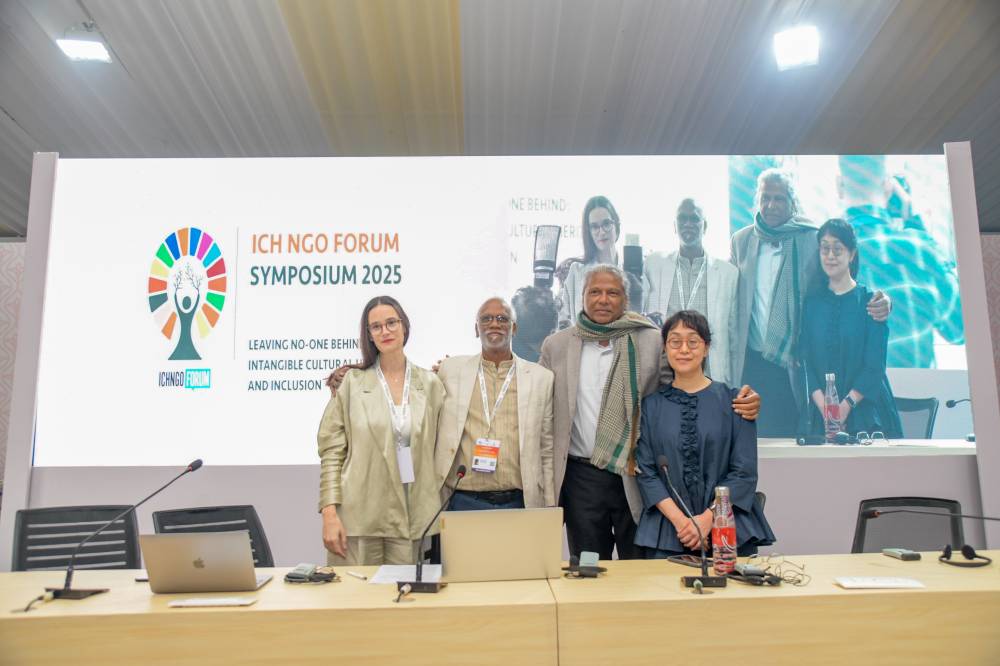
Alongside the twentieth session of the Intergovernmental Committee for the Safeguarding of the Intangible Cultural Heritage held last week in New Delhi, India, the ICH NGO Forum organized its traditional annual Symposium on Sunday, 7 December 2025. Building on the 2024 symposium on participatory approaches to living heritage safeguarding, the theme chosen for this year was ‘Leaving No-One Behind: Intangible Cultural Heritage and Disability Inclusion’.
Drawing on the 2018 United Nations Disability Inclusion Strategy and the UNESCO Disability Inclusion Strategy (2026-2029), participants reflected on connections between living heritage practices, their safeguarding, and disability in local, regional, national, and international contexts.
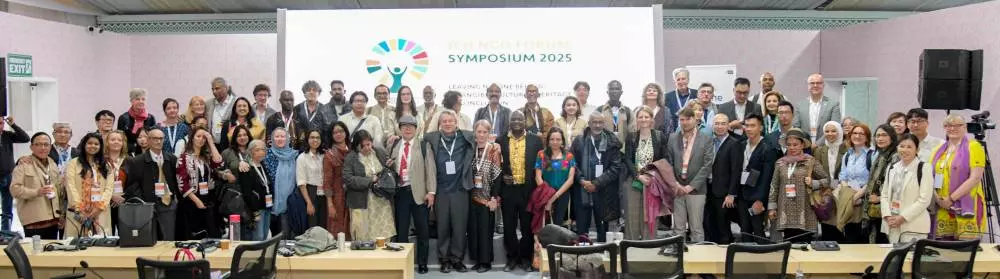
More than 100 representatives of accredited NGOs, practicing communities, and States Parties attended the symposium in person and online. Speakers shared their experiences of inclusive safeguarding initiatives, from community-based projects that integrate accessibility into heritage education, to inclusive performances and documentation of practices that ensure ‘no one is left behind’.
Interventions included presentation of an award-winning social innovation for active ageing and disability participation in Singapore; integration of traditional crafts into deaf education programs in the Republic of Korea; combining tailored support for persons with disabilities with broader inclusion in safeguarding efforts in Flanders, Belgium, inclusion of visually impaired artists in the revival of Bangladesh’s musical heritage, or a participatory model for inclusion in Egypt.
Through a combination of presentations, discussions, and testimonies from the field, participants reflected on how living heritage can serve as a vector for inclusion, empowerment, and participation.
The Symposium highlighted the need to develop comprehensive inclusion strategies, rather than programmes targeting people with disabilities only. It also brought a deeper understanding of the intersections between disability inclusion and living heritage, highlighting the transformative role of accessibility in safeguarding practices. Participants identified innovative community-based initiatives demonstrating inclusive approaches and shared policy and educational recommendations aimed at embedding inclusivity at the heart of heritage safeguarding.
The lessons learnt from the different experiences will contribute to strengthening future programmes and advocacy efforts aiming at truly inclusive safeguarding efforts.
More information: https://www.ichngoforum.org/.
Event:
-
20th session of the Intergovernmental Committee (8 December 2025 – 12 December 2025)