Report on the status of an element inscribed on the list of intangible cultural heritage in need of urgent safeguarding
A. Cover sheet
A.1.
State Party
Name of State Party
Mongolia
A.2.
Date of deposit of the instrument of ratification, acceptance, approval or accession
This information is available online.
Date of deposit of the instrument of ratification, acceptance, approval or accession
2005-06-29
A.3.
Element inscribed on the Urgent Safeguarding List that is the subject of this report
Name of element
Mongol Biyelgee, Mongolian traditional folk dance
Inscribed in
2009
Submitting State(s)
Mongolia
A.4.
Reporting period covered by this report
Please indicate the period covered by this report.
Reporting period covered by this report
16-12-2021 - 15-12-2025
A.5.
Other elements inscribed on the Urgent Safeguarding List, if any
Please list all other elements from your country inscribed on the Urgent Safeguarding List, together with the year of inscription; for multinational elements, please indicate the other States concerned.
Other elements inscribed on the Urgent Safeguarding List, if any
Coaxing ritual for camels (2015)
Folk long song performance technique of Limbe performances - circular breathing (2011)
Mongol Tuuli, Mongolian epic (2009)
Mongolian calligraphy (2013)
Mongolian traditional practices of worshipping the sacred sites (2017)
Traditional music of the Tsuur (2009)
A.6.
Executive summary of the report
Please provide an executive summary of the report that will allow general readers to understand the current status of the element, any positive or negative impacts of inscription, the implementation of safeguarding measures during the reporting period and their possible update for the following years.
Executive summary of the report
During the reporting period, numerous measures were implemented to strengthen the viability of the Mongol biyelgee, Mongolian traditional folk dance, including research, registration, documentation, awareness-raising, and training, with support and funding at the national and international levels. Furthermore, an assessment and study of the current state of the Bii biyelgee dance was conducted, identifying both its positive and negative aspects. As a result, the viability of the heritage was significantly improved, the number of practitioners increased, and its significance in the socio-cultural environment was strengthened.
Regarding positive impacts:
- As of 2025, a total of 432 practitioners were registered in the State Integrated Registration and Information Database of Cultural Heritage, including 87 Khoton, 50 Torguud, 79 Bayad, 104 Dorvod, and 112 Zakhchin practitioners. During the reporting period, an important initiative was launched to revive and transmit the Uriankhai Bii biyelgee, which was in danger of disappearing and being forgotten in the Bayan-Olgii and Khovd provinces. For strengthening the viability of this heritage element, apprenticeship training was organized based on practitioners of this heritage element, and over 1,000 Biyelgee apprentices and amateurs were trained across the country. Following this, the Biyelgee competitions and examinations are regularly held. During the reporting period, the project "Sustaining and transmitting Mongol Biyelgee” was implemented with the support of the UNESCO Intangible Cultural Heritage Fund and the Ministry of Culture, Sports, Tourism, and Youth of Mongolia. Within the framework of this project, the field research was conducted in the Bayan-Olgii, Darkhan-Uul, Orkhon, Selenge, Uvs, Khovd, Tov provinces, and Ulaanbaatar city between 2022 and 2023, and documented over 500 variations of 54 types of Bii biyelgee with audio and video recordings. In addition, apprenticeship training cabinets were established in Bayan-Olgii, Darkhan-Uul, Orkhon, Selenge, Uvs, Khovd provinces, and the Ulaanbaatar city, and a total of 83 apprentices were trained. Dedicated research conference, festival were organized, besides publishing of handout, research book, documentary film, and making of content for promoting distinctive characteristics of six ethnic groups, which were broadcast to the public through Mongolian National Broadcasting.
During the reporting period, the Umnugovi and Khovsgol provinces, “the United Association of Mongolian Traditional Folk Art” NGO, “Agsal Khulai” NGO, a practitioner and the winner of the 2021 Mongolian Intangible Cultural Heritage Award, Ts. Khumbaa, a practitioner and Honored Cultural Figure G. Bayartai, organized several apprenticeship trainings and made valuable contributions to the safeguarding of this heritage element.
Negative impacts:
Although considerable progress has been made for the viability of this heritage, potential risks that should be addressed in the further safeguarding plan. For instance, choreographers do not appreciate the traditional way of practicing Bii biyelgee, and do not consider the cultural significance and symbols associated with Bii biyelgee while choreographing staged dance. There are still risks in the assimilation of movements and the main distinctive features, therefore, it is necessary to revive the Bii biyelgee tradition in a balanced way. In addition, an increase in migration of herder practitioners to the capital city due to loss of livestock in harsh winter and negative impacts of climate change, and an important part of Bii biyelgee are being forgotten and on the edge of decline, such as melodies of ikhel, tovshuur, and shanz musical instruments, and the craftsmanship of aforementioned musical instruments.
During the reporting period, planned safeguarding measures were fully implemented, and various activities were organized in collaboration with governmental and non-governmental organizations, including apprenticeship training, research studies, performances, content creation, documentary film production, media promotion, and festivals and competitions. Transmission trainings were conducted for the Bii biyelgee of Uriankhai, Khoton, and Torguud ethnic groups, and melodies of Bii biyelgee effectively revitalized ikhel and tovshuur musical instruments. Overall, the viability of this heritage of the element has strengthened, and it is necessary to start the transfer from the List of Intangible Cultural Heritage in Need of Urgent Safeguarding to the UNESCO Representative List of the Intangible Cultural Heritage of Humanity.
A.7.
Contact person for correspondence
Provide the name, address and other contact information of the person responsible for correspondence concerning the report.
Title (Ms/Mr, etc.)
Ms
Family name
Tserendorj
Given name
Tsolmon
Institution/position
Coordination Officer for Policy Implementation of Intangible Cultural Heritage Department of Cultural Heritage Ministry of Culture
Address
Denver Street
7th Khoroo
Sukhbaatar District
Ulaanbaatar 210620a
Telephone number
+976 99057308; +976 51 265617
E-mail address
Tsolmon.ncch@gmail.com
Other relevant information
B
Ms
B. Status of element inscribed on the Urgent Safeguarding List
Refer to the nomination file or to previous reports, if any, as the basis for reporting on the current status of the element, and report only on relevant changes since the date of inscription on the List or since the previous report. Nomination files, specific timetables and earlier reports, if any, are available at https://ich.unesco.org or from the Secretariat, upon request.
The State Party shall pay special attention to the role of gender and shall endeavour to ensure the widest possible participation of the communities, groups and, where applicable, individuals concerned as well as relevant non-governmental organizations during the process of preparing this report, and is asked to describe how it has done so in point D below.
B.1.
Social and cultural functions
Please explain the social and cultural functions and meanings of the element today, within and for its community, the characteristics of the bearers and practitioners, and any specific roles or categories of persons with special responsibilities towards the element, among others. Attention should be given to any relevant changes related to inscription criterion U.1 (‘the element constitutes intangible cultural heritage as defined in Article 2 of the Convention’).
Social and cultural functions
The role and significance of the dance Bii Biyelgee in the present society and culture are being stabilized and improved by the books, documentaries, TV programs, digital content, online training, and apprenticeship training on this heritage element done by governmental and non-governmental organizations, scholars, and practitioners who are working to safeguard this heritage element. Bii Biyelgee practitioners have their own specific characteristics that are reflected in environmental effects from nature and geography where they are living, the origin of their family/clan, and the social and historical lived experience of history. The Bii Biyelgee practice has been practiced among the people of Khovd, Uvs, and Bayan-Ulgii provinces in western Mongolia, and with the social and economic changes, practitioners migrated to Darkhan-Uul, Orkhon, Selenge, Tov provinces, and Ulaanbaatar city, and now practitioners in recognized in the aforementioned settled area. Bii biyelgee is not only a dance that belongs to the domain “Folk performing arts”, but it also encompasses a wide range of Mongolian traditional knowledge, customs, festivals, religions, and traditional crafts, and therefore, the practitioners of Bii Biyelgee are very unique in that they embody various traditional knowledge.
Characteristics of the Bii biyelgee practitioners:
1. The influence of the natural and geographical environment in which they live,
2. Characteristics of their ethnicity,
3. Characteristics of the society and history they have experienced, etc.
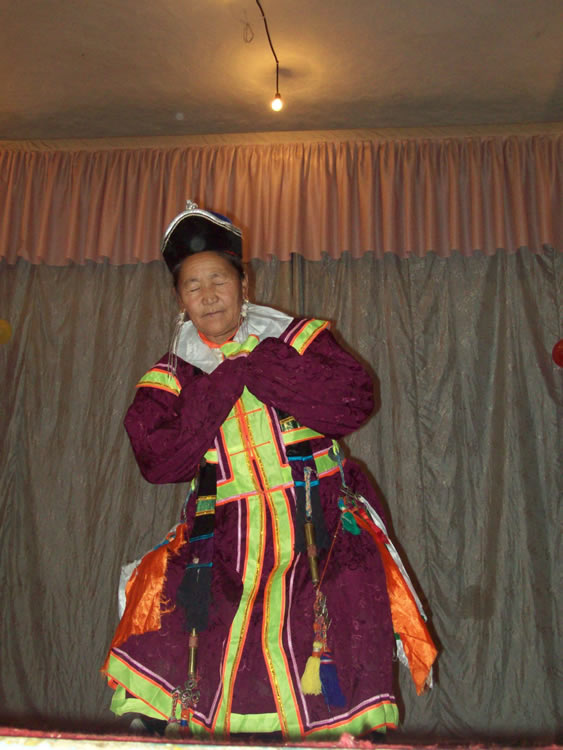
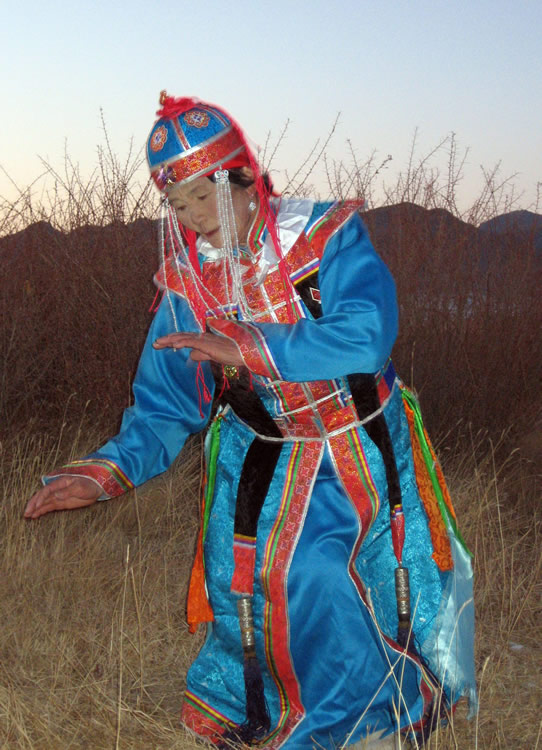
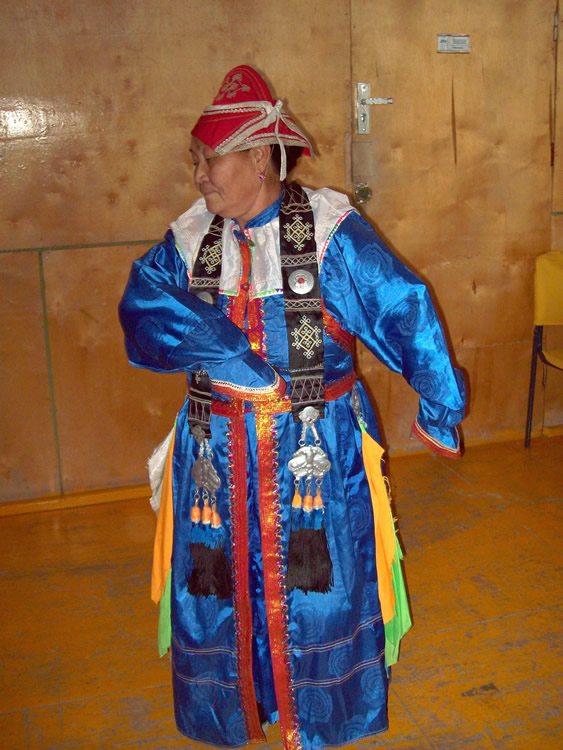
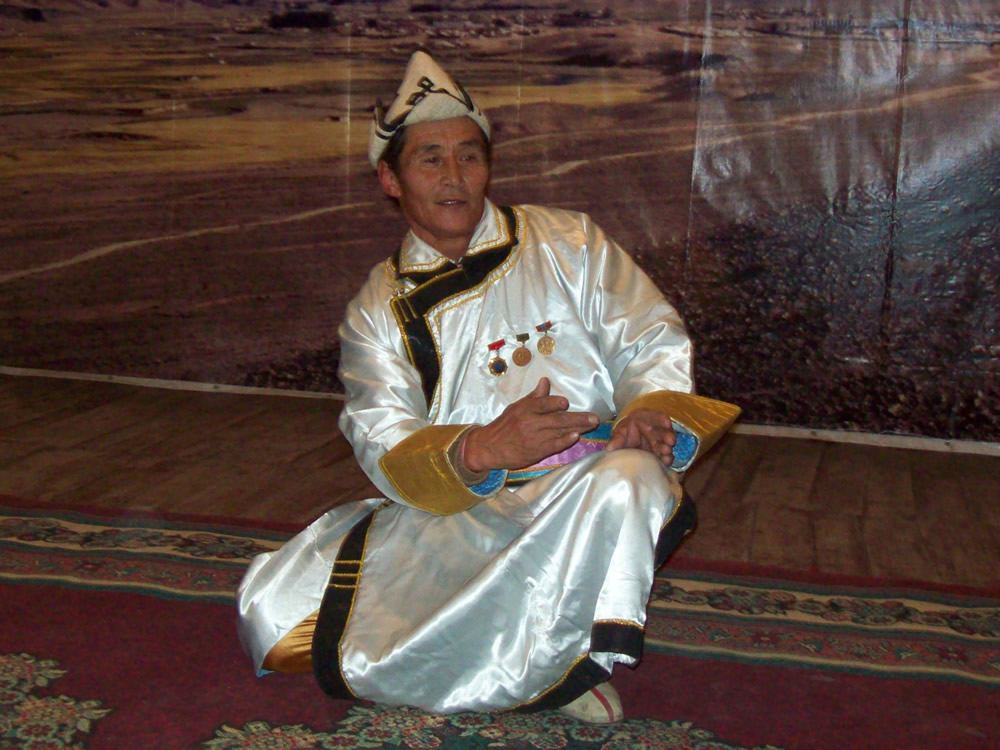
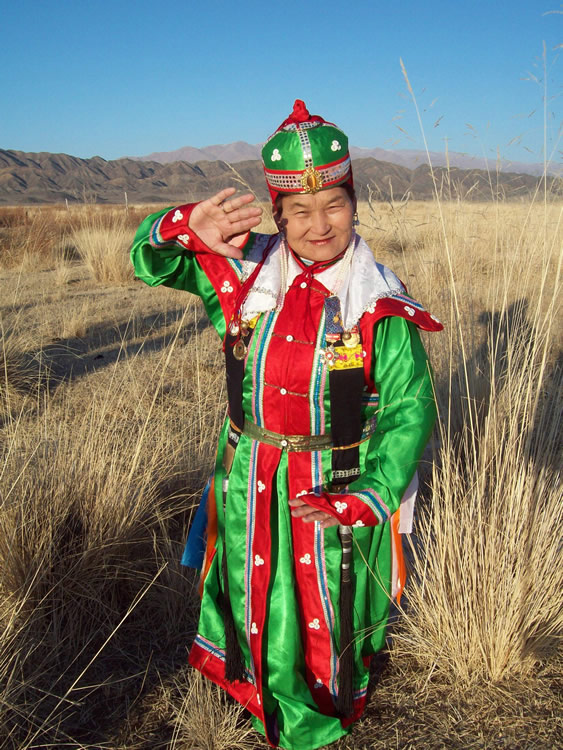
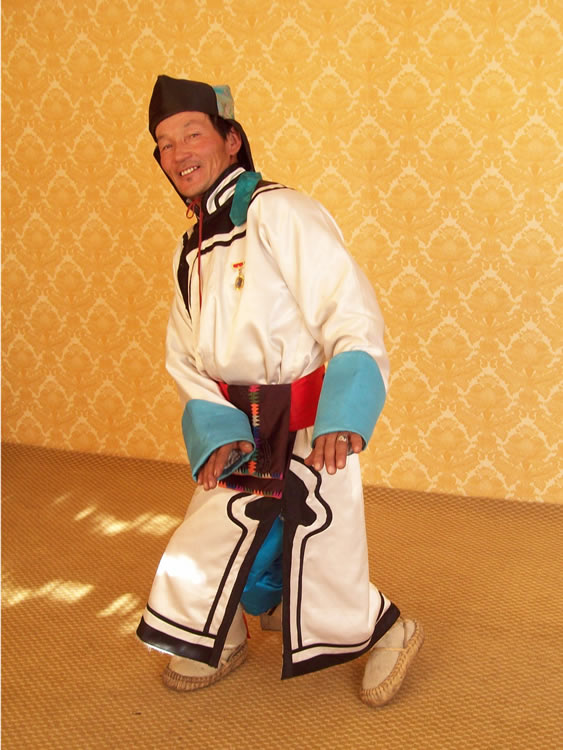
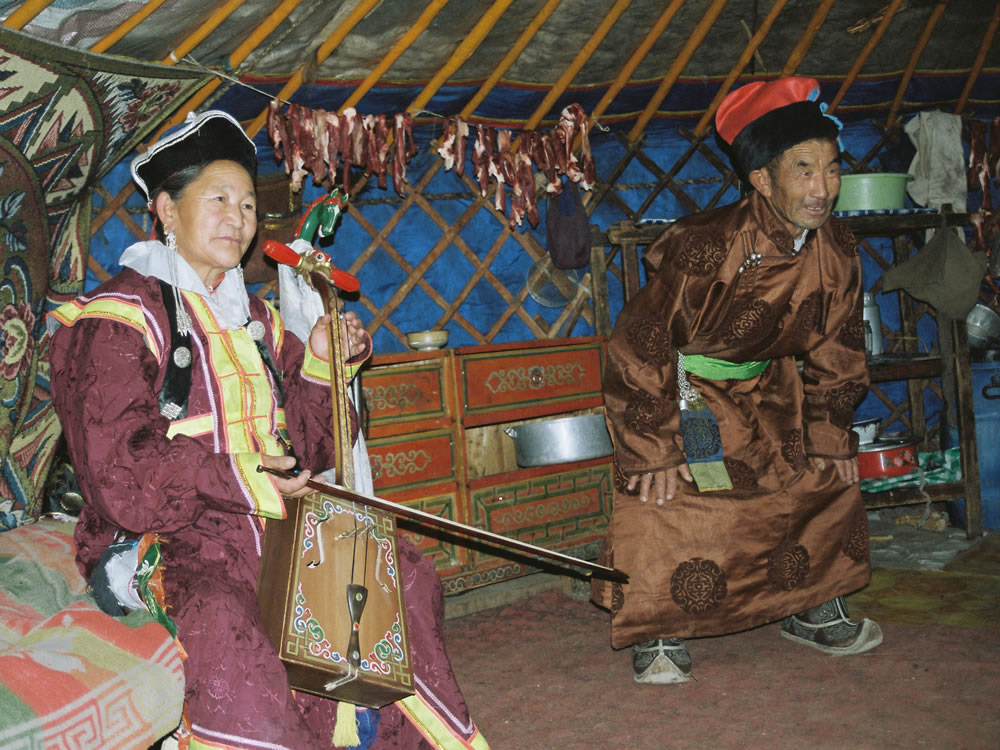
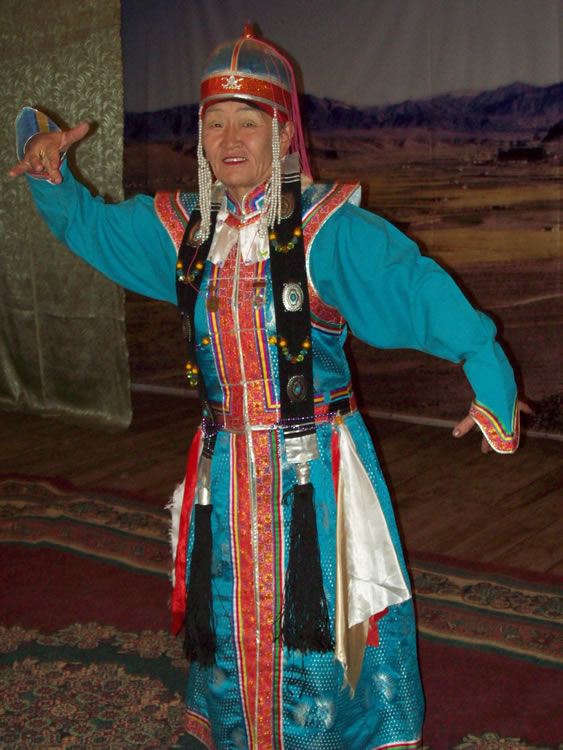
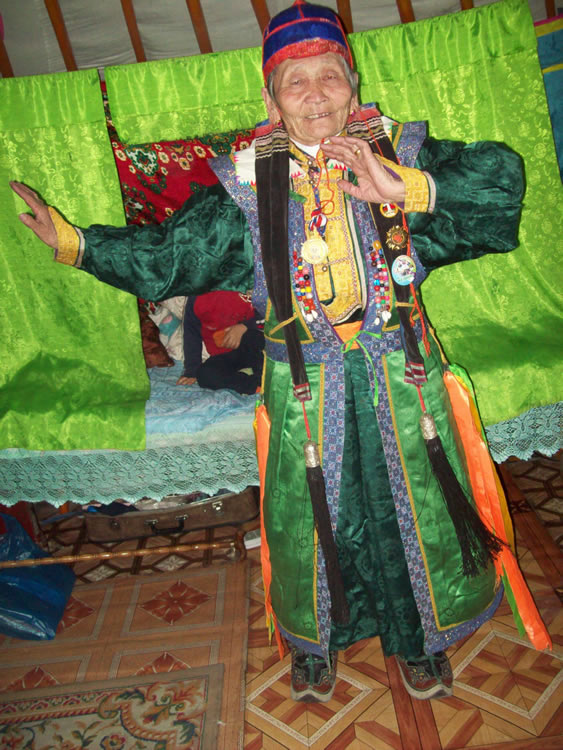
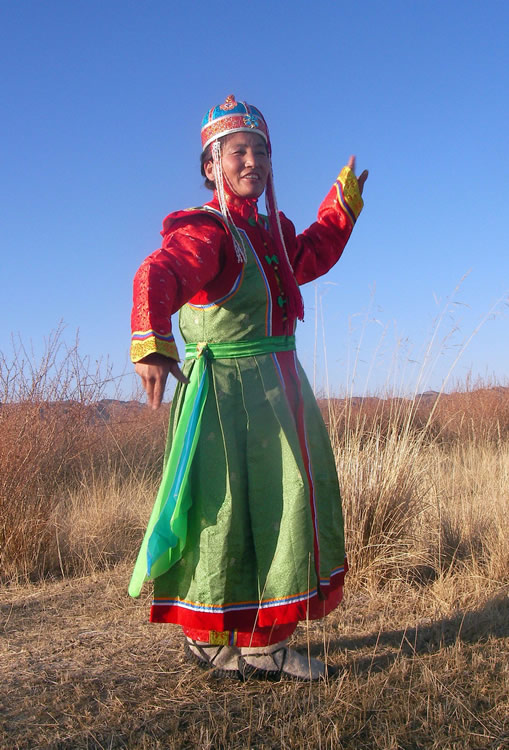
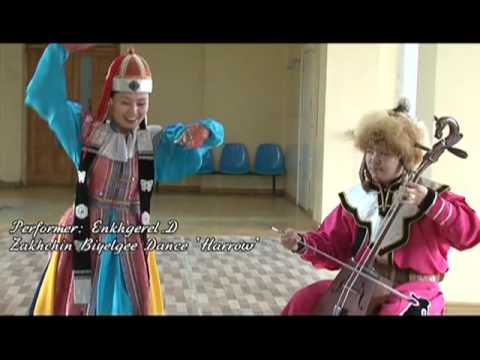
When practitioners perform the Bii Biyelgee, they wear traditional costumes and accessories that express the uniqueness of each ethnic group. It is impossible to imagine the Bii Biyelgee without a musical instrument. Bii Biyelgee becomes a complete when practitioner improvised the movements in association with musical instruments, including Ikhel, Tovshuur, Tovshuur, and Shudarga and the creation of their own hearts and minds. Nowadays, the traditions of performing Bii Biyelgee with Ikhel and Tovshuur in Oirad Mongols, with Tsuur and Ikhel in Altai Uriankhains, with Tovshuur /shanz/ in Torguud are being practiced. All of this demonstrates the role and importance of performance in today's society and culture, as well as being a cornerstone of the cultural heritage of the community concerned and an integral part of their daily lives. The traditional folk dance Bii Biyelgee is an inseparable connection with the customs, psychology, language, and culture of Mongolians, and it supports and creates a pleasant and satisfying life, and is also one of the important conditions and positive factors in a harmonious and sustainable life. Symbolizing the best part of the human relationship to others is the main objective of the folk dance Bii Biyelgee, and it well suits the main concepts of the human rights declaration, the concept of respectfulness between humankind, and also the Sustainable Development Goals. Bii Biyelgee became the originality and model of the Mongol dance within its transmission to today, and is being developed as a living culture and playing an important role in the protection of world cultural diversity.
We are fully obliged to our duty to safeguard and transmit all 54 types of Bii biyelgee and its myths, stories, and symbolic meaning for future generations, which were collected from the field research.
B.2.
Assessment of its viability and current risks
Please describe the current level of viability of the element, particularly the frequency and extent of its practice, the strength of traditional modes of transmission, the demographics of practitioners and audiences and its sustainability. Please also identify and describe the threats, if any, to the element's continued transmission and enactment and describe the severity and immediacy of such threats, giving particular attention to any strengthening or weakening of the element’s viability subsequent to inscription.
Assessment of its viability and current risks
In 2009, when Bii Biyelgee was inscribed on the UNESCO List of Intangible Cultural Heritage in Need of Urgent Safeguarding, there were fewer than 20 practitioners, but as of December 2025, their number had reached 432 across the country.
As part of the project "Sustaining and transmitting Mongol Biyelgee" by UNESCO Fund for the Safeguarding of Intangible Cultural Heritage and the Ministry of Culture, Sports, Tourism and Youth of Mongolia, field research was conducted in 2022 to assess the current status of this element. 70 percent of the 208 practitioners involved in this field research were predominantly elders, while the majority of the 149 participants in the Mongolian Bii Biyelgee Festival organized in 2025 were children, demonstrating the expanding scope of this heritage.
Informal trainings are frequently organized in Bayan-Olgii, Khovd, Selenge, Tuv, and Khuvsgul provinces. In addition, the “Altan Khelkhee” group in Khovd province, and elder practitioners performed Torguud Bii Biyelgee at the events for the 250th Anniversary of the Silk Road, the Tea Road, and the 3rd Jangar Naadam in 2022, and in Chingel soum of Xinjiang Uyghur Autonomous Region in the People’s Republic of China in 2023.
The “Nomads” World Cultural Festival is organized annually by the Government of Mongolia, the Ministry of Culture, Sports, Tourism, and Youth of Mongolia, for promoting and disseminating the diverse intangible cultural heritage elements and developing cultural tourism. Practitioners from Bayan-Olgii, Uvs, Khovd, Darkhan-Uul, Orkhon, Selenge provinces, and Ulaanbaatar city are actively participating in this festival to promote Bayad, Dorvod, Zakhchin, Khoton, Torguud, and Uriankhai Bii biyelgee. In 2025, a total of 260,000 persons visited the festival.
The Council of Mongolians Abroad launched an information campaign, "Mongolian Biyelgee as an Expression of National Culture," and the NGO “Agsal Khulai” has been conducting training on traditional dance to Mongolians living in Japan since 2024, which is an important task for promoting and disseminating Bii biyelgee abroad.
Although the viability of this heritage element has been enhanced and is ready to transfer between lists, the following issues should always be taken into account. As for including:
Globalization: Young generations are following foreign cultures as a result of rapid globalization, and multi-cultural effect /movies, different celebrations and festivities, effects of different religions/; and do believe that traditional cultural elements are outdated; the world and country's socio-cultural environment is being standardized, and so on.
Migration: Since 1990, the migration from rural areas to urban areas has been extremely intense. Due to this, practitioners of Bii Biyelgee have dispersed. Although the number of practitioners and apprentices of Bii Biyelgee is growing, there is a risk of standardization still existing in unique rhythms of ethnic groups, movements, patterns, symbols, and associated rituals, and these are gradually assimilating one another.
Commercialization: The Traditional way of performing Bii Biyelgee is being lost due to the tendency to use this folk dance as a form of entertainment to attract tourists rather than to safeguard it, and dance training centers are using it for their survival. It is necessary to strengthen its traditional use in the original setting, such as various celebrations, rituals associated with nomadic living style, besides with on-stage promotion.
It is still demanding to safeguard the traditional dance in its traditional setting, repertoire, training, and forms, besides developing with innovation. In addition, it is important to bring appropriate conditions where the folk performing arts and professional arts can exist in parallel.
B.3.
Implementation of safeguarding measures
Please report on the safeguarding measures described in the nomination file, and previous report, if any. Describe how they have been implemented and how they have substantially contributed to the safeguarding of the element during the reporting period, taking note of external or internal constraints such as limited resources. Include, in particular, information on the measures taken to ensure the viability of the element by enabling the community to continue to practise and transmit it. Include the following detailed information concerning the implementation of the set of safeguarding measures or safeguarding plan:
B.3.a.
Objectives and results
Indicate what primary objective(s) were addressed and what concrete results were attained during the reporting period.
Objectives and results
Objectives:
- To improve the legal environment for safeguarding this heritage element,
-To update the registration of practitioners,
-Intensify research on this heritage element,
-To increase the number of apprenticeship trainings,
-To promote and disseminate the knowledge associated with heritage and raise awareness of the general public on this,
-To conduct the monitoring
Results:
1. The draft of “Law on Supporting practitioners of intangible cultural heritage” has been elaborated.
2. Practitioners number increased to 432. The project "Sustaining and transmitting Mongol biyelgee" has been implemented with the support of the UNESCO Intangible Cultural Heritage Fund and the Ministry of Culture, Sports, Tourism, and Youth of Mongolia, trained 83 children over two years.
3. As a result of the Bii biyelgee research conducted in six provinces of Mongolia and Ulaanbaatar city between 2022-2023, more than 500 variations of 54 Bii Biyelgee were registered and documented, 75 melodies of ikhel were documented, and 54 practitioners of Bii biyelgee were newly identified.
4. The skill and repertoire of practitioners and apprentices significantly improved as a result of the organization of festivals and competitions at the local, regional, and national levels. Approximately 800 people participated in the aforementioned festivals.
5. In 2023-2024, a series of programs was conducted to disseminate knowledge and understanding of the Bii Biyelgee and its myths, history, and symbolism.
6. Between 2022 to 2025, the School of Culture at the Mongolian National University of Arts and Culture conducted a field study in Bii biyelgee as part of a UNESCO project and documented Bii biyelgee variations in audio and video.
7. The number of practitioners, communities, and local initiatives, public interest, and governmental and local administrative organizations in the safeguarding and transmitting this heritage element to younger generations has grown.
8. As a result of promotional activities dedicated to practitioners of Bii biyelgee, their reputation and social value have increased among the public.
To raise awareness of Bii biyelgee, regional and online seminars were organized.
9. In Selenge province, a long-term and medium-term program for the safeguarding of Bii Biyelgee was developed, and in Khovd province, various Bii biyelgee practices were strengthened.
10. The number of publications dedicated to promoting Bii Biyelgee has increased, and best practices were established, such as expanding Bii Biyelgee research by local councils of ethnic groups and provinces, which were allocating budgetary funds for raising public awareness, and collaborating on the creation of documentary content.
From this, it can be concluded that the Bii Biyelgee is overcoming the risk of disappearance and its viability is strengthened, but on the other hand, there is still a need to reduce the risks mentioned in part B2 and take measures for safeguarding.
B.3.b.
Safeguarding activities
List the key activities that were carried out during this reporting period in order to achieve these expected results. Please describe the activities in detail and note their effectiveness or any problems encountered in implementing them.
Safeguarding activities
As part of the goal of improving the legal environment:
• To improve the legal environment, the "Law on supporting practitioners of Intangible cultural heritage" has been drafted.
Update of registration of practitioners:
• 432 practitioners registered in the State Integrated Registration and Information Database of Cultural Heritage.
• Within the framework of the project "Sustaining and transmitting Mongol Biyelgee", 83 children from 6 ethnic groups were taught Bii Biyelgee for 2 years. Also, with the support of provinces and local authorities, the practitioners of Bii Biyelgee have trained 408 children from 6 ethnic groups, a total of 491 children.
Intensify research on this heritage element:
• In 2022-2023, the School of Culture of the Mongolian National University Arts and Culture organized 3 times field research and studies. Field research was conducted in the Darkhan-Uul, Orkhon, Selenge, Tuv, Khovd, Uvs, Bayan-Olgii provinces, and Ulaanbaatar city.
• In January 2023, field research was conducted in Uvs, Hovd, and Bayan-Olgii provinces for a month and documented 208 practitioners and collected 2TB of data associated with Bii Biyelgee. As a result of this research and study, a one-hour documentary film was created, and 6 content for 6 ethnic groups’ Bii biyelgee were created and broadcast on Mongolian National Television.
• In July-August 2024, a research project for the people of Bayad Bii Biyelgee was carried out in the areas of Malchin, Khyargas, Zuungobi, Tes, and Naranbulag soums of Uvs province.
To increase the number of apprenticeship trainings:
• To transmit Bii biyelgee to future generations, apprenticeship trainings were organized. Some of these trainings were inclusive, and participants consisted of teachers, students, and children from secondary schools and kindergartens in Ulaanbaatar city and provinces. For instance, students from the Mongolian National University of Arts and Culture have participated in the apprenticeship training organized at the School of Culture in 2023-2024.
• Some practitioners of Bii biyelgee offer training as a paid service, especially in urban areas. This is a positive aspect, and Bii Biyelgee is becoming a source of income and livelihood for practitioners.
• The practitioner N. Burmaa has organized 3 times training for Torguud bii biyelgee to safeguard this element through her Agsal Khulai Training Center.
• In 2023, practitioner of Dorvod Bii Biyelgee taught the Dorvod Biyelgee for 24 students from the School of Culture at the MNUAC.
• Dancer, choreographer D. Enkhgerel conducted a master class for children "Treasures of Treasures" at the School of Dance Arts at the Mongolian National University of Arts and Culture by choreography of choreographer, a dance professor, and teacher D. Nanjid.
• Practitioner G. Bayartai taught 81 children the basics of Bii Biyelgee traditions for 3 times.
• M. Davaajav, a practitioner from Tuv province, trained over 200 students and played a key role in the development of the Dorvod Biyelgee.
• Practitioner P. Gombojav trained 110 students from the secondary school of Khyargas soum, Uvs province, in the Bayad Bii Biyelgee. As part of the project, he trained 5 apprentices and taught 9 Bayad Bii biyelgee to them.
• Practitioner I.Tugsoo trained 100 apprentices for the 100th Anniversary of Khovd soum of Uvs province in 2024. Also, as part of the project, she trained 5 apprentices and taught 7 Dorvod Bii biyelgee to them.
• B. Badamtsetseg trained 60 apprentices for the 100th Anniversary of Manhan soum of Khovd province. As part of the project, she trained 5 apprentices and taught 13 Zakhchin Bii Biyelgee.
• P. Munkhtsoodj taught 4 Uriankhai Bii Biyelgee to apprentices from the Khovd and Bayan-Olgii provinces.
• T. Tsembel taught 6 Torguud Bii Biyelgee to 5 apprentices from the Bulgan soum of the Khovd province, as part of the project. She also taught Torguud Bii Biyelgee to 12 children voluntarily.
• Ikhelch Lkhagvatseren taught playing melodies of Uriankhai Bii biyelgee to 3 children, 2 from Bayan-Olgii province and another one from Khovd province.
• Ch. Oyuntulkhuur, a practitioner of musical instruments tovshuur and shanz, taught 11 students the Torguud Bii biyelgee and melodies of musical instruments tovshuur and shanz.
• J. Khumbaa, elder practitioner from Malchin soum of Uvs province, has taught Bayad Bii Biyelgee to 41 children.
To promote:
- To transmit Bii biyelgee to future generations, the number of practitioners, communities, and local initiatives, public interest, and governmental and local administrative organizations actively involved, and national, regional, and local festivals were held, and as a result of these festivals, the skills and repertoire of practitioners and amateurs improved. As for including: 1. Mongol Bii Biyelgee festival organized in Mankhan soum of Khovd province in 2023, 2. “Oirad tumen” festival is annually organized in July in Uvs province, 3. “Bii biyelgee” festival is organized in Nalaikh district of Ulaanbaatar province annually, 4. “Nomads” world cultural festival is organized annually in August and in 2025, a total of 150 practitioners and apprentices of Bii Biyelgee attended, 5. A very dedicated “Mongol Bii Biyelgee” festival has been organized in Uvs province on August 16-17, 2025, with 130 practitioners and apprentices.
- In 2023 and 2024, 5 public seminars were conducted by Sh. Erdenetsetseg and M. Ganbold, Ts. Tsolmon in the Darkhan-Uul, Orkhon, Selenge, Dornod, and Umnugobi provinces.
- As part of the project "Sustaining and transmitting Mongol Biyelgee” handouts, research books, and brochures were published and distributed to the public.
- As part of the project, “Issues on transmission and viability of Mongol Bii Biyelgee” international scieintific conference organized in 2025, including 15 speakers from the Cambridge University, Clermont Auvergne University, MNUAC, the Ministry of Culture, Sports, Tourism and Youth of Mongolia, the National Center for Cultural Heritage, the Association of Ethnomusicology in Mongolia, and so on.
- Researcher, Sh. Erdenetsetseg has presented at international academic conferences such as the Conference on Cultural Heritage held at the Mongolian Dance Academy in 2023, the Conference dedicated to the 70th anniversary of the Beijing Dance Academy in 2024, and the Conference held in Nepal in 2025.
- Researcher, Sh. Erdenetsetseg has presented papers at Russian academic conferences six times.
B.3.c.
Participation of communities, groups or individuals in the safeguarding activities
Describe how communities, groups or, if appropriate, individuals as well as relevant non-governmental organizations have effectively participated, including in terms of gender roles, in the safeguarding measures. Describe the role of the implementing organization or body (name, background, etc.) and the human resources that were available for implementing safeguarding activities.
Participation of communities, groups or individuals in the safeguarding activities
The Ministry of Culture, Sports, Tourism, and Youth of Mongolia has made continuous efforts in the enhancement and development of the policy documents for safeguarding this heritage element, and the National Center for Cultural Heritage has regularly updated the registration and inventorying of the heritage, along with safeguarding measures. In addition, the School of Culture at the Mongolian National University Arts and Culture, local governing administrations of Uvs, Khovd, Bayan-Olgii provinces, and the Culture, Arts, Tourism and Youth Agencies in Darkhan-Uul, Bayan-Olgii, Selenge, Uvs, Khovd, Orkhon provinces, non-governmental organizations such as “Mongol Biyelgee-Mongolian traditional folk dance”, Ov Erdene-Biyelgee association”, “Nomad’s traditional cultural heritage center”, “Agsal Khulai” NGOs were actively involved in the safeguarding measures in cooperation with practitioners, researchers and scholars of this element.
Article 34 of the Law on Protection of Cultural Heritage defines for the first time the "rights and duties of intangible cultural heritage practitioners", Article 34.1.1, Section 2 states that the bearer "shall be to receive financial support to protect, transmit, and recreate the intangible cultural heritage, under the necessary circumstances”, and Article 34.2 Section 2 states practitioners "to teach students, transmit to next generation, to disseminate, promote, provide assistance to record information, and conduct registration of intangible cultural heritage".
Practitioners of Bii biyelgee are actively involved in the safeguarding, transmission, research, study, revitalization activities, especially promoting “Mongol Biyelgee-Mongolian traditional folk dance” through media organizations, radios and TVs. For instance, Bii biyelgee practitioners J.Khumbaa, G.Bayartai, D.Balgan, N.Burmaa and ikhel musical instrument craftsmanship L.Bayarsaikhan and “Ov Erdene-Biyelgee association”, “Innovation center for Mongol dance studies”, “Nomad’s traditional cultural heritage center”, “United Association of Mongolian traditional folk arts”, “Bii biyeleg association of Mongolian traditional folk arts”, “Agsal Khulai” NGOs are involved.
Practitioners actively organized the apprenticeship training, research, and promotional activities. While Practitioners were transmitting the Bii biyelgee for their apprentices, they truly aimed to transmit the traditional knowledge associated with history, living style, customs, and rituals of certain ethnic groups.
In addition, Sh.Erdenetsetseg, Ph.D a researcher, director of the Institute of Research Studies of Culture and Arts (former director of the School of Culture), S.Yundenbat, N.Urtnasan, Ts.Tsolmon, M.Munguntsetseg, D.Enkhgerel, D.Bayarbaatar, J.Erdenekhorloo, practitioners such as J.Khumbaa, P.Gombojav, Sh.Otgonbayar, B.Badamtsetseg, I.Tugsuu, P.Munkhtsooj, G.Bayartai, Lkhagvatseren, Ch.Oyuntulkhuur, T.Tsembel, Kh.Tumenjargal, M.Jalk, and D.Balgan played an active role in this safeguarding plan.
B.3.d.
Timetable
Indicate in a timetable when each activity was implemented.
Timetable
• Between 2022-2025, "Law on supporting practitioners of Intangible cultural heritage" has been drafted.
• Between 2022-2025, 432 practitioners registered in the State Integrated Registration and Information Database of Cultural Heritage.
• Between 2022-2025, 83 children from 6 ethnic groups were taught Bii Biyelgee for 2 years within the project "Sustaining and transmitting Mongol Biyelgee", in addition, with the support of provinces and local authorities, the practitioners of Bii Biyelgee have trained 408 children from 6 ethnic groups, a total of 491 children.
• In 2022-2023, the School of Culture of the Mongolian National University Arts and Culture organized 3 times field research and studies. Field research was conducted in the Darkhan-Uul, Orkhon, Selenge, Tuv, Khovd, Uvs, Bayan-Olgii provinces, and Ulaanbaatar city.
• In July-August 2024, a research project for the people of Bayad Bii Biyelgee was carried out in the areas of Malchin, Khyargas, Zuungobi, Tes, and Naranbulag soums of Uvs province.
• In 2023-2024, the practitioner N. Burmaa, 23, Dancer, Practitioner G. Bayartai, M. Davaajav, Practitioner P. Gombojav, Practitioner I.Tugsoo, B. Badamtsetseg, P. Munkhtsoodj, T. Tsembel, Ikhelch Lkhagvatseren, Ch. Oyuntulkhuur, J. Khumbaa taught 6 ethnic groups, Bii Biyelgee and melodies of ikhel, tovshuur, and shanz to 664 people.
- Between 2022-2025, Mongol Bii Biyelgee festival, “Oirad tumen” festival, “Bii biyelgee” festival, “Nomads” world cultural festival, and “Mongol Bii Biyelgee” festival were organized.
- In 2023 and 2024, 5 public seminars were conducted by Sh. Erdenetsetseg and M. Ganbold in the Darkhan-Uul, Orkhon, and Selenge provinces, by Ts. Tsolmon in Dornod, Umnugobi provinces.
- Between 2022-2025, as part of the project "Sustaining and transmitting Mongol Biyelgee” handouts, research books, and brochures were published and distributed to the public.
- As part of the project, “Issues on transmission and viability of Mongol Bii Biyelgee” has been organized in 2025.
B.3.e.
Budget expenditures
Provide the detailed amounts of the funds used for the implementation of each activity (if possible, in US dollars), identifying the funding source for each (governmental sources, in-kind community inputs, etc.).
Budget
• Between 2022-2025, "Law on supporting practitioners of Intangible cultural heritage" has been drafted. – 3000 $
• Between 2022-2025, 432 practitioners registered in the State Integrated Registration and Information Database of Cultural Heritage.-15000 $
• Between 2022-2025, 83 children from 6 ethnic groups were taught Bii Biyelgee for 2 years within the project "Sustaining and transmitting Mongol Biyelgee." In addition, with the support of provinces and local authorities, the practitioners of Bii Biyelgee have trained 408 children from 6 ethnic groups, a total of 491 children. 35000 $ (project budget did not include)
• In July-August 2024, a research project for the people of Bayad Bii Biyelgee was carried out in the areas of Malchin, Khyargas, Zuungobi, Tes, and Naranbulag soums of Uvs province. 5000$
- Between 2022-2025, the Mongol Bii Biyelgee festival, “Oirad tumen” festival, “Bii biyelgee” festival, “Nomads” world cultural festival, and “Mongol Bii Biyelgee” festival were organized. 20000 $ (project budget did not include)
- As part of the project, “Issues on transmission and viability of Mongol Bii Biyelgee” has been organized in 2025. – 1000$
- Mongolia has paid 23000$ for establishing apprenticeship training cabinets in 6 areas for rent of cabinets, electricity, water, and heating for implementing the project “Sustaining and transmitting Mongol Biyelgee” (project budget did not include)
A total of 102,000 $
B.3.f.
Overall effectiveness of the safeguarding activities
Provide an overall assessment of the effectiveness of the activities undertaken to achieve the expected results and of the efficiency of the use of funds for implementing the activities. Please indicate how the activities contributed to achieving the results and whether other activities could have contributed better to achieving the same results. Also indicate whether the same results could have been achieved with less funding, whether the human resources available were appropriate and whether communities, groups and individuals could have been better involved.
Overall effectiveness of the safeguarding activities
As a result of the safeguarding measures and activities, the viability of the Bii biyelgee heritage element has been enhanced. Some progress has been made in reviving, safeguarding, and studying the tradition of this heritage element, and setting up a sustainable mechanism for promoting and transmitting this heritage. The registration and information database of cultural heritage has been regularly updated in accordance with the given schedule, and the legal environment associated with this heritage element and its practitioners has improved. As of 2025, 432 practitioners of this heritage element are registered in the State registration and information database of cultural heritage, and compared to 2009, when this heritage element was inscribed on the List of Intangible Cultural Heritage in Need of Urgent Safeguarding, practitioners and apprentices increased over 21 times. Initiatives and participation of governmental and non-governmental organizations, practitioners, individuals, and communities in the field of safeguarding, dissemination, promotion, and transmission of intangible cultural heritage have increased, cooperative relations have been developed, and relevant experience has been gained. There is a growing awareness among the public to respect, be proud of, transmit, and learn about their intangible cultural heritage. In addition, the field research was very effective in the research, documentation, creation of registration and information database, reflection of research outcomes in the safeguarding plans, and promoting to the public. The field research organized within this reporting period provided a huge opportunity to see the safeguarding measures in a holistic approach. Previously, we could see that the main point of the safeguarding measure in Bii Biyelgee is its movements, costumes, and associated practices, from the fieldwork we have seen, another major and potential threat that could affect to viability of Bii Biyelgee in the future. This is the assimilation of melodies in musical instruments of ikhel, tovshuur, and shanz, and the decrease in craftsmanship of these musical instruments.
An international research conference has been organized, and researchers and scholars in the field of Bii Biyelgee heritage presented their research articles and research works, and a research book has been published for public use. Apprenticeship trainings were organized in provinces and the Ulaanbaatar city, and 491 apprentices were trained. Besides, these seminars have been conducted for the public by researchers aiming to raise awareness. In addition, several festivals are organized at local, regional, and national levels by the government and non-governmental organizations, local governing administrations, and practitioners, and they have made a huge contribution to promoting Bii Biyelgee and its practitioners to the general public, besides inspiring young apprentices' interest in Bii Biyelgee. We should highlight that this result came from the budget of the project “Sustaining and transmitting Mongol Biyelgee” by UNESCO ICH Fund and the Ministry of Culture, Sports, Tourism, and Youth of Mongolia. We also should say that we would never reach the same result if we had less funding and less dedication.
C
Tserendorj
C. Update of the safeguarding measures
C.1.
Updated safeguarding plan
Please provide an update of the safeguarding plan included in the nomination file or in the previous report. In particular provide detailed information as follows:
- a. What primary objective(s) will be addressed and what concrete results will be expected?
- b. What are the key activities to be carried out in order to achieve these expected results? Describe the activities in detail and in their best sequence, addressing their feasibility.
- c. How will the State(s) Party(ies) concerned support the implementation of the updated safeguarding plan?
Updated safeguarding plan
In “VISION-2050” Long-term Development Policy of Mongolia, National Action Plan of Government of Mongolia, Guidelines for Development of Mongolia in 2026-2030, “Guidelines for Improving the Laws and Regulations of Mongolia until 2028,” and Strategic Plan of the Ministry of Culture for 2024-2028 incorporates organizing the activities in the field of identification, registration, studying, creation of a registry and database, as well as transmitting, distributing, promoting the intangible cultural heritage and supporting, protecting, educating, and identifying its practitioners. They aim to support the transmission of academic talent and traditional knowledge to future generations and provide a system of support and incentives for groups, communities, and practitioners who have established apprenticeship training. A working group has been established and has begun to conduct relevant research to submit an independent law on “Safeguarding of the Intangible Cultural Heritage” to the State Great Khural in 2023.
a) The updated plan is in line with the above policy documents. The purpose of the plan is to update the records, research, and documentation of the traditional art of Bii Biyelgee, to transmit, study, promote, and strengthen its viability through formal and informal training, raise public awareness, and provide the preparation to transfer from the List of Urgent Safeguarding to the Representative List of Intangible Cultural Heritage of Humanity.
Objective:
- To increase the number of practitioners who practice the skill and knowledge of Bii biyelgee to a sufficient level
- To organize apprenticeship training continuously in established cabinets,
- To organize awareness-raising activities for the general public,
- To continue the research on the relationship between the Bii Biyelgee and melodies of Ikhel, tovshuur, and shanz
- Organize festivals and events not only on Bii biyelgee but also on its melodies and the craftsmanship of musical instruments
- Make an assessment of the viability of this heritage element
b). Expected result.
- The number of skilled practitioners will be increased
- The number of apprentices will be increased
- Appreciation for the Bii biyelgee will be increased among the general public
- Comprehensive research will be done on the relationship between the Bii Biyelgee and melodies of Ikhel, tovshuur, and shanz
- Festivals will enable comprehensive safeguarding measures
-As a result of the above activities, it will be possible to transfer the heritage from the List of the Cultural Heritage in Need of Urgent Safeguarding to the Representative List of the Intangible Cultural Heritage of Humanity.
c) Ensure policy, organizational, financial, and investment support from the Government of Mongolia, the Ministry of Culture, Sports, Tourism, and Youth of Mongolia, the Government implementing Agency for Cultural and Arts Authority, The National Center for Cultural Heritage, Mongolian National Commission for UNESCO, Local governing administrations, NGOs, practitioner, apprentices, researchers, and citizens to implement the updated safeguarding plan.
C.2.
Timetable for future actitivies
Provide a timetable for the updated safeguarding plan (within a time-frame of approximately four years).
00310,00312,00543,00871,00873,01061
Timetable
Assessment:
In 2026,
- To assess the viability of Bii biyelgee, aiming to transfer from the List of Intangible Cultural Heritage in Need of Urgent Safeguarding to the Representative List of Intangible Cultural Heritage of Humanity, UNESCO
Training:
In 2026-2029,
- to train apprentices with the following highly skilled practitioners of Bii Biyelgee
- to train apprentices in the melodies of ikhel, tovshuur, and shanz by 6 ethnic groups
- to train apprentices in the making of musical instruments ikhel, tovshuur, and shanz by 6 ethnic groups
Awareness raising:
2026-2029
- To organize awareness-raising activities for the general public throughout the country
- Organize festivals and events not only on Bii biyelgee but also on its melodies and the craftsmanship of musical instruments
- In 2026, the "Mongolian Bii Biyelgee" event will be held in the Uvs, Khovd, and Bayan-Olgii provinces
- In 2026, the "Mongolian Bii Biyelgee" event will be held in Tes soum of Uvs aimag in honor of the famous practitioner Bayad Y. Jamyan;
- In 2027, the "Mongolian Bii Biyelgee" event will be held in Zereg soum of Khovd aimag in honor of the famous practitioner Zakhchin Sh. Banzai;
- In 2028, the "Mongolian Bii Biyelgee" event will be held in Bohmorun soum of Uvs aimag in honor of the famous practitioner Dorvod Idesh.
Research and inspection
2026-2029
- To continue the research on the relationship between the Bii Biyelgee and melodies of Ikhel, tovshuur, and shanz in
- Organizing an international scientific conference "Mongolian Cultural Heritage: The Legacy of Mongolian Cultural Heritage" in 2027;
- Organizing a nationwide inspection of Mongolian cultural heritage in 2029;
C.3.
Budget for future activities
Provide the estimates of the funds required for implementing the updated safeguarding plan (if possible, in US dollars), identifying any available resources (governmental sources, in-kind community inputs, etc.).
Budget
- To assess the viability of Bii biyelgee, aiming to transfer from the List of Intangible Cultural Heritage in Need of Urgent Safeguarding to the Representative List of Intangible Cultural Heritage of Humanity, UNESCO – 6000$
- to train apprentices with the following highly skilled practitioners of Bii Biyelgee -8000$
- to train apprentices in the melodies of ikhel, tovshuur, and shanz by 6 ethnic groups -8000$
- to train apprentices in the making of musical instruments ikhel, tovshuur, and shanz by 6 ethnic groups -8000 $
- To organize awareness-raising activities for the general public throughout the country – 8000 $
- Organize festivals and events not only on Bii biyelgee but also on its melodies and the craftsmanship of musical instruments – 15000 $
- In 2026, the "Mongolian Bii Biyelgee" event will be held in the Uvs, Khovd, and Bayan-Olgii provinces -5000$
- In 2026, the "Mongolian Bii Biyelgee" event will be held in Tes soum of Uvs aimag in honor of the famous practitioner Bayad Y. Jamyan; -5000$
- In 2027, the "Mongolian Bii Biyelgee" event will be held in Zereg soum of Khovd aimag in honor of the famous practitioner Zakhchin Sh. Banzai; -5000$
- In 2028, the "Mongolian Bii Biyelgee" event will be held in Bohmorun soum of Uvs aimag in honor of the famous practitioner Dorvod Idesh. -5000$
- To continue the research on the relationship between the Bii Biyelgee and melodies of Ikhel, tovshuur, and shanz -10000$
- Organizing an international scientific conference "Mongolian Cultural Heritage: The Legacy of Mongolian Cultural Heritage" -5000 $
- Organizing a nationwide inspection of Mongolian cultural heritage -7000 $
Total of 95000 $
C.4.
Community participation
Please describe how communities, groups and individuals, as well as relevant non-governmental organizations have been involved, including in terms of gender roles, in updating the safeguarding plan, and how they will be involved in its implementation.
00147
Community participation
The updated safeguarding plan was developed by the Ministry of Culture, Sports, Tourism and Youth of Mongolia, the National Center for Cultural Heritage, the Mongolian National Commission for UNESCO, the Government implementing agency-Culture and Arts Authority, senior and young heritage practitioners, and relevant government officials, including opinions of organizations, scholars of MNUAC, in accordance with the policy documents such as the “Law on Protection of Cultural Heritage”, long-term development policy document of Mongolia VISION -2050, the Action Plan of the Government of Mongolia, the Guidelines for the Development of Mongolia for 2026-2030, the Guidelines for Improving the Legislation of Mongolia until 2028, and the Strategic Plan for 2026-2030 of the Ministry of Culture, Sports, Tourism and Youth of Mongolia.
The Ministry of Culture, Sports, Tourism and Youth of Mongolia will create a favorable legal environment, formulate policies, allocate and monitor the necessary budgets in the state budget, and provide guidance and methodologies for the implementation of national activities by the Government of Mongolia. The National Center for Cultural Heritage will work with trainers and heritage practitioners to organize safeguarding activities, as well as national inventory, festivals, and academic conferences.
In addition, the Mongolian National University of Culture and Arts will continue keep do research and studies in association with Bii biyelgee and its melodies. Apprenticeship training will be conducted by practitioners continuously.
C.5.
Institutional context
Please report on the institutional context for the local management and safeguarding of the element inscribed on the Urgent Safeguarding List, including:
- a. the competent body(ies) involved in its management and/or safeguarding;
- b. the organization(s) of the community or group concerned with the element and its safeguarding.
2005-06-29
Institutional context
A. Ministry of Culture, Sports, Tourism and Youth
Address: Ministry of Culture of Mongolia, 7th khoroo, Sukhbaatar District, Ulaanbaatar, Mongolia
Specialist: Tserendorj Tsolmon
Specialist responsible for coordinating the implementation of intangible cultural heritage policy
Phone: +976-51-265617
Fax: +976-
Email: tsolmon@moc.gov.mn
Mobile: +976-99057308
Email: info@moc.gov.mn
Website: moc.gov.mn
B. Government Implementing Agency Culture and Arts Authority
Address: Mongolia, Ulaanbaatar City, Sukhbaatar District, 8th khoroo, Cultural Palace, Building G, 6th floor
Senior Specialist: Jargalsaikhan Nasanjargal
Responsible for intangible cultural heritage affairs
Mobile: +976-99086285
Email: nasaa08@gmail.com
C. National Center for Cultural Heritage
Address: Mongolia, Ulaanbaatar City, Khan-Uul District, 21st khoroo, Buyant Ukhaa 2 residential area, National Center for Cultural Heritage
Head of Registration and Information Department: Arslan Saruul
Phone: +976-99030405
Email: a.saruul@ncch.gov.mn, saku_tuntic@yahoo.com
D
Tsolmon
D. Participation of communities in preparing this report
Describe the measures taken to ensure the widest possible participation of the communities, groups and, where applicable, individuals concerned as well as relevant non-governmental organizations during the process of preparing this report.
Participation of communities in preparing this report
By Order A/51 of 2025, issued by the Government Implementing Agency for Culture and Arts, an official working group was established to prepare and draft the “Periodic Report on Intangible Cultural Heritage Requiring Urgent Safeguarding” for UNESCO. The working group included representatives from the Government Implementing Agency for Culture and Arts, the National Center for Cultural Heritage, the Institute of Culture and Arts Studies under the Mongolian State University of Arts and Culture, as well as relevant heritage bearers. During the preparation of this periodic report, the working group has held 3 meetings to collect data and information from practitioners and cultural organizations in 21 provinces and 9 districts of Ulaanbaatar, and for analyzing the gathered data in accordance with the questionnaires of the periodic reporting form, and for elaborating the updated safeguarding plan for this heritage element. The Ministry of Culture, Sports, Tourism and Youth of Mongolia, the National Center for Cultural Heritage, Mongolian National Commission for UNESCO, School of Culture in the Mongolian National University of Culture and Arts, the Institute for Studies of Culture and Arts, “United Association of Mongolian traditional folk arts”, “Agsal Khulai” NGOs and researchers, scholars, and practitioners, such as G.Bayartai practitioner of Dorvod Biyelgee, Sh.Otgonbayar practitioner of Zakhchin biyelgee, R.Samjid practitioner of Uriankhai Biyelgee, J.Khumbaa practitioner of Bayad biyelgee and ikhel, D.Balgan practitioner Khoton Biyelgee, Ts.Buyankhishig and N.Burmaa practitioners of Torguud Biyelgee, and L.Bayarsaikhan craftsmanship of ikhel musical instrument were played the most vital role in the preparation of this report.
E
Coordination Officer for Policy Implementation of Intangible Cultural Heritage
Department of Cultural Heritage
Ministry of Culture
E. Signature on behalf of the State Party
The report should be signed by an official empowered to do so on behalf of the State, and should include his or her name, title and the date of submission.
Name
Mr. DAVAATSEREN Byambasuren
Title
The State Secretary of the Ministry of Culture, Sports, Tourism and Youth of Mongolia
Date
15-12-2021
Signature
Upload signed version in PDF