Rapport sur l'état d'un élément inscrit sur la liste du patrimoine culturel immatériel nécessitant une sauvegarde urgente
A. Page de couverture
A.1.
État partie
Nom de l'État partie
Guatemala
A.2.
Date du dépôt de l'instrument de ratification, d'acceptation, d'approbation ou d'adhésion
Elle peut être consultée en ligne.
Date of deposit of the instrument of ratification, acceptance, approval or accession
2006-10-25
A.3.
Élément inscrit sur la Liste de sauvegarde urgente qui fait l'objet du présent rapport
Nom de l'élément
Nan Pa’ch ceremony
Inscrit en
2013
État(s) soumissionnaire(s)
Guatemala
A.4.
Période considérée dans le présent rapport
Veuillez indiquer la période couverte par le présent rapport.
Reporting period covered by this report
16-12-2021 - 30-11-2025
A.5.
Autres éléments inscrits sur la Liste de sauvegarde urgente, le cas échéant
Veuillez établir une liste de tous les autres éléments présents sur le territoire de votre pays qui sont inscrits sur la Liste de sauvegarde urgente et indiquer en quelle année ils y ont été inscrits ; pour ce qui est des éléments multinationaux, veuillez indiquer quels autres États sont concernés.
A.6.
Synthèse du rapport
Veuillez fournir une synthèse du rapport, qui permette au grand public de comprendre l'état actuel de l'élément, mentionne toute incidence positive ou négative de son inscription et fasse état des mesures de sauvegarde mises en œuvre pendant la période considérée et leur possible mise à jour les années suivantes.
Executive summary of the report
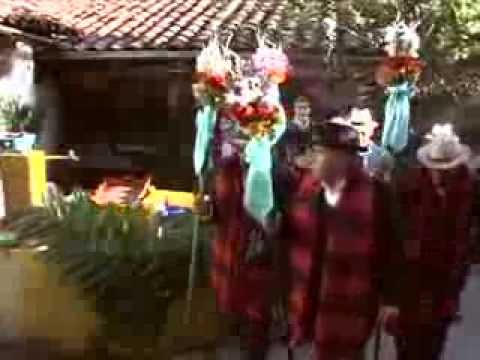
The Nan Pa’ch Ceremony is an ancestral tradition of Mayan Mam people, whose main foundation is the cosmogonic connection between human beings, corn, and nature; it takes place in Guatemala, in the municipality of San Pedro Sacatepéquez, department of San Marcos. Its intangible cultural elements and annual representations show that respect for and conservation of Mother Earth are principles that strengthen community identity.
The inscription of the Ceremony on the List of Intangible Cultural Heritage in Need of Urgent Safeguarding in 2013 stemmed from the difficulties in carrying out the annual performance, the transmission of the ancestral tradition, and its intergenerational transfer, which had been weakened and fractured by multiple factors, including the internal armed conflict that occurred in the country from 1960 to 1996. Within this same context, the loss of Mayan Mam language, as well as changes in corn planting practices, are central issues.
Together with the culture bearers, the Ministry of Culture and Sports, through the Directorate of Intangible Heritage, from 2022 to 2025, has carried out participatory diagnostic work, situational analysis, and open participatory dialogue that contributed to strengthening the research and documentation of the cultural manifestation, its environment, and its material and intangible elements; as well as the actions promoted for its safeguarding.
The objective of the research was to systematize the information related to the meanings of the ceremony, the dates or periods of its performance, the participants, the phases, musical, symbolic, and gastronomic elements, the contexts, and the sacred places.
This report follows up on the activities carried out by the culture bearers integrated into the Ancestral Council Pro Mother Corn, who, together with the accompanying local and central public institutions, non-governmental organizations linked to the cultural sector, academic and educational centers, media outlets, and the community of San Pedro Sacatepéquez, San Marcos, among other private sector actors, have provided support for the strengthening of this cultural manifestation, significantly impacting its promotion and diffusion at national level.
One of the elements addressed that stands out during this period is related to the joint efforts undertaken for the recovery of practices and the revitalization of internal spaces, sacred places and hills, as well as the material elements used. The difficulties encountered in addressing this cultural manifestation remain linked to the revitalization and use of Mayan Mam language in the territory, the scarcity of economic resources, and the involvement of various social actors seeking prominence through the diffusion of the ceremonial practices.
A.7.
Personne à contacter pour la correspondance
Donnez le nom, l'adresse et les coordonnées d'une personne à qui toute correspondance concernant le rapport doit être adressée.
Titre (Mme/M., etc.)
Mr
Nom de famille
López Castellanos
Prénom
Angel Manuel
Institution/fonction
Technical Director of Intangible Heritage, Ministry of Culture and Sport
Adresse
12 avenue 11-11 zone 1. Guatemala City, Guatemala.
Numéro de téléphone
+502 2208-6600
Adresse électronique
amlopezc@mcd.gob.gt
Autres informations pertinentes
It is important to note that the custodians of this culture are demanding that their cultural manifestation be addressed and safeguarded with a view to its possible inclusion on the Representative List of the Intangible Cultural Heritage of Humanity.
B
Mr
B. État de l'élément inscrit sur la Liste de sauvegarde urgente
Veuillez vous référer au dossier de candidature ou aux précédents rapports, le cas échéant, pour savoir quand établir un rapport sur l'état actuel de l'élément et ne rendez compte que des changements pertinents survenus depuis la date de son inscription sur la Liste ou depuis le précédent rapport. Les dossiers de candidature, les calendriers spécifiques et les précédents rapports, le cas échéant, sont disponibles à l'adresse suivante : https://ich.unesco.org ou peuvent être demandés au Secrétariat.
L'État partie s'efforce de prêter une attention particulière au rôle du genre et d'assurer la plus large participation possible des communautés, des groupes et, le cas échéant, des individus concernés ainsi que des organisations non gouvernementales pertinentes pendant le processus de préparation de ce rapport ; il lui est demandé au point D ci-dessous de décrire de quelle manière il y est parvenu.
B.1.
Fonctions sociales et culturelles
Expliquez les fonctions, les significations sociales et culturelles de l'élément aujourd'hui, au sein et pour ces communautés, les caractéristiques de ses détenteurs et de ses praticiens et décrivez, entre autres, toute catégorie de personnes exerçant un rôle ou des responsabilités spécifiques vis-à-vis de l'élément. Une attention particulière devrait être accordée à tout changement pertinent susceptible d'avoir des répercussions sur le critère d’inscription U.1 (« L’élément est constitutif du patrimoine culturel immatériel tel que défini à l'article 2 de la Convention »).
Social and cultural functions
This is a ritual of veneration of corn that is celebrated in the municipality of San Pedro Sacatepéquez, in the department of San Marcos. It highlights the close connection between human beings and nature. Thanks are given to corn, as a sacred food, and prayers are offered for good harvests and blessings through offerings and supplications.
The Nan Pa'ch ceremony has vital social and cultural functions for the Maya Mam people, primarily to give thanks for the corn harvest, reaffirm their identity and worldview, strengthen community ties through collective participation, and transmit ancestral knowledge to new generations, thus serving as a pillar of their cultural heritage. It is integrated with the structures of communal authority, strengthening the social order and shared roles that foster unity.
It is a key mechanism for cultural transmission, where elders pass on knowledge, cultivation techniques, and the Maya Mam philosophy to new generations through practice and oral tradition. The activity helps preserve traditions front external influences, such as the fight against chemical fertilizers and genetically modified corn.
It involves families, generating communion and community, with participants ranging from elders to children, reinforcing identity and a sense of belonging. The ceremonial elements, and rituals for coexistence, oral teaching, and the practical application of ancestral knowledge for the entire population, without distinction of age or gender.
B.2.
Analyse de sa viabilité et risques auxquels il est actuellement exposé
Décrivez le degré actuel de viabilité de l'élément, en particulier la fréquence et l'étendue de sa pratique, la vigueur des modes de transmission traditionnels, la composition démographique des praticiens et des publics, et sa durabilité. Veuillez aussi identifier et décrire les facteurs qui, le cas échéant, constituent une menace pour la pérennité de la transmission et de la représentation de l'élément et indiquez le degré de gravité et de proximité de tels facteurs, en accordant une attention particulière à tout renforcement ou affaiblissement de la viabilité de l'élément suite à son inscription.
Assessment of its viability and current risks
For the Ministry of Culture and Sports, through the Ancestral Council Pro Mother Corn, the ceremony remains active, with the participation and support of the communities. For several years, the current custodians of the culture have promoted community participation and the integration of young people and children in educational spaces that allow for the dissemination of the symbolic value of the ceremony and the importance of corn and Mother Nature within the Maya Mam identity, seeking to strengthen the collective identity of the people of San Pedro Sacatepéquez, in the department of San Marcos. Workshops are held in public and private educational centers; they also participate in community activities and celebrations, as well as in cultural events at the departmental, national, and international levels.
To keep the cultural manifestation alive, although they have required institutional support, for the most part, the custodians of the culture have managed year after year the associated costs related to their clothing, musical instruments, material elements, transportation, food, among others.
In San Pedro Sacatepéquez, San Marcos, there is a genuine interest in participation from the new generations and both formal and informal media. The risks to its viability, although minimal, lie in the economic difficulties and the expenses of preparation and participation.
The current challenges are linked to the modification, due to land use and ownership issues, of some inherent spaces where they carry out their ritual practices.
Another challenge is the intervention of other actors who seek prominence through the dissemination of the ceremony.
B.3.
Mise en œuvre des mesures de sauvegarde
Veuillez rendre compte des mesures de sauvegardes qui ont été décrites dans le dossier de candidature et dans un précédent rapport, le cas échéant. Décrivez de quelle manière elles ont été mises en œuvre et ont contribué de façon substantielle à la sauvegarde de l'élément au cours de la période considérée, en tenant compte des contraintes externes ou internes telles que des ressources limitées. Incluez en particulier des informations sur les mesures prises afin d'assurer la viabilité de l'élément en permettant à la communauté d'en poursuivre la pratique et la transmission. Fournissez les renseignements suivants en ce qui concerne la mise en œuvre de l’ensemble des mesures de sauvegarde ou du plan de sauvegarde :
B.3.a.
Objectifs et résultats
Indiquez quels objectifs principaux ont été atteints et quels résultats concrets ont été obtenus pendant la période considérée.
Objectives and results
The main objectives during this period were linked to the work of research, registration and participatory dialogue for the implementation of a situational diagnosis of the current state of the cultural manifestation in which the bearers of the culture were involved through the Pro Madre Maíz association, today called the Pro Madre Maíz Ancestral Council, and social actors who participate and show interest in strengthening the culture of San Pedro Sacatepéquez, San Marcos and especially the Pa'ch Ceremonial.
The objective of this diagnosis was to identify strengths and weaknesses around the Ceremonial and its Safeguard. The results of the diagnosis were presented to the bearers of the culture and related social actors, which generated debates about the participants, meanings, temporality, uses and material elements that are part of this cultural manifestation.
As a result, follow-up agreements were signed between the bearers of the culture of the Ceremonial, the Ministry of Culture and Sports, entities and related social actors; which was intended to give continuity to the work carried out regardless of the possible rotation of institutional personnel derived from a change in government administration.
The follow-up work included dialogue spaces, accompaniment, support and audiovisual documentation of the Ceremonial by the institutional technical team, as well as participant observation of the Ceremonial.
At the same time, joint actions were carried out with the bearers of culture for the recovery and revitalization of sacred places and hills, as well as material elements.
B.3.b.
Activités de sauvegarde
Dressez la liste des principales activités menées au cours de la période considérée pour obtenir ces résultats escomptés. Veuillez décrire les activités en détail en mentionnant leur efficacité et tout problème rencontré dans leur mise en œuvre.
Safeguarding activities
The period of this report coincides with two initial moments that delve into the safeguarding dynamics of the Nan Pa'ch Ceremonial.
The first moment refers to the administrative changes within the Directorate of Intangible Heritage of the Ministry of Culture and Sports, which were carried out in June 2022.
The second moment is carried out at the request of monitoring the safeguard measures of the Ceremonial, promoted by the Nan Jal Cultural Association (Madre Mazorca), which was the promoter of the declaration as intangible Cultural Heritage of the Nation of the “Ceremonial of the Pach, the Pregón and its parliaments”, according to Ministerial Agreement 524-2002 and which was also part, together with Pro Madre Maíz (bearers of the culture), of the registration process of the Ceremonial on the List of Intangible Cultural Heritage that requires urgent safeguarding measures promoted by UNESCO.
Based on the follow-up request of the Nan Jal Association, through the Ministry of Culture and Sports, during the year 2023, a technical workspace was established to monitor the safeguard measures of the Nan Pa'ch Ceremonial. The table was made up of the bearers of culture, the Ministry of Culture and Sports, the Municipality of San Pedro Sacatepéquez, the Nan Jal association, the Sampedrana’s Culture House, the Toj Chum cultural association and eventual actors interested in strengthening the cultural heritage of the municipality.
As the first joint action, the participatory diagnosis of the cultural manifestation was carried out, for which the Technical Directorate of Intangible Heritage developed a consultation instrument and promoted dialogue spaces for its execution and presentation of results in July 2023.
Among the most relevant results of this diagnosis, differences and similarities were identified regarding the meaning and symbolic value of the cultural manifestation, its effects linked to the weakening of the Mayan Mam language in the area and the use of spaces considered as sacred places. In addition, greater intervention and monitoring by the related public institutions was visualized and required.
Following the presentation of the diagnostic results, follow-up agreements were established in December 2023, anticipating a new change of government administration in January 2024.
During the year 2024, the follow-up work included dialogue spaces that made it possible to address the weaknesses and effects identified in the diagnosis and in parallel, participatory accompaniment, support and audiovisual documentation of the Ceremonial was carried out on the different dates, activities and routes that are currently part of it; all of this, with the aim of accompanying and promoting the revitalization of the cultural manifestation, through participant observation as part of a qualitative anthropological and sociological research process on the Nan Pa'ch Ceremonial.
In the year 2025, the research work continued to focus, above all, on the sacred places used for spiritual practice within the ceremonial, linked to four sacred “Guardian” hills and thirteen crosses, in spaces that represent the energies that articulate the human being. In parallel, it supported the management with the owners of the private facilities for the use of the spaces that required it, to carry out the ceremonial ritual in the coming years. They participated and provided economic and logistical assistance in the ceremonial activities. In addition, the active participation of the bearers of culture was documented in various events at the local level, such as in San Francisco Soche and San Juan del Pozo, also at the departmental and national level; In addition, the contributions provided to the ceremonial through entities linked to the Guatemalan cultural sphere were documented.
B.3.c.
Participation de communautés, de groupes ou d'individus aux activités de sauvegarde
Veuillez décrire de quelle manière les communautés, les groupes ou, le cas échéant, les individus ainsi que les organisations non gouvernementales pertinentes ont participé de façon effective à l'exécution des mesures de sauvegarde, y compris en termes de rôles du genre. Décrivez le rôle joué par l'organisation ou l'organe chargé de l'exécution (dénomination, informations de référence, etc.) et les ressources humaines qui ont été mises à disposition pour la mise en œuvre des activités de sauvegarde.
Participation of communities, groups or individuals in the safeguarding activities
During the ceremonial activities, local and national public entities participated, including the Ministry of Culture and Sports, the Guatemalan Institute of Tourism -INGUAT- and the Municipality of San Pedro Sacatepéquez. Both institutions promoted activities to address the Ceremonial in other spaces at the national level or contributed resources to strengthen it.
In parallel, the civil organizations, Nan Jal, Toj Chum, Twi Chej and the Casa de la Cultura Sampedrana participated. Representatives and students from schools, private schools, public and private universities, the University of San Carlos of Guatemala and the Rafael Landívar University respectively joined the process and the ceremonial accompaniment. It should be noted that the members of social organizations and academic entities that participated in the different activities are part of the community and culture of San Pedro Sacatepéquez in San Marcos.
The ceremonial activities involve not only the community of male and female bearers, but also members of their families. The tours that are carried out involve the free participation of the community, who along the way provide offerings of fruits and vegetables, typical of the tradition.
At the end of the tour of the different points, hills and sacred places, the ceremony concludes with the traditional dance in the assigned space, which has been, during the period of this report, the Municipal Central Plaza, or the headquarters of the Pro Madre Maíz Ancestral Council. The community that participates in the event converges in this space, without distinction of age or gender.
Most of the technical tables and ceremonial activities were covered by local and municipal media.
B.3.d.
Calendrier
Indiquez, sous forme de calendrier, les dates de mise en œuvre de chacune des activités.
Timetable
During 2022, the Ministry of Culture and Sports held meetings with the Nan Jal association to follow up on the safeguarding measures for the ceremonial practice, establishing the need to form a technical working group together with the cultural practitioners.
In 2023, this technical group was established, integrating the cultural practitioners through the Pro Mother Corn Committee, public institutions, and social actors involved in or interested in strengthening the ceremonial practice. The Ministry of Culture developed a diagnostic tool, which was implemented within this working group, resulting in an analysis of the current situation of the ceremonial practice, including its strengths and weaknesses. This led to the signing of agreements establishing a work plan, which included research processes through the updating of the inventory of the cultural manifestation and subsequent working and discussion sessions aimed at strengthening and safeguarding the ceremonial practice.
The research, documentation, registration, and dialogue processes have been ongoing throughout 2024 and 2025. In parallel, institutional support was provided for the promotion and dissemination of the cultural manifestation. It is worth noting that during 2024, the monitoring of safeguarding measures focused on the practice of the ceremonial and its related activities, while in 2025, it was primarily focused on the protection of sacred sites considered inherent to the ceremonial practice.
B.3.e.
Dépenses budgétaires
Veuillez fournir le détail des montants des fonds utilisés pour la mise en œuvre de chaque activité (si possible, en dollars des États-Unis), en indiquant dans chaque cas l’origine du financement (sources gouvernementales, contributions en nature des communautés, etc.).
Budget
According to Nery Orozco, president of the Ancestral Council Pro Mother Corn, the annual activities carried out as part of the Nan Pa’ch Ceremony involve an approximate expenditure of US$10,500.00, which is managed by the cultural bearers. Expenses include food, transportation, fuel, payment of basic services, contracting services for the events, clothing, purchase of flowers, fireworks, and in some cases, accommodation, among others.
Regularly, each year the Municipality of San Pedro Sacatepéquez provides a financial contribution ranging from US$1250 to US$3200.
The Ministry of Culture and Sports, during 2025, provided the equivalent of US$1200 for food and US$2000 to carry out workshops and dialogue spaces for the ceremonial activities. In previous years, it provided US$2000 to conduct participatory dialogues and document the activities.
Recently, in 2025, ADESCA, a decentralized entity linked to the Ministry of Culture and Sports, provided musical instruments to the Ancestral Council Pro Mother Corn, including a marimba and a double bass, valued at US$7500.
The Guatemalan Tourism Institute, during 2025, held a Gastronomic Congress and food fair from September 1st to 3rd, focusing on the Na Pa'ach, highlighting the central role of corn in the culture and cuisine. They invited the cultural bearers of the ceremony to discuss their cultural manifestation and perform the dance during the event held in Guatemala City.
B.3.f.
Efficacité globale des activités de sauvegarde
Procédez à une évaluation globale de l'efficacité des activités menées pour parvenir aux résultats escomptés et de l'utilisation des fonds nécessaires à leur mise en œuvre. Veuillez indiquer de quelles manières les activités ont contribué à l’obtention des résultats et si d'autres activités auraient été mieux adaptées à cette fin. Indiquez aussi si les mêmes résultats auraient pu être obtenus avec de moindres ressources financières, si les ressources humaines disponibles étaient appropriées et si les communautés, groupes et individus concernés auraient pu participer davantage.
Overall effectiveness of the safeguarding activities
It is considered that the effectiveness in safeguarding the cultural heritage linked to the Nan Pa'ch Ceremonial has been achieved by promoting the active participation of communities and social actors linked and interested in the strengthening of local culture, constantly evaluating its strengths and weaknesses and working together for the generational transmission, promotion and dissemination of its cultural manifestation.
From 2022 to 2025, all actions carried out during the participatory diagnosis process, the evaluation of the results, the joint construction of the plan and the agreements for the establishment of safeguard actions in the short, medium and long term, have been addressed with the direction and support of the Ministry of Culture and Sports, through the Directorate of Intangible Heritage and the Department of Sacred Places, for the most part, there was the participation of all the actors of the so-called Table Technical, being the bearers of the culture, the Pro Madre Maíz Ancestral Council, the fundamental basis for safeguarding. The development of tools and methodologies adapted to local needs were vital for community management.
Informal teaching, which is intrinsic to the ceremonial, added to the actions in formal education spaces have been strengthened.
Culture bearers are considered to have led the identification and management of their ICH, being main actors in all phases to ensure that measures are relevant and sustainable.
The provision of funds, activities and collaborative projects between the different sectors has been essential for strengthening the cultural manifestation.
The continuity of the work, linked to the safeguarding actions of the Nan Pa'ch Ceremonial, is aimed at strengthening and promoting activities in the formal educational sector, both at the local level and at the national level, with the aim of establishing educational projects that link the school with the community and above all, making the Ceremonial known by addressing its essence, the legacy and importance of corn, the care of Mother Nature and the strengthening of the Mayan Mam identity.
It is considered that, at the beginning of this period and safeguarding process, the permanence of public institutions was vital. Currently, it is perceived that the bearers of culture are strengthened, in terms of management of their heritage, the generation of participatory processes. Furthermore, they are aware of the importance of its generational transfer and the integration of its cultural manifestation into the educational sector, strengthening its connection with the sustainable and cultural development of San Pedro Sacatepéquez.
It is anticipated that the foundations built during this process will promote participatory growth and community involvement within the cultural manifestation. As it grows and is revitalized, it will require a larger budget; However, it is considered that due to the importance of the cultural manifestation, the structure and the knowledge maintained by the bearers of the culture, the efforts will be carried out effectively.
C
López Castellanos
C. Mise à jour des mesures de sauvegarde
C.1.
Plan de sauvegarde mis à jour
Veuillez fournir une mise à jour du plan de sauvegarde inclus dans le dossier de candidature ou dans le précédent rapport. En particulier, veuillez donner des informations détaillées comme suit :
- a. Quels sont les objectifs principaux visés et les résultats concrets attendus ?
- b. Quelles sont les activités principales à mener pour atteindre ces résultats attendus ? Veuillez décrire les activités en détail et dans l'ordre d'exécution, en démontrant leur faisabilité.
- c. Comment le ou les États parties concernés soutiennent-ils la mise en œuvre du plan de sauvegarde mis à jour ?
Updated safeguarding plan
The first objective is the enhancement of the internal spaces that are part of the ritual activities within the Nan Pa’ch Ceremony. Since the hills and crosses that are part of the ceremony have already been identified and georeferenced, and the historical and anthropological information linked to the ceremony has been systematized, it was agreed with the Ancestral Council Pro Mother Corn that it is opportune to work together so that the spaces and crosses that serve as ceremonial altars are restored and protected, thus elevating their status and ensuring that the community of San Pedro Sacatepéquez identifies them, connects them to the Ceremony, and recognizes them as part of their cultural heritage. To this objetive, the intervention and financial assistance of public institutions will be requested, specifically the Ministry of Culture and Sports and the Municipality of San Pedro Sacatepéquez, San Marcos.
The second objective refers to all the promotional and dissemination activities of the Ceremony, which will strengthen its integration and inclusion in public and private educational spaces, prioritizing the local level in San Pedro Sacatepéquez. This includes the reprinting of specific educational material about the Nan Pa’ch Ceremony, as well as the integration of the Ceremony into various events at the national level. The continuation of financial support and institutional dissemination mechanisms is also planned.
The bearers of this cultural tradition are considering the possibility that this Ceremony will be included soon in the Representative List of the Inmaterial Cultural Heritage of Humanity.
C.2.
Calendrier des activités à venir
Veuillez fournir un calendrier du plan de sauvegarde mis à jour (sur une période d’environ quatre ans).
Timetable
During 2026, all work related to the enhancement of the inherent spaces is planned. This will require the involvement of the Department of Pre-Hispanic Monuments, the Department of Conservation of Cultural Heritage, and the Department of Sacred Sites, all under the Ministry of Culture and Sports. These departments, together with the Municipality of San Pedro Sacatepéquez and the Ancestral Council Pro Mother Corn, will be responsible for the necessary improvement and construction work, taking into account that each space has different characteristics and administrative requirements.
It is anticipated that in all subsequent years, the ceremonial practices will be disseminated and promoted in San Pedro Sacatepéquez, as well as their safeguarding. To this objetive, the participating public institutions, the various social actors involved, and, of course, the bearers of the culture, will continue the training and awareness-raising efforts regarding the importance of this cultural manifestation. Awareness workshops, involvement in local activities, media dissemination, among others, are essential elements to keep the ceremony alive. The intersectoral approach currently maintained by the ceremonial practices must remain active. For its part, the Ministry of Culture and Sports remains committed to providing resources and tools to disseminate this tradition.
The great challenge during the 2028–2029 period will be to ensure the continuity of these processes, regardless of the governmental and administrative changes that the Ministry of Culture and Sports and the Municipality of San Pedro Sacatepéquez will undoubtedly undergo.
C.3.
Budget des activités à venir
Veuillez fournir les estimations des fonds requis pour la mise en œuvre du plan de sauvegarde actualisé (si possible, en dollars des États-Unis), en identifiant les ressources disponibles (sources gouvernementales, contributions en nature des communautés, etc.)
Budget
Due to administrative responsibilities within the public administration, it is expected that the budgets allocated to the various ceremonial activities will increase as the cultural manifestation grows and is embraced by the population and communities, or at least remain stable.
It is considered that achieving the objective of enhancing the inherent spaces will require greater involvement from technicians and professionals in the field, which will intrinsically necessitate increased public investment, especially in the renovation of the altars and ceremonial crosses.
In terms of promotion and dissemination, support will be needed for renewing the attire of the cultural bearers, which substantially increases the budget required for strengthening the ceremonial practices.
As more people integrate into and participate in the ceremonies, the expenses necessary for managing and coordinating the activities will also increase.
It is projected that, in the next four years, budgetary needs will increase by 25% annually. This will require that the annual plans and budgets of public institutions include this increase in their planning.
If the transfer of the List of Intangible Cultural Heritage in Need of Urgent Safeguarding to the Representative List of the Inmaterial Cultural Heritage of Humanity, promoted by UNESCO, is carried out, the activities parallel to this process will require greater public investment.
C.4.
Participation des communautés
Veuillez décrire comment les communautés, groupes et individus ainsi que les organisations non gouvernementales pertinentes ont été impliqués, y compris en termes de rôles du genre, dans la mise à jour du plan de sauvegarde et comment ils seront impliqués dans sa mise en œuvre.
00089
Community participation
The Intangible Heritage Directorate of the Ministry of Culture and Sports of Guatemala addressed the monitoring and work related to safeguarding the intangible cultural heritage associated with the Ceremonial, in strict adherence to the 2003 Convention. All implemented actions were carried out with the prior, free, and informed consent of the culture bearers, who, in turn, are key to keeping this tradition alive through their daily practices. The identification, management, design, established safeguarding measures, and their implementation are all part of the set of decisions made by the culture bearers. The Ministry of Culture has taken on the role of facilitator and advisor to strengthen their capacities and ensure the safeguarding of their heritage so that it can be transmitted to future generations.
The participation of social actors, without distinction of gender, in some cases contributed significantly to safeguarding the heritage, while in other cases, especially during the diagnostic and dialogue phases, it limited and hindered progress, generating disagreements or conflicts. However, currently, they are working together to strengthen and safeguard the Ceremonial.
The openness and effective management demonstrated by the Ancestral Council Pro Mother Corn in resolving difficulties are noteworthy. This council will undoubtedly safeguard its heritage with or without the support of other social actors, including public institutions.
C.5.
Contexte institutionnel
Veuillez indiquer quelles institutions sont en charge de la gestion locale et de la sauvegarde de l'élément inscrit sur la Liste de sauvegarde urgente, notamment :
- a. l'(les) organisme(s) compétent(s) impliqué(s) dans sa gestion et/ou sa sauvegarde ;
- b. l'(les) organisation(s) de la communauté ou du groupe concernée(s) par l'élément et sa sauvegarde.
2006-10-25
Institutional context
The accompanying public institutions include the Ministry of Culture and Sports, through the Directorate of Intangible Heritage and its Department of Sacred Sites, which act as an advisory and management body for monitoring the safeguarding measures. The Guatemalan Tourism Institute (INGUAT) provided support in the promotion and dissemination of the Ceremony, promoting and integrating the practitioners into various activities. The Municipality of San Pedro Sacatepéquez, San Marcos, has been a key partner, providing support and resources (physical spaces and financial assistance) to the cultural practitioners to keep the heritage alive. ADESCA recently contributed by providing musical instruments. The Ministry of Education also incorporates the Ceremony into school activities.
The accompanying community organizations, such as Nan Jal, Twi Chej, Toj Chum, and the San Pedro Cultural Center, among others, have supported the safeguarding process and, like INGUAT, have contributed to the promotion and dissemination of the Ceremony, integrating the cultural practitioners into different spaces and showcasing the Mam Mayan tradition.
And the Ancestral Council for Mother Corn, which keeps the Ceremony alive and seeks its safeguarding.
D
Angel Manuel
D. Participation des communautés à l'établissement du présent rapport
Décrivez les mesures qui ont été prises pour assurer la plus large participation possible des communautés, des groupes et, le cas échéant, des individus ainsi que des organisations non gouvernementales pertinentes concernés pendant la préparation du présent rapport.
Participation of communities in preparing this report
Since June 2022, the Directorate of Intangible Heritage has not experienced any changes or departures of technical and management personnel. Even though the government administration and the authorities of the Ministry of Culture itself were changed in January 2024, the directorate responsible for monitoring and safeguarding the Nan Pa’ch Ceremony has remained unchanged, allowing it to initiate and continue all the safeguarding processes and actions that have been carried out during the period covered by this report.
The coordinated work during this time has been direct and transparent, both with the cultural bearers and the related social actors. For this reason, the level of trust and credibility generated has allowed for strong and sustainable communication; so much so that all the interventions and steps taken to strengthen and address the Ceremony are known to the cultural bearers.
During the last meeting held in San Pedro Sacatepéquez, San Marcos, in November 2025, the results of the institutional interventions carried out during the last year were presented, just as in previous years. It was announced that, as in 2021, the periodic report to UNESCO would be prepared using the information provided in this document, which describes each of the actions implemented jointly with the cultural bearers and accompanying social actors.
It should be noted that the Directorate of Intangible Heritage currently maintains an active relationship with all participating social actors and, fundamentally, with the cultural bearers of the Nan Pa’ch Ceremony.
E
Technical Director of Intangible Heritage, Ministry of Culture and Sport
E. Signature au nom de l'État partie
Le rapport doit être signé par un responsable habilité à le signer pour le compte de l’État, avec la mention de son nom, de son titre et de la date de soumission.
Nom
Angel Manuel López Castellanos
Titre
Technical director of intangible heritage
Date
13-12-2025
Signature
Angel Manuel López Castellanos
Chargement du rapport périodique signé