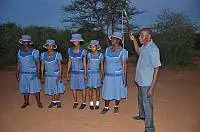
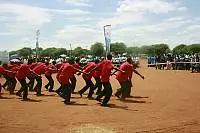
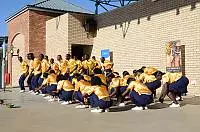
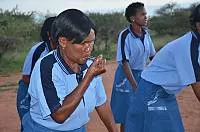
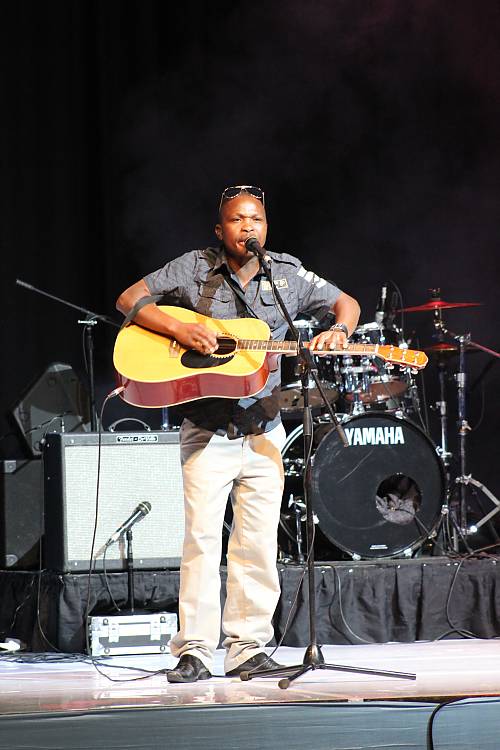
Le dikopelo, musique traditionnelle des Bakgatla ba Kgafela dans le district de Kgatleng


Votre navigateur n'est pas supporté par cette application. Merci d'utiliser des versions récentes de navigateurs tels que Google Chrome, Firefox, Edge ou Safara pour accéder aux interfaces 'Dive'.

Inscrit en 2017 (12.COM) sur la Liste du patrimoine immatériel nécessitant une sauvegarde urgente
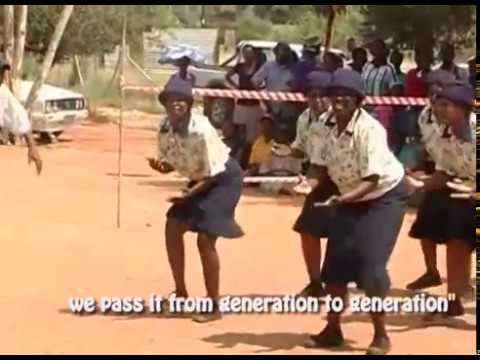
© S.O. Rampete/Bakgatla ba Kgafela, 2011

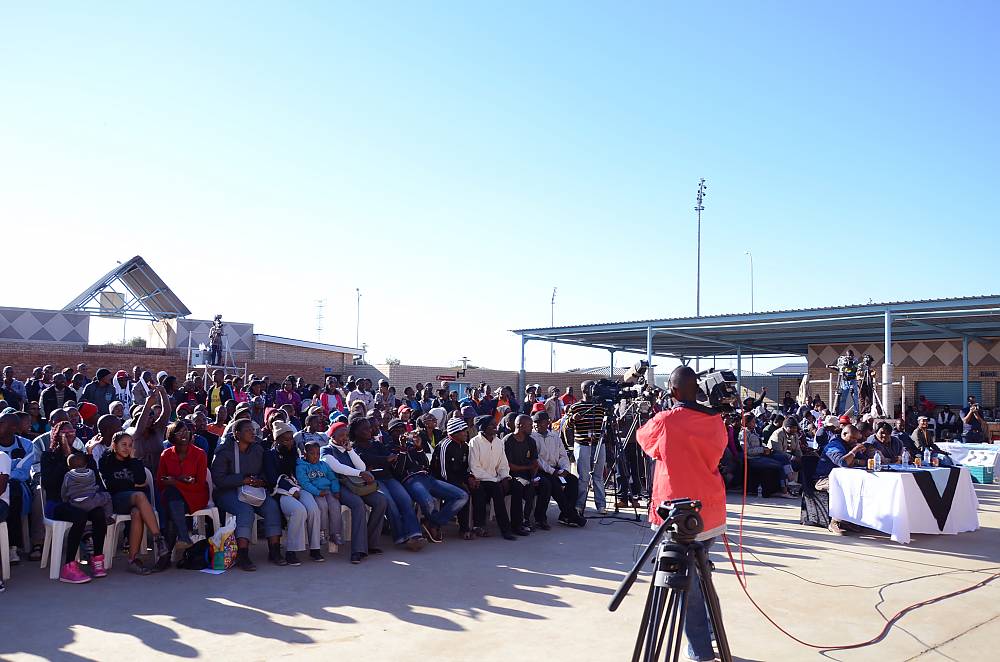
La pratique du dikopelo associe du chant vocal et de la danse suivant une chorégraphie spécifique, sans instruments de musique, et réunit les habitants d’une zone donnée qui chantent en chœur. L’élément est pratiqué par les hommes, les femmes et les enfants mais il est surtout maîtrisé par les anciens qui, en tant que membres d’un Conseil consultatif informel, transmettent leur savoir-faire à la jeune génération. Le dikopelo est une pratique collective fondée sur une vision partagée de la vie de la communauté. L’élément n’est plus aussi répandu que par le passé. Bien que le dikopelo soit à l’origine un événement pratiqué par les communautés sur les terres agricoles, le déclin de la population agricole a entraîné le déplacement des chœurs vers des villages où il est plus difficile de le pratiquer en raison de la modernisation. Les pratiques de divertissement modernes ont également réduit le nombre de praticiens expérimentés en mesure d’expliquer la signification de l’élément. Pourtant, malgré la faible viabilité du dikopelo, la communauté et les praticiens s’engagent pour sa sauvegarde, comme en témoignent leur détermination à se mesurer à des groupes issus d’autres districts et les efforts déployés pour faire revivre le dikopelo dans l’optique de préserver les jeunes des problèmes sociaux et de promouvoir des messages positifs dans la communauté.
Rapport périodique

Rapport sur l'état d'un élément inscrit sur la liste du patrimoine culturel immatériel nécessitant une sauvegarde urgente

A. Page de couverture

A.1.

État partie

Nom de l'État partie

Botswana

A.2.

Date du dépôt de l'instrument de ratification, d'acceptation, d'approbation ou d'adhésion

Elle peut être consultée en ligne.

Date of deposit of the instrument of ratification, acceptance, approval or accession

2010-04-01

A.3.

Élément inscrit sur la Liste de sauvegarde urgente qui fait l'objet du présent rapport

Nom de l'élément

Dikopelo folk music of Bakgatla ba Kgafela in Kgatleng District

Inscrit en

2017

État(s) soumissionnaire(s)

Botswana

A.4.

Période considérée dans le présent rapport

Veuillez indiquer la période couverte par le présent rapport.

Reporting period covered by this report

01-01-2022 - 15-12-2025

A.5.

Autres éléments inscrits sur la Liste de sauvegarde urgente, le cas échéant

Veuillez établir une liste de tous les autres éléments présents sur le territoire de votre pays qui sont inscrits sur la Liste de sauvegarde urgente et indiquer en quelle année ils y ont été inscrits ; pour ce qui est des éléments multinationaux, veuillez indiquer quels autres États sont concernés.

Other elements inscribed on the Urgent Safeguarding List, if any

Le savoir-faire de la poterie en terre cuite dans le district de Kgatleng au Botswana (2012)

A.6.

Synthèse du rapport

Veuillez fournir une synthèse du rapport, qui permette au grand public de comprendre l'état actuel de l'élément, mentionne toute incidence positive ou négative de son inscription et fasse état des mesures de sauvegarde mises en œuvre pendant la période considérée et leur possible mise à jour les années suivantes.

Executive summary of the report

The Dikopelo Folk Music tradition of the Bakgatla Ba Kgafela represents an important element of the community's intangible cultural heritage. It functions as a unifying social practice that provides both education and entertainment, while strengthening social cohesion among community members. Although the element has historically been practiced mainly by adult men and women, there has been a notable increase in youth participation. Young people have progressed from observing and practicing the tradition to taking on significant leadership and management roles. Today, practitioners include individuals from a wide range of professional backgrounds, contributing to the continued visibility and sustainability of the element.

The element's prominence is evident across various social gatherings, government events, and privately organized functions in both rural and urban settings. Several safeguarding measures outlined in the nomination file continue to be implemented, including awareness raising activities, capacity building workshops and promotion of the 2003 Convention. The tradition steadily attracts new practitioners and audiences from other districts in Botswana and beyond. Traditional modes of transmission remain strong, with elder practitioners passing knowledge to younger participants through apprenticeship, observation, and active involvement. Contemporary forms of transmission, particularly digital platforms driven by young people, have also become increasingly influential.

Despite progress made, since inscription the element continues to face challenges primarily linked to increasing commercialization. The expansion of privately organized, profit-driven events has raised concerns regarding the potential dilution of cultural meaning and uneven attention to safeguarding priorities. While such activities contribute to visibility and economic opportunities for practitioners, they also require careful alignment with community defined values to ensure the element’s integrity and long-term viability.

Safeguarding activities carried out during the reporting period benefited from both government and private-sector support. The Ministry of Youth, Gender, Sport and Culture, now the Ministry of Sport and Arts supported capacity-building and skills-development initiatives, while private and community-led events provided additional platforms for enactment and performance. These combined efforts contributed to sustained practice, increased participation, and broader public engagement / participation.
Efforts to address the challenges facing the element remain collaborative, participatory, and ongoing. Various stakeholders including practitioners, master practitioners, community leaders, educational institutions, business entities, government departments and audiences are actively involved. The Kgatleng District Intangible Cultural Heritage Committee continues to guide and coordinate the safeguarding processes working closely with the Baikopanyi Choirs Association.

The updated safeguarding plan will continue to prioritize awareness raising on the 2003 Convention, leadership training, copyright education and foundational instruction in Dikopelo Folk Music and adjudication. A comprehensive research study is scheduled to deepen understanding of the element's functions, practitioner characteristics and social significance, including identifying new master practitioners. Planned future measures also include strengthening institutional cooperation, improving licensing and regulatory conditions for practitioners and enhancing mechanisms to address threats posed by commercialization, decontextualization and environmental risks.

A.7.

Personne à contacter pour la correspondance

Donnez le nom, l'adresse et les coordonnées d'une personne à qui toute correspondance concernant le rapport doit être adressée.

Titre (Mme/M., etc.)

Ms

Nom de famille

Gaobatwe

Prénom

Lame

Institution/fonction

Senior Arts Officer - Ministry of Sport and Arts

Adresse

Ministry of Sport and Arts
Private Bag 00384
Gaborone, Botswana

CBD, Central Square Building
Plot 54355

Numéro de téléphone

+267 74214464 / +267 3698200

Adresse électronique

lgaobatwe@gov.bw

Autres informations pertinentes

Alternative email address:
lamegaobatwe@gmail.com

B

Ms

B. État de l'élément inscrit sur la Liste de sauvegarde urgente

Veuillez vous référer au dossier de candidature ou aux précédents rapports, le cas échéant, pour savoir quand établir un rapport sur l'état actuel de l'élément et ne rendez compte que des changements pertinents survenus depuis la date de son inscription sur la Liste ou depuis le précédent rapport. Les dossiers de candidature, les calendriers spécifiques et les précédents rapports, le cas échéant, sont disponibles à l'adresse suivante : https://ich.unesco.org ou peuvent être demandés au Secrétariat.

L'État partie s'efforce de prêter une attention particulière au rôle du genre et d'assurer la plus large participation possible des communautés, des groupes et, le cas échéant, des individus concernés ainsi que des organisations non gouvernementales pertinentes pendant le processus de préparation de ce rapport ; il lui est demandé au point D ci-dessous de décrire de quelle manière il y est parvenu.

B.1.

Fonctions sociales et culturelles

Expliquez les fonctions, les significations sociales et culturelles de l'élément aujourd'hui, au sein et pour ces communautés, les caractéristiques de ses détenteurs et de ses praticiens et décrivez, entre autres, toute catégorie de personnes exerçant un rôle ou des responsabilités spécifiques vis-à-vis de l'élément. Une attention particulière devrait être accordée à tout changement pertinent susceptible d'avoir des répercussions sur le critère d’inscription U.1 (« L’élément est constitutif du patrimoine culturel immatériel tel que défini à l'article 2 de la Convention »).

Social and cultural functions

The element continues to constitute an important part of the intangible cultural heritage of the Bakgatla Ba Kgafela community. It remains embedded in their cultural way of life and is regularly enacted during weddings, community social gatherings, government ceremonies and privately organised events. The community values the element as a powerful social unifier that brings people of different ages, backgrounds, and social status together for both education and entertainment. Through its performances, the element creates an environment that promotes solidarity, strengthens social cohesion and reciprocal support among practitioners.

The social and cultural meanings of the element extend beyond entertainment. It reinforces the identity of the Bakgatla Ba Kgafela, preserves cultural memory and provides continuity between generations. It also serves as an important vehicle for disseminating information on topical issues, platform of teaching moral values, etiquette, respect and appropriate social conduct, thereby contributing to community wellbeing. Since the element's inscription, its status as a marker of identity has become even more prominent, with increased local awareness of its cultural value and greater appreciation for the need to safeguard it.

The characteristics of the practitioners have expanded over the years. Practitioners now include individuals from a wide range of professions such as media, academia, traditional leadership, business, filmmaking, the music industry, healthcare, security services and public administration. The element is no longer seasonal, it is practiced frequently particularly on weekends and at month end activities, contributing to its sustained relevance in community life.

Specific categories of bearers with special responsibilities toward the element continue to play distinct roles. Master practitioners and elder knowledge holders are responsible for transmitting traditional skills, correcting performance techniques and leading rehearsals. Song leaders and whistle (pswerre) specialists play crucial role in directing group performances. Group leaders and cultural custodians coordinate events, maintain discipline, ensure continuity and uphold the increasingly taken up leadership roles, demonstrating growing mastery of specialized skills such as whistle use, song initiation, choreography and group management. Many youth undergo apprenticeship and structuring mentoring, which has strengthened intergenerational transmission. Committees within Dikopelo groups play an oversight role in the management, safeguarding, and transmission of the element. They also coordinate performances, and participation in festivals and training activities, while ensuring that Dikopelo is practiced in accordance with community values and cultural protocols.

Overall the element continues to serve essential social and cultural functions for the Bakgatla Ba Kgafela community. Its increasing visibility, expanded participation and evolving roles, particulary the emergence of young leaders demonstrate the dynamic and living nature of the element.

B.2.

Analyse de sa viabilité et risques auxquels il est actuellement exposé

Décrivez le degré actuel de viabilité de l'élément, en particulier la fréquence et l'étendue de sa pratique, la vigueur des modes de transmission traditionnels, la composition démographique des praticiens et des publics, et sa durabilité. Veuillez aussi identifier et décrire les facteurs qui, le cas échéant, constituent une menace pour la pérennité de la transmission et de la représentation de l'élément et indiquez le degré de gravité et de proximité de tels facteurs, en accordant une attention particulière à tout renforcement ou affaiblissement de la viabilité de l'élément suite à son inscription.

Assessment of its viability and current risks

The element remains highly viable within the Bakgatla Ba Kgafela community, with strong awareness of its significance and continued practice across the district. Since inscription, its visibility and recognition have increased considerably attracting greater participation from practitioners and wider audiences. The element is currently enacted frequently, often weekly or during month end gatherings, as well as during weddings, community events, and official ceremonies. This regularity of practice demonstrates its ongoing relevance and vitality.

Traditional modes of transmission remain strong with elders practitioners, Master Practitioners, and group leaders actively mentoring younger members through apprenticeship, hands on training, observation, and guided participation during performances. These traditional mechanisms continue to function effectively, ensuring the preservation of core skills, techniques and knowledge.

The demographics of practitioners continue to broaden. Practitioners include elders, adults, men, women and an increasing number of youth, who for now form a large proportion of active participants. Many come from diverse professional backgrounds. Audiences have similarly expanded, consisting of local community members, visitors from outside the district, youth supporters, and general followers who attend events in both rural and urban settings. Media coverage has also contributed to a wider national visibility.

Sustainability of the element has improved since inscription. Practitioners are now able to apply for and acquire land for practice spaces, enabling the development of permanent structures and small scale cost recovery initiatives to support sanitation, licensing fees, infrastructure and maintenance. The continuous inflow of young practitioners further strengthens long term sustainability.

However, several significant threats continue to affect the element 's viability. The most serious and immediate threat is commercialization. The unregulated involvement of private sector sponsors and organizers has led to more frequent , profit driven events that are sometimes scheduled weekly or monthly. This intensity places pressure on the natural environment and increases waste management challenges. Commercialization also risks shifting focus from cultural preservation to financial gain, potentially weakening traditional values, performance quality and community control over the element. Social and economic barriers have also emerged as a result of commercialization. Rising costs associated with events including entrance fees, logistics and participation expenses limit the involvement of some community members, particularly those with limited financial resources. These challenges may reduce participation and threaten inclusive transmission if not addressed.

Since inscription, the element's viability has generally strengthened due to heightened visibility, expanded audiences and increased youth involvement. The element remains vibrant and widely practiced, with strong traditional and contemporary mechanisms of transmission. While its viability has improved since inscription, addressing the growing challenges associated with commercialization is essential in ensuring it continued sustainability.

B.3.

Mise en œuvre des mesures de sauvegarde

Veuillez rendre compte des mesures de sauvegardes qui ont été décrites dans le dossier de candidature et dans un précédent rapport, le cas échéant. Décrivez de quelle manière elles ont été mises en œuvre et ont contribué de façon substantielle à la sauvegarde de l'élément au cours de la période considérée, en tenant compte des contraintes externes ou internes telles que des ressources limitées. Incluez en particulier des informations sur les mesures prises afin d'assurer la viabilité de l'élément en permettant à la communauté d'en poursuivre la pratique et la transmission. Fournissez les renseignements suivants en ce qui concerne la mise en œuvre de l’ensemble des mesures de sauvegarde ou du plan de sauvegarde :

B.3.a.

Objectifs et résultats

Indiquez quels objectifs principaux ont été atteints et quels résultats concrets ont été obtenus pendant la période considérée.

Objectives and results

The safeguarding measures implemented during the reporting period related to three key objectives. The objectives were; To build the capacity of Dikopelo Practitioners; To update the inventory on the Dikopelo element and; To increase the visibility of the element.

To Build Capacity of Dikopelo Practitioners
The primary objective was to organize capacity-building and skills-training workshops for practitioners. The intended results were to equip Dikopelo practitioners with progressive and productive skills in entrepreneurship; strengthen their understanding of the basics of Dikopelo Folk Music of the Bakgatla Ba Kgafela; improve their knowledge of intellectual property rights; and increase the participation of young people in safeguarding activities. All three planned activities were successfully implemented during the reporting period, namely the Copyrights for Artistic Development Workshop, the Technical Training Workshop / Skills transfer workshop on TINORO; a core vocal component of Dikopelo Folk Music and the Mid-Year Festival Conceptualization Workshop. From these capacity building workshops, practitioners gained practical knowledge on copyright, artistic rights and lawful protection of creative work. Skills in entrepreneurship, resource mobilization and project coordination were strengthened, enabling improved management of group activities. Practitioners also reported improved confidence in performing, organizing, and safeguarding the element, contributing to sustained viability.

To Update the Inventory on the Element
The objective of this activity was to generate updated findings on the current status of the element. A three-month in-depth research project was conducted to assess community awareness, gather new information, identify Master Practitioners, determine potential risks or threats, and inform future safeguarding strategies. During the research, two (2) new Master Practitioners, both female were identified. New information on performance styles, threatened components, and transmission practices were documented. The updated findings were incorporated into the Kgatleng District Intangible Cultural Heritage database. Since inscription the research has provided a clearer understanding of the element's evolution, transmission patterns and emerging threats.

To Increase the Visibility of the Element
Activities under this objective included the development of educational materials for institutions of learning and the conceptualization of a Mid-Year Festival that would showcase the element outside of traditional festive periods. A concept development workshop was conducted to equip the festival working team with essential skills in resource mobilization, marketing, publicity, coordination, and project management. The festival working team gained strengthened capacity to manage large scale cultural events. The Mid-Year Festival concept was successfully developed and is positioned to serve as an annual visibility platform. Since inscription, the visibility of the element has increased significantly through media exposure, institutional engagements and expanded participation. The development of the Mid -Year Festival marks a major milestone in promoting the element to broader audiences and reinforcing cultural pride and continuity.

B.3.b.

Activités de sauvegarde

Dressez la liste des principales activités menées au cours de la période considérée pour obtenir ces résultats escomptés. Veuillez décrire les activités en détail en mentionnant leur efficacité et tout problème rencontré dans leur mise en œuvre.

Safeguarding activities

Copyrights for Artistic Development Workshop (10-14 January 2022)

The increasing individualisation of Dikopelo practices had created misunderstandings between instrumental practitioners and conventional group-based practitioners, particularly regarding ownership of creative works. While traditional practitioners view songs and performances as communal intellectual property, some modern practitioners have claimed individual ownership of shared material. This resulted in conflicts, misinterpretations, and potential risks to the safeguarding of the element. The Copyrights for Artistic Development Workshop was therefore conducted to equip practitioners with updated knowledge of laws, regulations, and policies related to intellectual property protection. The objective was to strengthen practitioners’ understanding of copyright, reduce disputes, and promote lawful safeguarding of creative works.

A total of 59 practitioners (30 males and 29 females) from Baikopanyi Choirs Association affiliate groups attended the workshop. The training was facilitated by Palm Consult, a private consulting firm with extensive expertise in copyright and intellectual property rights. Some of the key results from the workshop were: Practitioners gained improved knowledge of copyright, piracy and plagiarism; some groups successfully recorded and patented their songs; some practitioners registered with the copyright Society of Botswana (COSBOTS).

Although only one workshop was held instead of the three initially planned, the activity was effective in addressing a major safeguarding concern. Participation gaps remained, as some choirs did not send representatives. Overall the workshop strengthened legal awareness, reduced conflict and protected communal ownership traditions thus contributing to sustained safeguarding of the element.

Technical Training on Tinoro Voice Workshop (28 June – 2 July 2022)

Tinoro, a core vocal component of Dikopelo Folk Music, had been identified as being at risk of extinction due to declining practitioners with specialized knowledge. To address this threat, the Kgatleng District Intangible Cultural Heritage Committee, the Baikopanyi Choirs Association, and Master Practitioner Mr. Thibe Nyepetsi convened an inclusive technical training workshop on Tinoro. The four-day workshop was hosted at Phuthadikobo Museum and attracted 34 participants (25 females and 9 males), including 6 youth and 4 persons living with disabilities. The training was co-facilitated by Master Practitioner Mr. Thibe Nyepetsi with assistance from Ms. Mmatau Modise and Ms. Korotiki Monau

Several key results were attained from this training: Practitioners gained technical vocal skills specific to Tinoro; The systematic transmission of a threatened component was restored; Youth participation ensured continuity across generations; Inclusion of persons with disabilities strengthened accessibility and community involvement. The workshop successfully revived interest in Tinoro and reversed the decline in skilled practitioners. The activity also directly addressed a major risk to the element's viability and demonstrated high effectiveness in strengthening transmission.

In-Depth Research on Dikopelo Folk Music (1 June – 31 August 2022)

The objective of this activity was to update the Dikopelo inventory through the identification of additional Master Practitioners (living human treasures), review the status of the element, and identify emerging risks. A total of 52 participants (15 males and 37 females) aged around 60 years were interviewed. Through this process, two new female Master Practitioners were identified.

From the research exercise a number of results were achieved such as: Updated and expanded information was added to the district ICH database; Previously undocumented practitioners and skills were recorded; Emerging threats, including commercialization pressures, were identified and a clear picture of transmission patterns and demographic profiles were established.
The identification of two female master Practitioners strengthened gender representation in safeguarding. In overall the research significantly improved the accuracy of the inventory and enhanced the effectiveness of the future safeguarding planning.

Dikopelo Mid-Year Festival Concept Development Workshop (19–24 September 2024)

The revival of the Mid-Year Festival is a key component of the updated safeguarding plan, intended to enhance visibility, promote intergenerational transmission, and support entrepreneurship among practitioners. The Concept Development Workshop was designed to build practitioners’ knowledge and skills in festival management, branding, resource mobilization, marketing, and project coordination. The training aimed to strengthen the entrepreneurial and organizational capacity of Dikopelo groups while ensuring that safeguarding needs remain central. 48 practitioners from the Baikopanyi Choirs Association attended the four-day workshop, which was facilitated by a consultancy company; PTratway Investments (PTY) LTD.

During this workshop a comprehensive Mid-Year Festival concept and business plan was developed. Practitioners also acquired practical skills in budgeting, branding, fundraising and event coordination. The workshop improved community ownership and readiness to implement an annual festival. The festival concept supports sustainability by creating income generating opportunities and strengthening year round visibility of the element. In conclusion, the activity effectively prepared practitioners to manage a large cultural event and contributes to long term sustainability and visibility of the element while ensuring protection of the element from decontextualization and over commercialization.

B.3.c.

Participation de communautés, de groupes ou d'individus aux activités de sauvegarde

Veuillez décrire de quelle manière les communautés, les groupes ou, le cas échéant, les individus ainsi que les organisations non gouvernementales pertinentes ont participé de façon effective à l'exécution des mesures de sauvegarde, y compris en termes de rôles du genre. Décrivez le rôle joué par l'organisation ou l'organe chargé de l'exécution (dénomination, informations de référence, etc.) et les ressources humaines qui ont été mises à disposition pour la mise en œuvre des activités de sauvegarde.

Participation of communities, groups or individuals in the safeguarding activities

The implementation of safeguarding activities during the reporting period was highly collective, participatory, and inclusive, involving a wide range of community stakeholders. Master Practitioners, Mr. Thibe Nyepetsi, Ms. Mmatau Modise, and Ms. Korotiki Monau played a central role in capacitating practitioners and guiding the safeguarding process. Their participation extended beyond training delivery to include planning, coordination, and technical support, particularly through the involvement of Mr. Nyepetsi as a member of the Kgatleng District Intangible Cultural Heritage Task Team. Their leadership and expertise were vital in strengthening transmission, as they shared skills and knowledge with emerging / new groups and practitioners.

Community groups demonstrated improved participation through increased representation in safeguarding activities. Out of sixty-four choir groups, each group sent at least two practitioners, resulting in approximately 124 practitioners attending the capacity-building workshops. This reflects strong community commitment to safeguarding and a growing awareness of the significance of the element. Participation also increased at various social, private, and government-organized events across the district. Due to expanded awareness and visibility, enactment activities have become more frequent not only within Kgatleng but also in other districts such as Kweneng, Tlokweng, Ramotswa, Ghanzi, Kang.

The safeguarding activities, including training workshops, research, commemorative events, and celebrations were fully funded by the Government of Botswana through the Ministry of Youth, Gender, Sports and Culture, now restructured as the Ministry of Sport and Arts (MOSA). These activities were implemented by the Kgatleng District Intangible Cultural Heritage Committee through an appointed Task Team, working collaboratively with Baikopanyi Choirs Association as the lead implementing partner / competent body for Dikopelo Folk Music, and supported by Phuthadikobo Museum.

During the reporting period, there was a notable increase in privately organized activities and government-commissioned performances, which further promoted the enactment of the element. The number of individual groups participating in private events grew significantly, largely due to the frequency and diversity of such opportunities. Many groups were engaged on a paid basis to perform at social gatherings and entertainment venues, reflecting increased private-sector involvement in safeguarding efforts.

Gender participation was strong and inclusive, with both male and female practitioners actively involved in training, decision-making, and transmission activities. Female Master Practitioners notably contributed to strengthening knowledge transfer and representation. Youth participation also increased, ensuring intergenerational continuity and the long-term viability of the element.

Overall, community engagement during the reporting period was robust. The active involvement of practitioners, master practitioners, youth, women, cultural associations, and local institutions contributed significantly to the successful implementation of safeguarding measures and reinforced community ownership of the element. Some activities such as National Arts Festival competitions and community led festivals, provided regular opportunities for Dikopelo groups to actively perform the element. They also encouraged continuous rehearsals, performance discipline and public presentation thereby strengthening enactment, visibility and intergenerational participation.

B.3.d.

Calendrier

Indiquez, sous forme de calendrier, les dates de mise en œuvre de chacune des activités.

Timetable

The following timetable presents key safeguarding, promotional, and capacity-building activities undertaken between 2022 and 2025 in support of Dikopelo Folk Music of the Bakgatla ba Kgafela. These activities reflect the combined efforts of the community, cultural associations, Master Practitioners, private festival organizers, and the State Party to strengthen transmission, enhance visibility, and ensure the continued vitality of the element. The timetable includes national and regional festivals, commemorative events, capacity-building workshops, research initiatives, and cultural festivals that involved practitioners across Kgatleng District.

ACTIVITY DATES
National Arts Festival Regional Competitions June 2022
Baikopanyi Choirs Association / DBS Choirs Festival December 2022
National Arts Festival Regional & National Competitions June & July 2023
National Culture Day Commemoration May 2023
International Anti-Corruption Day Commemoration July 2023
National Arts Festival Regional & National Competitions June & July 2024
National Arts Festival Regional Competitions July 2025
Copyrights for Artistic Development Workshop January 2022
Technical Training on Tinoro Voice Workshop June 2022
In- Depth Research on Dikopelo Folk Music June - August 2022
ICH Refresher Workshop for KDICH Leadership February 2023
Dikopelo Mid-Year Festival Concept Development Workshop September 2024
Okanyantsa Cultural Choir Festivals August 2022, 2023, 2024, 2025
Seepamotswedi Itally Cultural Festival September 2024, 2025
KOMA 48HRS Cultural Festival September 2022, 2023, 2024, 2025
Tlang Lotlhe Cultural Festival November 2022, 2023, 2024, 2025

B.3.e.

Dépenses budgétaires

Veuillez fournir le détail des montants des fonds utilisés pour la mise en œuvre de chaque activité (si possible, en dollars des États-Unis), en indiquant dans chaque cas l’origine du financement (sources gouvernementales, contributions en nature des communautés, etc.).

Budget

The following safeguarding and cultural activities were implemented during the reporting period, supported through a combination of government funding, private sector contributions, and in-kind support from community groups and cultural organizations.

National Arts Festival – Funded by the Ministry of Youth, Gender, Sport and Culture (MYSC): $1,862

Choirs Festival – Funded by the Department of Broadcasting Services (DBS): $6,554

National Arts Festival – Funded by MYSC: $745

National Culture Day Commemoration – Funded by MYSC: $1,862

International Anti-Corruption Day Commemoration – Funded by the Ministry of Defence and Security: $1,117

National Arts Festival – Funded by MYSC: $596

National Arts Festival Regionals – Funded by the National Arts Council of Botswana: $525

Copyrights for Artistic Development Workshop – Funded by MYSC: $7,059.26

Technical Training on Tinoro Voice Workshop – Funded by MYSC: $7,139.64

In-Depth Research on Dikopelo Folk Music – Funded by MYSC: $4,627.24

ICH Refresher Workshop for Kgatleng District ICH Leadership – Funded by MYSC: $3,501.32

Dikopelo Mid-Year Festival Concept Development Workshop – Funded by MYSC: $2,738

Okanyantsa Cultural Choir Festival – Funded by Crack It Institution: $9,505.54

Seepamotswedi Italy Cultural Festival – Supported through in-kind contributions from participating choirs: $1,118.30

KOMA 48HRS Cultural Festival – Funded by Phafana Productions: $10,409

Tlang Lotlhe Cultural Festival – Funded by Guveng Rams Company: $4,420

Mokgabo Choirs Festival – Funded by Khetoz Productions: $2,634.40

B.3.f.

Efficacité globale des activités de sauvegarde

Procédez à une évaluation globale de l'efficacité des activités menées pour parvenir aux résultats escomptés et de l'utilisation des fonds nécessaires à leur mise en œuvre. Veuillez indiquer de quelles manières les activités ont contribué à l’obtention des résultats et si d'autres activités auraient été mieux adaptées à cette fin. Indiquez aussi si les mêmes résultats auraient pu être obtenus avec de moindres ressources financières, si les ressources humaines disponibles étaient appropriées et si les communautés, groupes et individus concernés auraient pu participer davantage.

Overall effectiveness of the safeguarding activities

The reporting period was influenced by a number of external factors, most notably post-COVID-19 recovery conditions and the transition following national elections, which affected the smooth and timely implementation of the safeguarding plan. As a result, the overall effectiveness of the activities, while positive in several areas, did not fully eliminate or resolve the major threats facing the element. Some risks were mitigated, but others remain and continue to require sustained attention to prevent long-term endangerment.

Although several planned activities could not be implemented, the activities that were carried out produced measurable and meaningful results. There was also an increase in activities implemented outside the original safeguarding plan, particularly privately funded events which contributed to broader visibility and engagement. However, privately organized activities often prioritised economic gain, and in such cases individual groups did not consistently focus on the safeguarding needs or preservation status of the element. This limited their overall contribution to long-term safeguarding.

Participation of Dikopelo groups in the National Arts Festivals at both regional and national levels proved to be an effective safeguarding measure. This helped stimulate the formation of new youth groups and encouraged greater youth involvement. However, some groups were primarily motivated by prize money rather than safeguarding objectives, which may have reduced the sustainability impact of these activities.

The three workshops conducted during the period attracted a higher number of practitioner turnout than in previous years, a positive indicator of community engagement / participation. Practitioners gained valuable knowledge and skills related to the history, meaning, and technical components of Dikopelo Folk Music of Bakgatla Ba Kgafela. Their capacity to identify, observe, and analyse potential risks to the element also improved. Furthermore, through the Copyrights for Artistic Development Workshop, practitioners strengthened their understanding of intellectual property rights, equipping them to protect their creative works, register them with appropriate authorities, and benefit from royalties. Participation in the Mid-Year Festival activities contributed both to the enactment, transmission and the visibility of the element. Practitioners derived personal and group benefits, social, cultural, and economic, while also reinforcing public awareness.

Overall, the funding allocated for the safeguarding activities was used efficiently, with most activities achieving their intended outcomes despite operational constraints. However, it is likely that some results could have been achieved with fewer resources if activities had been more closely coordinated between government and private organisers.

In retrospect, certain activities such as continuous training, structured youth programmes, and community-led monitoring might have contributed even more effectively to the expected safeguarding results than some of the private events that occurred. Strengthening collaboration, improving scheduling, and prioritizing activities directly linked to safeguarding outcomes could enhance cost-effectiveness and impact in future cycles.

C

Gaobatwe

C. Mise à jour des mesures de sauvegarde

C.1.

Plan de sauvegarde mis à jour

Veuillez fournir une mise à jour du plan de sauvegarde inclus dans le dossier de candidature ou dans le précédent rapport. En particulier, veuillez donner des informations détaillées comme suit :

  1. a. Quels sont les objectifs principaux visés et les résultats concrets attendus ?
  2. b. Quelles sont les activités principales à mener pour atteindre ces résultats attendus ? Veuillez décrire les activités en détail et dans l'ordre d'exécution, en démontrant leur faisabilité.
  3. c. Comment le ou les États parties concernés soutiennent-ils la mise en œuvre du plan de sauvegarde mis à jour ?

Updated safeguarding plan

The updated safeguarding plan for Dikopelo Folk Music of Bakgatla ba Kgafela brings together community stakeholders, practitioners, and the State Party in a coordinated effort to ensure the element’s long-term vitality/viability. The plan focuses on three core objectives: capacity building and skills development; documentation and inventorying; and enhanced visibility, awareness, and transmission.

To Strengthen Capacity Building and Skills Development of Practitioners

Several activities have been identified under this objective, first is the entrepreneurship training workshop planned to accommodate all sixty Dikopelo groups in Kgatleng District, as well as the leadership of the Baikopanyi Choirs Association. The workshop will equip practitioners with essential entrepreneurial skills and techniques to enhance sustainability. A total of sixty practitioners will be trained. The workshop will run for five days. The second one will be a five-day workshop conducted to train adjudicators and develop a culturally appropriate adjudication score sheet that reflects Dikopelo performance standards, replacing the unsuitable choral music score sheets previously used. Three days will be dedicated to training adjudicators, while two days will be devoted to developing the adjudication sheet. An expert, together with two Master Practitioners, will facilitate the training. Third will be training on the Basics of Dikopelo which will be conducted to address the distortion of the element and strengthen foundational knowledge. Sixty (60) participants will be trained and Master Practitioners will be engaged to deliver the training.

Strengthen Documentation, Inventorying and Research on the element

Key activities under this objective include a four-months fieldwork research exercise is planned to conduct comprehensive documentation of the element. The study will focus on the history of the element, the current state of practitioners, associated intangible and tangible components, and the contemporary meaning of Dikopelo. Research will be conducted across all 23 villages within the five clusters of Kgatleng District. A team of trained eight researchers, will lead the inventorying and documentation process. Findings from the research will guide subsequent thematic safeguarding activities. There will also be development of educational materials; a forty-eight-minute documentary video focusing on the goals and safeguarding activities of the element will be produced, with 100 copies distributed. Additionally, a booklet on the element will be developed, and another 100 copies will be printed. These educational materials will be shared with students and community members to support awareness raising, documentation, and transmission.

Enhance Visibility, Awareness, and Transmission of Dikopelo Folk Music

A district-wide Mid-Year Festival will be hosted by the Baikopanyi Choirs Association and will feature sixty choirs, six regional elimination rounds, a semi-final, a final, and participation of approximately 2,400 practitioners. The elimination phases will be held across the various clusters of Kgatleng District, with the final taking place in the Mochudi cluster. The festival aims to raise awareness on intangible cultural heritage generally and Dikopelo Folk Music in particular. Planning and implementation will involve dialogue with relevant authorities on legal ownership and use of cultural spaces. The initiative will also incorporate radio and television programming, as well as cultural exchange activities to support regional and international participation.

C.2.

Calendrier des activités à venir

Veuillez fournir un calendrier du plan de sauvegarde mis à jour (sur une période d’environ quatre ans).

00753,01502,02117

Timetable

The following safeguarding activities constitute the updated programme for the continued protection, promotion, and transmission of Dikopelo Folk Music of the Bakgatla ba Kgafela. These activities build on initiatives that were not fully implemented during the previous reporting period and have been rescheduled to ensure more coordinated and effective delivery. With anticipated economic stability, implementation is expected to proceed smoothly beginning in early 2026.

The planned activities reflect the priorities and aspirations of the Dikopelo-practising community and incorporate recommendations from practitioners, traditional leadership, the State Party, and the Kgatleng District Intangible Cultural Heritage Committee. Particular emphasis is placed on intergenerational transmission, youth participation, capacity building, and the creation of sustainable livelihood opportunities linked to the practice of Dikopelo Folk Music.

Planned Safeguarding Activities and Timelines:

Second Phase Copyright Workshop – May 2026

Mid-Year Festival – June/ July 2026

Mainstreaming Dikopelo in the Curriculum – August 2026

In-depth Research on Dikopelo Folk Music – September–November 2026

Workshops on the 2003 Convention – April 2027

2003 Convention Training of Trainers – June 2027

Entrepreneurship Training Workshop – August 2027

Training on the Basics of Dikopelo – November 2027

Developing Educational Material – April 2028

Adjudicators’ Training Workshop – June 2028

Radio Programme on Dikopelo – October 2028

Television Programme on Dikopelo – May 2029

C.3.

Budget des activités à venir

Veuillez fournir les estimations des fonds requis pour la mise en œuvre du plan de sauvegarde actualisé (si possible, en dollars des États-Unis), en identifiant les ressources disponibles (sources gouvernementales, contributions en nature des communautés, etc.)

Budget

The Kgatleng District Intangible Cultural Heritage Committee, in collaboration with Baikopanyi Choirs Association, has identified the following safeguarding activities for inclusion in the future Safeguarding Plan. The estimated budget for each activity is outlined below; however, these figures remain provisional as no formal funding commitments have been secured. It is anticipated that the State Party will provide financial support for some activities, while others may be supported through in-kind contributions from the community and private entities. Several of the proposed activities have also been submitted as part of the Baikopanyi Choirs Association’s request for International Assistance under the 2003 Convention. These activities focus on strengthening capacity building, research, education, and awareness-raising to ensure the sustainable transmission of Dikopelo.

ACTIVITY FUNDS SOURCE
Second Phase Copyright Workshop $8 516.99 State
Mainstreaming Dikopelo in Curriculum $5 895 ICH Fund
Mid-Year Festival $7 342.80 ICH Fund
In-depth Research on Dikopelo Folk Music $11 665 ICH Fund
Workshops on 2003 Convention $6 440 State
2003 Convention Training of Trainers $8 235 ICH Fund
Entrepreneurship Training Workshop $4 235 ICH Fund
Training on the Basics of Dikopelo $6 440.40 ICH Fund
Developing Educational Material $4 850 ICH Fund
Adjudicators' Training Workshop $3 841 In Kind
Radio Program on Dikopelo $5 706.30 State
Television Program on Dikopelo $6 423.89 In Kind

C.4.

Participation des communautés

Veuillez décrire comment les communautés, groupes et individus ainsi que les organisations non gouvernementales pertinentes ont été impliqués, y compris en termes de rôles du genre, dans la mise à jour du plan de sauvegarde et comment ils seront impliqués dans sa mise en œuvre.

00031

Community participation

Baikopanyi Choirs Association held a series of consultative meetings with representatives of its affiliate groups to review progress on the implementation of the Safeguarding Plan, assess the effectiveness of the current measures, and develop aligned recommendations. Following these consultations, the Association compiled and submitted the practitioners’ inputs to the Task Team on behalf of the Kgatleng District Intangible Cultural Heritage Committee. Feedback from practitioners indicated the need for intensified safeguarding efforts, particularly in light of the economic setbacks caused by COVID-19 and the recent changes in the country’s political governance.

Local traditional leadership also contributed to updating the safeguarding plan through debriefing meetings with Baikopanyi Choirs Association. Their submissions strongly advocated for expanded capacity building, strengthened knowledge transmission, and enhanced protection of the element from risks of extinction. In addition, some local business owners who have shown growing interest in the safeguarding of the element, were engaged in the review process. Through their commercial involvement with Dikopelo groups and practitioners, they have positioned themselves as key stakeholders and emphasized the need for entrepreneurship training, especially for youth.

The composition of the Kgatleng District Intangible Cultural Heritage Committee further ensures broad community participation. The Committee includes members representing diverse sectors of the district, enabling them to bring forward firsthand information, insights, and recommendations regarding safeguarding activities, progress, and challenges. Their active participation in reviewing and updating the safeguarding plan contributed to a well-informed and community-driven revision.

Gender participation was notable throughout the review process, with both women and men, particularly female Master Practitioners and youth representatives actively contributing to discussions, analysis, and decision-making. This balanced involvement reflects the community’s commitment to inclusive safeguarding.

During implementation, these same stakeholders—community groups, practitioners (including women, men, and youth), Master Practitioners, traditional leaders, local businesses, and the Baikopanyi Choirs Association will continue to play central roles. They will support training delivery, documentation efforts, monitoring, and local coordination, ensuring that the safeguarding measures remain community-led and gender inclusive.

C.5.

Contexte institutionnel

Veuillez indiquer quelles institutions sont en charge de la gestion locale et de la sauvegarde de l'élément inscrit sur la Liste de sauvegarde urgente, notamment :

  1. a. l'(les) organisme(s) compétent(s) impliqué(s) dans sa gestion et/ou sa sauvegarde ;
  2. b. l'(les) organisation(s) de la communauté ou du groupe concernée(s) par l'élément et sa sauvegarde.

2010-04-01

Institutional context

The safeguarding and management of Dikopelo Folk Music of the Bakgatla Ba Kgafela is primarily coordinated by Baikopanyi Choirs Association, the leading community-based organization responsible for the element. The Association comprises 74 affiliate groups across Kgatleng District, each with 60–80 practitioners. Its Executive Committee and operational subcommittees oversee daily administration, coordination of activities, and implementation of safeguarding actions.

Phuthadikobo Museum, a community owned institution, plays an additional safeguarding role through research, exhibitions, and documentation of Bakgatla cultural heritage. The Museum hosts the Kgatleng District Intangible Cultural Heritage Committee, a multisectoral body comprising representatives from the District Commissioner’s Office, District Council, Ministry of Sport and Art, Land Board, traditional leadership, NGOs, Master Practitioners, prominent practitioners, and Village Development Committees. This Committee provides oversight, coordination, and technical input into safeguarding measures.

Together these institutions, community groups, cultural associations, government bodies, private organizers, traditional leadership, and NGOs, form a collaborative framework that supports ongoing safeguarding, management, and visibility of the element.

D

Lame

D. Participation des communautés à l'établissement du présent rapport

Décrivez les mesures qui ont été prises pour assurer la plus large participation possible des communautés, des groupes et, le cas échéant, des individus ainsi que des organisations non gouvernementales pertinentes concernés pendant la préparation du présent rapport.

Participation of communities in preparing this report

The preparation of this report resulted from extensive consultations and collaboration among the State Party, Baikopanyi Choirs Association as the implementing agency, the Kgatleng District Intangible Cultural Heritage Committee as the lead coordinating body, Master Practitioners and practitioners of the element, community members from across Kgatleng District, and local business stakeholders. These engagements ensured the widest possible participation of all groups concerned with the safeguarding of Dikopelo Folk Music.

A Task Team of seven researchers was established to oversee data collection, compilation, and reporting, with the objective of producing an accurate and informative account of the status of the element. The Task Team included representatives from Baikopanyi Choirs Association, the Kgatleng District Intangible Cultural Heritage Committee, the Ministry of Sport and Arts, and Phuthadikobo Museum, thereby integrating governmental, community, and non-governmental perspectives.

The reporting process involved multiple methods, including research activities, stakeholder interviews, and physical visits to a broad range of institutions and community structures. These included local and tribal leadership, private businesses, government departments, practitioners of the element, law enforcement officials, media personnel, the Land Board, dressmakers, Kgatleng District Council units responsible for licensing, environmental management, physical planning and by-laws, small business entrepreneurs, and institutions of learning. This approach ensured that diverse voices including youth, women, and cultural practitioners were heard and represented.

The exercise was strengthened by the support of individual community members, Dikopelo groups, and private establishments, who contributed resources for meals, communication, and travel. Their involvement reflects strong community ownership and broad based participation in the preparation of this report, consistent with UNESCO’s requirement for inclusive and community driven safeguarding processes.

E

Ministry of Youth, Gender, Sport and Culture

E. Signature au nom de l'État partie

Le rapport doit être signé par un responsable habilité à le signer pour le compte de l’État, avec la mention de son nom, de son titre et de la date de soumission.

Nom

Nakiso Kubanji

Titre

Acting Director - Departments of Arts

Date

15-12-2025

Signature

Chargement du rapport périodique signé

Top