Rapport sur l'état d'un élément inscrit sur la liste du patrimoine culturel immatériel nécessitant une sauvegarde urgente
A. Page de couverture
A.1.
État partie
Nom de l'État partie
Mongolie
A.2.
Date du dépôt de l'instrument de ratification, d'acceptation, d'approbation ou d'adhésion
Elle peut être consultée en ligne.
Date of deposit of the instrument of ratification, acceptance, approval or accession
2005-06-29
A.3.
Élément inscrit sur la Liste de sauvegarde urgente qui fait l'objet du présent rapport
Nom de l'élément
Traditional music of the Tsuur
Inscrit en
2009
État(s) soumissionnaire(s)
Mongolie
A.4.
Période considérée dans le présent rapport
Veuillez indiquer la période couverte par le présent rapport.
Reporting period covered by this report
16-12-2021 - 15-12-2025
A.5.
Autres éléments inscrits sur la Liste de sauvegarde urgente, le cas échéant
Veuillez établir une liste de tous les autres éléments présents sur le territoire de votre pays qui sont inscrits sur la Liste de sauvegarde urgente et indiquer en quelle année ils y ont été inscrits ; pour ce qui est des éléments multinationaux, veuillez indiquer quels autres États sont concernés.
Other elements inscribed on the Urgent Safeguarding List, if any
La calligraphie mongole (2013)
La technique d’interprétation du chant long des joueurs de flûte limbe – la respiration circulaire (2011)
Le Biyelgee mongol, danse populaire traditionnelle mongole (2009)
Le rituel pour amadouer les chamelles (2015)
Le Tuuli mongol, épopée mongole (2009)
Les pratiques traditionnelles mongoles de vénération de sites sacrés (2017)
A.6.
Synthèse du rapport
Veuillez fournir une synthèse du rapport, qui permette au grand public de comprendre l'état actuel de l'élément, mentionne toute incidence positive ou négative de son inscription et fasse état des mesures de sauvegarde mises en œuvre pendant la période considérée et leur possible mise à jour les années suivantes.
Executive summary of the report
Since its inscription in 2009 on UNESCO’s List of Intangible Cultural Heritage in Need of Urgent Safeguarding, Mongolia has implemented a wide range of measures to safeguard, revitalize, promote, and transmit the traditional art of the Mongolian Tsuur to future generations. During the reporting period (2021–2025), the viability of this ICH element has significantly improved, the number of practitioners has increased, and its position within the socio-cultural environment has been consolidated.
Positive Outcomes
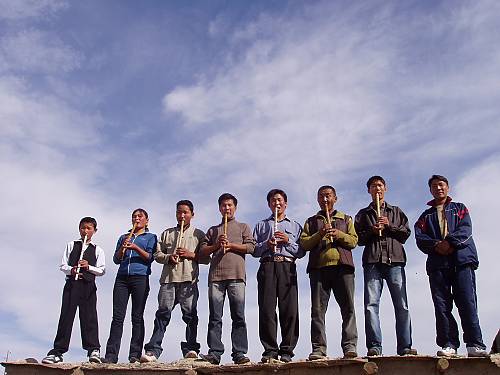
• The number of Tsuur practitioners has grown, with 53 individuals trained through informal apprenticeship programs as of 2025.
• Institutions in both central and local areas, such as Khovd Province and Ulaanbaatar City, have collaborated to regularly organize training, research, performances, and promotional activities.
• The art of the Tsuur has been widely promoted through national festivals, cultural events, international conferences, television programs, radio, and social media content.
• A “Training Center for the Traditional Art of the Mongolian Tsuur” has been established and has begun conducting regular training.
• Active initiatives have been carried out among the Uriankhai ethnic group to revive, promote, craft, transmit, and integrate Tsuur playing techniques into practice.
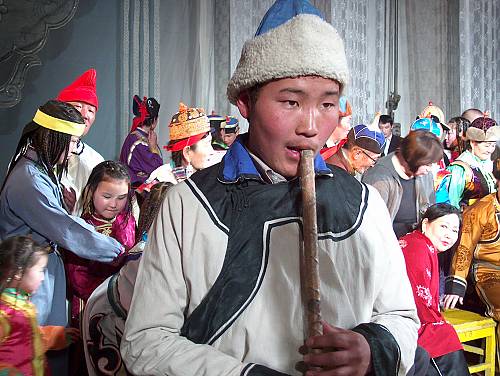
• The sound of the Tsuur has been revived in Mongolian cultural life, becoming a customary element in weddings, ceremonies, and rituals, an inspiring sign of cultural revival and transmission.
Challenges
• The traditional art of the Mongolian Tsuur continues to lack consistent state funding and systematic support.
• Some training and activities remain short-term and irregular, while at the local level, resources are limited, with insufficient training facilities, textbooks, and instructional materials.
Implementation of Safeguarding Measures
• Through cooperation between governmental and non-governmental organizations, diverse activities have been organized to disseminate, safeguard, transmit, and promote the Tsuur, including training, research, performances, content creation, publications, media promotion, events, festivals, and competitions.
• Awareness-raising initiatives such as promotional events, documentaries, articles, interviews, podcasts, postage stamps, and concerts have been successfully implemented.
• Among the Uriankhai ethnic group, active work has been undertaken to revive, transmit, and integrate the crafting and playing techniques of the Tsuur into practice.
The traditional art of the Mongolian Tsuur has strengthened its viability, increased the number of practitioners, and consolidated its role in the socio-cultural environment. The groundwork has been laid for its nomination to the Representative List of Intangible Cultural Heritage of Humanity. However, further efforts are required to ensure sustainable safeguarding, support, and integration into contemporary cultural life.
A.7.
Personne à contacter pour la correspondance
Donnez le nom, l'adresse et les coordonnées d'une personne à qui toute correspondance concernant le rapport doit être adressée.
Titre (Mme/M., etc.)
Ms
Nom de famille
Tserendorj
Prénom
Tsolmon
Institution/fonction
Coordination Officer for Policy Implementation of Intangible Cultural Heritage Department of Cultural Heritage Ministry of Culture
Adresse
Denver Street
7th Khoroo
Sukhbaatar District
Ulaanbaatar 210620a
Numéro de téléphone
+976 99057308; +976 51 265617
Adresse électronique
Tsolmon.ncch@gmail.com
Autres informations pertinentes
B
Ms
B. État de l'élément inscrit sur la Liste de sauvegarde urgente
Veuillez vous référer au dossier de candidature ou aux précédents rapports, le cas échéant, pour savoir quand établir un rapport sur l'état actuel de l'élément et ne rendez compte que des changements pertinents survenus depuis la date de son inscription sur la Liste ou depuis le précédent rapport. Les dossiers de candidature, les calendriers spécifiques et les précédents rapports, le cas échéant, sont disponibles à l'adresse suivante : https://ich.unesco.org ou peuvent être demandés au Secrétariat.
L'État partie s'efforce de prêter une attention particulière au rôle du genre et d'assurer la plus large participation possible des communautés, des groupes et, le cas échéant, des individus concernés ainsi que des organisations non gouvernementales pertinentes pendant le processus de préparation de ce rapport ; il lui est demandé au point D ci-dessous de décrire de quelle manière il y est parvenu.
B.1.
Fonctions sociales et culturelles
Expliquez les fonctions, les significations sociales et culturelles de l'élément aujourd'hui, au sein et pour ces communautés, les caractéristiques de ses détenteurs et de ses praticiens et décrivez, entre autres, toute catégorie de personnes exerçant un rôle ou des responsabilités spécifiques vis-à-vis de l'élément. Une attention particulière devrait être accordée à tout changement pertinent susceptible d'avoir des répercussions sur le critère d’inscription U.1 (« L’élément est constitutif du patrimoine culturel immatériel tel que défini à l'article 2 de la Convention »).
Social and cultural functions
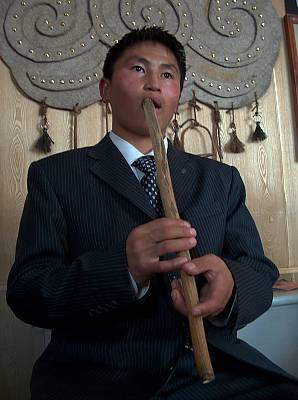
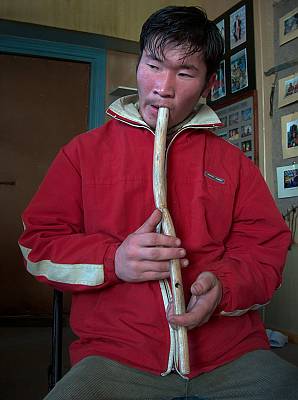
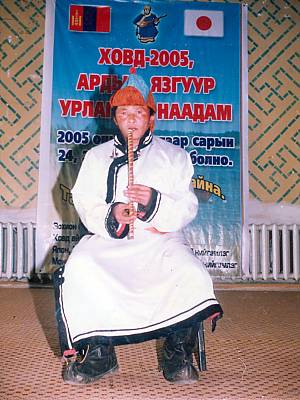
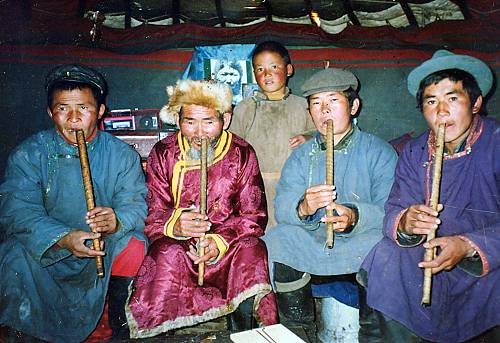
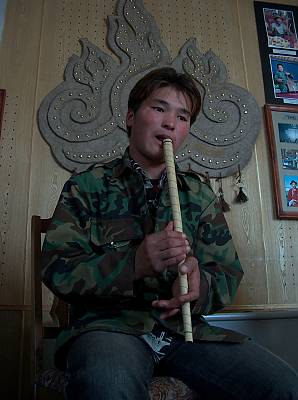
The “Traditional Art of the Mongolian Tsuur” originated and developed among the Uriankhai ethnic group. It is an ICH element that embodies profound expressions of nature, nomadic life, and worldview. This element is not only a musical instrument. Still, it is also closely linked with rituals, celebrations, traditional dances, epic chanting, and archery, serving as a source of cultural pride for the Uriankhai people.
Since its inscription in 2009 on UNESCO’s List of Intangible Cultural Heritage in Need of Urgent Safeguarding, the socio-cultural significance of this heritage has dramatically increased, and its viability has improved. The art of the Tsuur has been promoted and recognized locally and nationally through cultural events, festivals, ceremonies, conferences, concert openings, radio, television, and social media content, thereby gaining public respect and appreciation. This has played an essential role in fostering pride in heritage, preparing future generations, and strengthening cultural resilience.
Notable milestones:
• Cultural creative industries and tourism products based on the “Traditional Art of the Mongolian Tsuur” have emerged.
• A Tsuur apprenticeship training center has opened, disseminating the living tradition and enhancing its vitality.
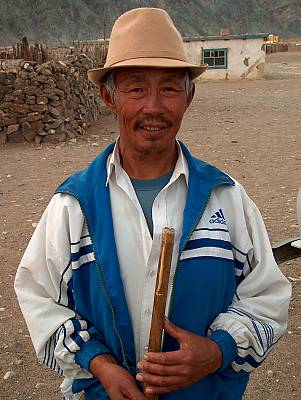
• The characteristics of practitioners are rooted in lineage continuity, traditional ecological knowledge, musical talent, and unique modes of expression. Tsuur players are not merely musicians but also transmitters of heritage, ritual leaders, and cultural ambassadors. For example, Honored Artist of Mongolia B. Naranbat, represents the eighth generation of Tsuur masters, actively engages in training, performances, content creation, and public events, leading efforts to revitalize the heritage, educate younger generations, and raise public awareness.
• Beyond performances in the National Folk Orchestra of the National Academic Theatre of Arts, contemporary ethno-modern and ethno-rock bands have incorporated the Tsuur into their creative works. Groups such as Jangar, Khusugtun, Altai, Tsalam, and The HU feature the Tsuur in their performances. Notably, The HU has introduced the Tsuur to international audiences through works such as Bii Biyelgee, Khar Ayanga, and Shireg Shireg. Young musicians are also increasingly blending the Tsuur with other instruments in modern compositions, revitalizing and innovating the tradition.
The Tsuur is more than sound; it is knowledge, skill, ritual, and value. It is a vital element of cultural resilience and fully aligns with the definition of intangible cultural heritage under Article 2 of the Convention.
Today, Mongolia stands ready to nominate the Traditional Art of the Mongolian Tsuur for inscription on the Representative List of the Intangible Cultural Heritage of Humanity.
B.2.
Analyse de sa viabilité et risques auxquels il est actuellement exposé
Décrivez le degré actuel de viabilité de l'élément, en particulier la fréquence et l'étendue de sa pratique, la vigueur des modes de transmission traditionnels, la composition démographique des praticiens et des publics, et sa durabilité. Veuillez aussi identifier et décrire les facteurs qui, le cas échéant, constituent une menace pour la pérennité de la transmission et de la représentation de l'élément et indiquez le degré de gravité et de proximité de tels facteurs, en accordant une attention particulière à tout renforcement ou affaiblissement de la viabilité de l'élément suite à son inscription.
Assessment of its viability and current risks
Since its inscription on UNESCO’s List of Intangible Cultural Heritage in Need of Urgent Safeguarding, the traditional art of the Mongolian Tsuur has drawn increasing public attention. Year by year, the circle of bearers, researchers, apprentices, and enthusiasts has expanded, and public knowledge and understanding of the Tsuur have grown.
Between 2009 and 2025, the art of Tsuur playing has spread beyond the confines of a single lineage. It has reached talented individuals across regions, including students and folk musicians, through both formal and informal training. As a result, the number of learners and performers has broadened, and public awareness of the rituals and traditions associated with the Tsuur has deepened. Since its inscription, its viability has strengthened to the point where the threat of extinction has been overcome.
Cross border cooperation has also developed. Bearers, communities, and scholars from Xinjiang Uyghur Autonomous Region and Inner Mongolia in China have engaged in joint research, safeguarding, transmission, training, dissemination, and exchange of experiences related to the traditional art of the Mongolian Tsuur.
Old traditions connected with mountain and ovoo worship rituals have been revived, with increased use of the Tsuur among heritage bearers. Among the Uriankhai people, the ancient practice of performing bii biyelgee dance to Tsuur melodies has also been revived. Today, weddings, celebrations, and artistic events are often opened with Tsuur music, elevating its social and cultural value. This new practice demonstrates the living continuity and evolving vitality of the tradition, ensuring its survival.
As globalization, urbanization, and sedentary lifestyles expand, the traditional cultural space of the Tsuur has shifted. It is increasingly performed as stage art rather than solely within ritual contexts. To preserve and develop the Tsuur within its native cultural environment, apprenticeship training is now being implemented step by step in areas where Uriankhai communities are concentrated, such as Khovd Province center, Duut and Munkhkhairkhan districts of Khovd, Bayan Ulgii Province center, Buyant and Altai districts, and Chandmani Undur district of Khuvsgul Province.
Within the framework of Mongolia’s goal to transfer the “Traditional Art of the Mongolian Tsuur” from UNESCO’s Urgent Safeguarding List to the Representative List of the Intangible Cultural Heritage of Humanity, the country is pursuing a policy of strengthening the tradition in its native environment among the Uriankhai people concentrated in Khovd, Bayan Ulgii, and Khuvsgul. Efforts are focused on raising public awareness, promoting the element, expanding and improving apprenticeship training, and ensuring its sustainable transmission.
B.3.
Mise en œuvre des mesures de sauvegarde
Veuillez rendre compte des mesures de sauvegardes qui ont été décrites dans le dossier de candidature et dans un précédent rapport, le cas échéant. Décrivez de quelle manière elles ont été mises en œuvre et ont contribué de façon substantielle à la sauvegarde de l'élément au cours de la période considérée, en tenant compte des contraintes externes ou internes telles que des ressources limitées. Incluez en particulier des informations sur les mesures prises afin d'assurer la viabilité de l'élément en permettant à la communauté d'en poursuivre la pratique et la transmission. Fournissez les renseignements suivants en ce qui concerne la mise en œuvre de l’ensemble des mesures de sauvegarde ou du plan de sauvegarde :
B.3.a.
Objectifs et résultats
Indiquez quels objectifs principaux ont été atteints et quels résultats concrets ont été obtenus pendant la période considérée.
Objectives and results
During the reporting period, the main objectives for safeguarding, revitalizing, transmitting, promoting, and integrating the Traditional Art of the Mongolian Tsuur into practice were defined as follows:
1. Identify, register, and support bearers of the Tsuur tradition.
2. Strengthen both formal and informal training.
3. Increase public awareness and integrate the tradition into practice through cultural events.
4. Promote the Tsuur at local and national levels, reinforcing cultural resilience.
5. Expand cooperation between governmental and non governmental organizations to establish a sustainable safeguarding environment.
Achieved Results
• In Ulaanbaatar city and Khovd Province, around 53 individuals were trained through informal programs between 2022 and 2025. In 2024, a Training Center for the Traditional Art of the Mongolian Tsuur was established and began regular instruction.
• Led by Honored Artist of Mongolia B. Naranbat, bearers conducted a 21 day training program for 13–30 learners in Khovd Province’s Jargalant and Duut soums, and delivered introductory lessons in schools.
• The Tsuur has been regularly performed at major events such as the National Naadam Festival, Uriankhai Archery, the Nomadic Festival, conferences, and concerts, becoming integrated into public cultural life.
• It has been widely promoted through Mongolian national television, radio, social media content, podcasts, articles, interviews, and documentaries. In 2025, it was prominently featured in the Mongolian Cultural Heritage program and the National Naadam Festival.
• More than 200 Tsuur instruments were crafted and used in training and performances.
• In 2024, the Ministry of Culture awarded Tsuur master performer B. Naranbat as an ‘ICH Practitioner of the Year” and granted 30,000,000 MNT.
• The Tsuur was promoted internationally at events such as MOWCAP, the 60th anniversary of Swiss Mongolian diplomatic relations (commemorative stamp), and the Ethno Harmony Festival.
These achievements have strengthened the element's viability, expanded its scope of practice, and laid the foundation for preparing future generations, essential steps toward ensuring the sustainable transmission of the Traditional Art of the Mongolian Tsuur.
B.3.b.
Activités de sauvegarde
Dressez la liste des principales activités menées au cours de la période considérée pour obtenir ces résultats escomptés. Veuillez décrire les activités en détail en mentionnant leur efficacité et tout problème rencontré dans leur mise en œuvre.
Safeguarding activities
1. Updating the registration and research of heritage bearers
• The National Center for Cultural Heritage has annually updated the State unified database of cultural heritage. For instance, the Department of Culture and Arts of Khovd Province, Duut soum of Khovd, and the “Apprenticeship Training Center for the Traditional Art of the Mongolian Tsuur” in Ulaanbaatar trained 53 apprentices, who were subsequently registered in the national cultural heritage database.
2. Increasing awareness, dissemination, and promotion of the Traditional Art of the Mongolian Tsuur
• On November 20, 2022, a promotional event titled “Promoting the Traditional Art of the Tsuur” was held at Zalaat Valley of Bogd Mountain. In cooperation with the Choijin Lama Temple Museum, a media program on crafting Tsuur instruments from Zalaat plants was produced and disseminated via social media and YouTube.
• At the 2nd National Forum on Intangible Cultural Heritage organized by the Ministry of Culture in 2022, Mongolian National Television highlighted the Tsuur in its Mongolian News program.
• Mongol HD Television, in collaboration with the "Uv Erdene" Theatre of the National Center for Cultural Heritage and ORI Video Library, has broadcasted the Tsuur melody titled "Praise of Altai."
• On National Pride Day, commemorating the birthday of Chinggis Khan, Tsuur player B. Naranbat was invited to appear on the Morning Program of Mongolian National Television. During this segment, he performed the melody "Flow of the Eev River" and participated in an interview, sharing insights about his artistry and musical heritage.
• In 2023, journalist N. Ariunsaihan conducted an interview with B. Naranbat, an eighth-generation tsuur player, titled “There Was a Time When People Mocked Tsuur Playing.” This interview was published on the website https://duuren.life/post/1751.
• In the year 2023, journalist P. Amgalanbayar published an article titled “Eighth-Generation Bearer B. Naranbat: I Grew Up Listening to Tsuur Melodies from Infancy” in Century News and on the website www.polit.mn.
• In 2023, Star TV produced “Mongolian Resilience, the Magic of the Tsuur” with participation of scholars and Tsuur players, commissioned by the Ministry of Culture.
• In 2023, the Morning Program on Mongolian Radio welcomed Tsuur players to share their expertise and insights with listeners.
• On May 20, 2024, a commemorative stamp was issued to commemorate the 60th anniversary of diplomatic relations between Mongolia and Switzerland. This stamp features B. Naranbat, a distinguished Tsuur player, along with the Tsuur instrument.
• In 2024, Tsuur musician N. Amartuvshin showcased his talents by performing "Steppe Mongol Home" and "Mother Sea" on the morning program of Mongolian National Television.
• In the year 2024, Education Television's Lunar New Year program highlighted the rituals and traditions associated with the Tsuur.
• In 2024, the Morning Program of Mongolian National Television featured a heritage segment in which B. Naranbat engaged in a discussion regarding the Tsuur tradition.
• In 2025, participants from the Tsuur community engaged in the ‘Durvun Berkh’ entertainment program, broadcast by MNB Television.
• In 2025, B. Naranbat made an appearance on the Mongolian National Television program titled "Mongolian Heritage Culture," where he presented insights into the art forms of throat singing and the Tsuur.
• In July 2025, B.Naranbat participated in a performance featured on Eagle Television's National Naadam Festival program. Additionally, on June 29, 2025, Tsuur musicians contributed to SBN Television's Heritage Culture program.
• On July 9, 2025, B. Naranbat commenced their association with Family Radio 104.5 and the Radio and Coffee podcast.
• Through repeated media coverage, public awareness of the Tsuur tradition has been significantly enhanced.
3. Strengthening research on the Traditional Art of the Tsuur
• In 2022, the Ministry of Culture’s journal, National Cultural Path, featured an interview titled "Songs of the Mountains," conducted by U. Chinzoorig with B. Naranbat, a Tsuur player and cultural researcher.
• In 2022, the National Center for Cultural Heritage, in collaboration with the Choijin Lama Temple Museum, organized an event "Promoting the Traditional Art of the Tsuur" at the “Uv Erdene” Theatre. This event included various performances and research presentations.
• In 2025, the Bibliotheca Oirdatica Biography Serica XXVIII series, published by the Tod Nomyn Gerel Center, released Dr. M. Ganbold’s work, People of the Altai Mountains, which features a comprehensive study of Tsuur player N. Buyandelger.
4. Strengthening viability
• In 2022, the National Center for Cultural Heritage, in collaboration with the Darkhan-Uul Museum, organized the event "Let the Wonder of the Mongolian Tsuur Resonate in Burkhant Valley." This initiative provided musical education to 140 children and youth from the regions of Darkhan, Khonkhor, and Shariin Gol.
• In 2022, 21 Tsuur players underwent training and subsequently participated in the Uriankhai and Tuvan Cultural Heritage Festival, during which 21 Tsuur instruments were handcrafted and presented to the participants.
• In 2022, over ten Tsuur players actively contributed to the Tea Road Cultural Heritage Festival III, held in Khovd Province. On November 20, 2022, the NCCH joined forces with the Choijin Lama Temple Museum to co-organize an event focused on promoting the traditional art of the Tsuur.
• In 2023, the Academy of English facilitated lectures and training sessions on the Tsuur as part of the Mongolian Pride campaign. Subsequently, on November 2, 2023, the National Center for Cultural Heritage inaugurated the Apprenticeship Training Center dedicated to the traditional art of the Tsuur.
• In 2024, Tsuur player B. Naranbat crafted over 200 Tsuur instruments, complete with cases, each valued at 250,000 MNT, intended for training purposes and for enthusiasts of the instrument.
• In January 2025, the Governor’s Office of Khovd Province, in conjunction with the Department of Culture, Arts, Tourism, and Youth, launched a 21-day basic training program under the guidance of eighth-generation bearer B. Naranbat, where thirteen apprentices were prepared.
• In 2025, the Governor’s Office of Duut soum, Khovd Province, initiated another 21-day training program at the Cultural Center, also featuring instruction from B. Naranbat, intending to train thirty apprentices. Additionally, in January 2025, B. Naranbat conducted introductory lessons for eighty students at the secondary school in Duut soum.
B.3.c.
Participation de communautés, de groupes ou d'individus aux activités de sauvegarde
Veuillez décrire de quelle manière les communautés, les groupes ou, le cas échéant, les individus ainsi que les organisations non gouvernementales pertinentes ont participé de façon effective à l'exécution des mesures de sauvegarde, y compris en termes de rôles du genre. Décrivez le rôle joué par l'organisation ou l'organe chargé de l'exécution (dénomination, informations de référence, etc.) et les ressources humaines qui ont été mises à disposition pour la mise en œuvre des activités de sauvegarde.
Participation of communities, groups or individuals in the safeguarding activities
The Traditional Art of Mongolian Tsuur Music has been sustained through the active and effective participation of communities, ethnic groups, individuals, and both governmental and non-governmental organizations. Their collective engagement has been instrumental in strengthening the viability of this element. For the Uriankhai ethnic group in particular, the tsuur represents a profound cultural expression, and their involvement has been the driving force behind its revival, transmission, and integration into contemporary practice.
Key institutions have played central roles in safeguarding activities:
• Governmental bodies, including the Ministry of Culture, the National Center for Cultural Heritage, the Capital City Department of Arts and Culture, the Governor’s Office of Khovd Province, the Department of Culture, Arts, Tourism and Youth of Khovd Province, the Choijin Lama Temple Museum, and the Darkhan-Uul Province Museum, have provided policy support, organized events, and contributed to training and research.
• Non-governmental and media organizations, such as “Uvug Uriankhai” NGO, the Mongolian Uriankhai Archery Association, the Tsuur Apprenticeship Training Center, Mongol Post JSC, The Academy of English, the Mongolian Theatre Museum, MNB, Star TV, Eagle TV, SBN, NTV, Education TV, Zogii.mn, Duuren, Life, and Family Radio 104.5, have actively promoted public awareness, produced cultural content, and disseminated knowledge about the heritage.
Element practitioners have been at the heart of safeguarding efforts, ensuring transmission, research, promotion, and training:
• Apprenticeship trainers: B. Naranbat, E. Baatarjav, N. Buyandelger, B. Zagdsjav, D. Namuuntsatsag, N. Zolzaya
• Tsuur instrument crafters: N. Buyandelger, B. Naranbat, B. Zagdsjav, N. Amartuvshin, Kh. Byambajav, N. Sanjaadorj, T. Erdenebat
Among them, Honored Artist of Mongolia B. Naranbat, as the eighth-generation bearer, has played a leading role in training, performances, content creation, and public events. His contributions have been vital in reviving and developing the heritage, educating younger generations, and raising public awareness. Collaborating tsuur players, researchers, journalists, teachers, and local cultural workers have also provided indispensable human resources.
While male bearers have predominated in safeguarding activities, the increasing involvement of female researchers, museum staff, journalists, and organizers has been significant. Their contributions to training, content creation, and event organization have enriched the safeguarding process and broadened participation.
These collaborative efforts have established a strong foundation for safeguarding the heritage in a diverse, sustainable, and effective manner. As a result, the number of bearers has grown, the practice has expanded, and public understanding has deepened, ensuring the continued vitality of the Traditional Art of Mongolian Tsuur Music.
B.3.d.
Calendrier
Indiquez, sous forme de calendrier, les dates de mise en œuvre de chacune des activités.
Timetable
Within the framework of safeguarding the Traditional Art of Mongolian Tsuur Music, the following activities have been carried out:
• 2022 — The National Center for Cultural Heritage, in cooperation with the Darkhan-Uul Province Museum, organized the program “Let the Wonder of Mongolian Tsuur Resonate in Burkhant Valley”. Through this training and research initiative, musical education was promoted among talented children and youth via the tsuur, providing more accessible learning opportunities. A total of 140 residents and children from Darkhan, Khonkhor, and Shariin Gol soums participated.
• July 25–26, 2022 — At the “Cultural Heritage Festival of the Uriankhai and Tuvan Peoples”, 21 tsuur players were trained and prepared to perform. Additionally, 21 tsuur instruments were crafted and presented as gifts to participants.
• September 25–26, 2022 — More than 15 tsuur players took part in the Third “Tea Road” Cultural Heritage Festival held in Khovd Province.
• November 20, 2022 — The National Center for Cultural Heritage, together with the Choijin Lama Temple Museum, co-organized the event “Day for Promoting the Traditional Art of Tsuur Music” at the Uv Erdene Theatre.
• 2023 — Within the framework of the “Mongolian Pride” campaign organized by The Academy of English, lectures and training sessions on the theme of Mongolian Tsuur were conducted.
• November 2, 2023 — As part of the “Creative Month of Culture” campaign organized by the Ministry of Culture, the National Center for Cultural Heritage established the “Apprenticeship Training Center for the Traditional Art of Mongolian Tsuur”. More than 200 tsuur instruments were crafted for training purposes.
• 2025 — To ensure transmission of the heritage and prepare new tsuur players, the Governor’s Office of Khovd Province and the Department of Culture, Arts, Tourism and Youth organized a 21-day introductory training program, producing 43 new apprentices.
• January 2025 — At the General Education School of Duut soum, Khovd Province, tsuur player B. Naranbat conducted an introductory lesson on the tsuur for 80 students.
• Annual Recognition of ICH Practitioners— In accordance with Government Resolution No. 354 (2018), which established the regulation for awarding monetary prizes to heritage bearers who make outstanding contributions to the promotion and dissemination of intangible cultural heritage nationally and internationally, one bearer is selected each year. In 2024, the award was conferred upon B. Naranbat, an eighth-generation Uriankhai tsuur player, native of Duut soum in Khovd Province and resident of Bayanzürkh District, Ulaanbaatar. His recognition as an ICH Practitioner of the Year was officially confirmed by Order A/65 of the Minister of Culture, Sports, Tourism and Youth on February 28, 2025.
B.3.e.
Dépenses budgétaires
Veuillez fournir le détail des montants des fonds utilisés pour la mise en œuvre de chaque activité (si possible, en dollars des États-Unis), en indiquant dans chaque cas l’origine du financement (sources gouvernementales, contributions en nature des communautés, etc.).
Budget
In 2014, the Parliament of Mongolia revised and adopted the Law on the Protection of Cultural Heritage. Article 41 stipulates that “Funding for cultural heritage shall be provided from the state budget, local budgets, funds, donations, and assistance granted by citizens of Mongolia and foreign nationals, international organizations, legal entities, and other sources.” Article 13, Clause 13.1.13 further specifies that “Measures related to nominating cultural heritage for inscription on the World Heritage List and UNESCO ICH Lists, as well as safeguarding, transmitting, and promoting heritage already inscribed, shall be reflected annually in the state budget and financed accordingly.”
Article 15, “Powers of Citizens’ Representative Khurals of aimags, the capital city, soums, and districts”, Clause 15.1.1, states: “Ensure the implementation of laws on safeguarding cultural heritage within their territory, develop and implement programs and plans, approve necessary budgets, and exercise oversight.” Article 16, “Powers of Governors of aimags and the capital city”, Clause 16.1.12, stipulates: “Identify bearers of intangible cultural heritage, promote them publicly, provide support, and organize transmission activities.” These provisions enable the allocation of local budgets for safeguarding intangible cultural heritage.
During the reporting period, diverse activities were implemented to safeguard, revive, transmit, and promote the Traditional Art of Mongolian Tsuur Music. Financing was drawn from the state budget, local budgets, private sponsorship, and other sources.
Detailed expenditure breakdown:
• Informal training and apprenticeship programs (Ulaanbaatar, Khovd Province):
o Training costs, teacher fees, materials: $12,000
o Sources: Ministry of Culture, Governor’s Office of Khovd Province, “Uvug Uriankhai” NGO
o Additional contribution: R. Chuluunbat donated six tsuur instruments worth 1,800,000 MNT to the primary school of Ulaankhad bag, Altai soum, Bayan-Ölgii Province.
• Production and distribution of tsuur instruments (200 units):
o Materials, craftsmanship, packaging: $18,000
o Sources: Private investment (B. Naranbat), community support
• Participation in public events, performances, and festivals:
o Transport, accommodation, meals, preparation: $15,000
o Sources: Ministry of Culture, local budgets, sponsors
• Content creation, promotion, and media involvement (documentaries, interviews, articles):
o Production, filming, editing: $10,000
o Sources: MNB, Star TV, Eagle TV, duuren.life, Zogii.mn, volunteers
• Opening and operation of the “Apprenticeship Training Center for the Traditional Art of Mongolian Tsuur”:
o Equipment and training environment: $8,000
o Sources: National Center for Cultural Heritage, Ministry of Culture
• Participation in international events (MOWCAP, Ethno Harmony Festival):
o Participant costs and preparation: $6,000
o Sources: Ministry of Culture, community support
• Annual Recognition of ICH Practitioners
o Monetary reward: 30,000,000 MNT or $8800
o Sources: Ministry of Culture, community support
Total expenditure: approximately $77,800
These expenditures were directed toward expanding the scope of safeguarding, transmission, practice, and promotion of the heritage. The combined participation of the state, civil society, individuals, and voluntary initiatives has played a crucial role in ensuring financial sustainability and strengthening the viability of the Traditional Art of Mongolian Tsuur Music.
B.3.f.
Efficacité globale des activités de sauvegarde
Procédez à une évaluation globale de l'efficacité des activités menées pour parvenir aux résultats escomptés et de l'utilisation des fonds nécessaires à leur mise en œuvre. Veuillez indiquer de quelles manières les activités ont contribué à l’obtention des résultats et si d'autres activités auraient été mieux adaptées à cette fin. Indiquez aussi si les mêmes résultats auraient pu être obtenus avec de moindres ressources financières, si les ressources humaines disponibles étaient appropriées et si les communautés, groupes et individus concernés auraient pu participer davantage.
Overall effectiveness of the safeguarding activities
As a result of the series of safeguarding measures described above, the viability of the Traditional Art of Mongolian Tsuur Music has significantly improved. Notable progress has been made in establishing a stable system to revive, safeguard, develop, teach, research, and promote this ICH element. Key achievements include:
• Legal and institutional framework: Registration, documentation, and database creation for ICH have been strengthened, and the legal environment for safeguarding has improved.
• Expanded participation: The involvement and initiatives of heritage bearers, individuals, communities, groups, and NGOs have increased in cooperation with central and local cultural authorities. Collaborative relationships have been established, and valuable experience has been accumulated.
• Media engagement: Media organizations have shown growing interest and initiative in promoting and popularizing ICH, working actively with bearers, communities, and both governmental and non-governmental organizations.
• Public awareness: Through content creation, broadcasts, articles, and interviews, the media has conveyed the value of the heritage to the broader public.
• Community consciousness: Public respect, pride, and awareness of the importance of safeguarding, transmitting, and learning their ICH have steadily increased.
Since its inscription on UNESCO’s List of Intangible Cultural Heritage in Need of Urgent Safeguarding in 2009, the Traditional Art of Mongolian Tsuur Music has overcome the threat of extinction. Thanks to the sustained initiatives of the Government of Mongolia, the Ministry of Culture, Sports, Tourism and Youth, the National Center for Cultural Heritage, the administrations of Khovd and Uvs Provinces, the Khan-Uul District of Ulaanbaatar, and the active participation of relevant organizations, communities, and individuals between 2009 and 2025, the element has been revived and is now capable of stable continuity.
Coordination among government, civil society, local institutions, heritage bearers, and the media has improved, shaping a collaborative model. Activities have been implemented step by step, targeted to specific groups, and adapted to local contexts, thereby enhancing effectiveness.
Approximately $77,800 was spent, allocated to training, instrument-making, events, content production, and participant costs, meeting practical needs. However, budget limitations and irregular funding restricted the scope of certain activities. Voluntary participation, private investment, and community support helped reduce expenses, but a sustainable financing system remains necessary.
Moving forward, it is essential to:
• Improve the legal, institutional, and economic environment to ensure livelihood security, social welfare, and incentive systems for heritage bearers.
• Organize safeguarding activities within the native cultural environment of the heritage.
• Establish specialized teams at the regional level.
• Ensure and enhance gender balance.
• Expand the scope of participation by communities, groups, and individuals, and strengthen regional cooperation to increase further safeguarding effectiveness.
C
Tserendorj
C. Mise à jour des mesures de sauvegarde
C.1.
Plan de sauvegarde mis à jour
Veuillez fournir une mise à jour du plan de sauvegarde inclus dans le dossier de candidature ou dans le précédent rapport. En particulier, veuillez donner des informations détaillées comme suit :
- a. Quels sont les objectifs principaux visés et les résultats concrets attendus ?
- b. Quelles sont les activités principales à mener pour atteindre ces résultats attendus ? Veuillez décrire les activités en détail et dans l'ordre d'exécution, en démontrant leur faisabilité.
- c. Comment le ou les États parties concernés soutiennent-ils la mise en œuvre du plan de sauvegarde mis à jour ?
Updated safeguarding plan
Mongolia’s long-term development policy document Vision-2050, the Government Action Plan, the Main Directions for Mongolia’s Development 2026–2030, the Main Directions for Improving National Legislation until 2028, and the Ministry of Culture, Sports, Tourism, and Youth’s Strategic Plan 2025–2028 all emphasize the safeguarding of intangible cultural heritage. These frameworks set goals to identify, register, research, and document ICH; establish databases; transmit and disseminate heritage; promote and protect bearers; support the transmission of traditional knowledge and skills to future generations; and create systems to encourage and reward groups, communities, and bearers who establish apprenticeship training.
In line with legislative improvement, in 2023, a working group was established to draft an independent “Law on Supporting Practitioners of Intangible Cultural Heritage” with related research already underway for submission to Parliament.
Updated Safeguarding Plan
The revised plan was developed in alignment with the above policy documents. Its overarching goal is to update the registration, research, and documentation of the Traditional Art of Mongolian Tsuur Music; strengthen its transmission through formal and informal training; enhance research and promotion; reinforce its viability; raise public awareness; and prepare for its transfer from the List of Intangible Cultural Heritage in Need of Urgent Safeguarding to the Representative List of the Intangible Cultural Heritage of Humanity.
Objectives
• Enhance the legal environment to support practitioners of this heritage element
• Update registration and research on element bearers.
• Increase knowledge, dissemination, and promotion of the traditional art of Mongolian tsuur.
• Intensify research related to the element.
• Strengthen viability.
Expected Results
• The supporting mechanism for practitioners of intangible cultural heritage will be enhanced.
• Registration and research on bearers will be regularly updated.
• Public awareness will increase, leading to growth in the number of enthusiasts and researchers.
• The viability of the element will be reinforced.
• The number and skill level of apprentices will rise.
• Research related to the element will advance.
• A safeguarding plan based on systematic monitoring and evaluation will be established.
• Implementation of these activities will create the conditions for transferring the element from the Urgent Safeguarding List to the Representative List, with special attention to dissemination among the Uriankhai ethnic group.
Planned Activities (2026–2029)
To achieve the targeted results, the following activities will be organized:
• In 2026: The “Law on Supporting Practitioners of Intangible Cultural Heritage” will be elaborated and adopted.
• 2026–2029: Implement the “Mongolian Tsuur” campaign in Khovd, Bayan-Ulgii, and Khuvsgul Provinces, integrating it with cultural spaces and rituals.
• 2028: Conduct a nationwide tsuur inventory within the framework of the Law on Protection of Cultural Heritage.
• 2027: Organize a scientific conference on “Contemporary Trends in the Development of the Tsuur.”
• 2026: Continue the festival named after renowned tsuur player Paarain Narantsogt in Ulaanbaatar and Khovd Province.
• 2028: Produce and release a documentary film to introduce the tsuur to children and youth.
• 2026–2029: Organize apprenticeship training programs to transmit tsuur heritage.
• 2026–2029: Produce a series of documentary broadcasts through media and television to raise public awareness.
• 2026–2029: Organize staged apprenticeship programs in Uriankhai communities to disseminate tsuur traditions within their cultural environment. These will be held in the Duut and Munkhkhairkhan soums of Khovd Province, the Chandmani-Undur soum of Khuvsgul Province, and the Buyant and Altai soums of Bayan-Ulgii Province.
C.2.
Calendrier des activités à venir
Veuillez fournir un calendrier du plan de sauvegarde mis à jour (sur une période d’environ quatre ans).
00310,00311,00543,00871,00873,01061
Timetable
Between 2026 and 2029, a series of activities will be implemented in cooperation with governmental and non-governmental organizations, researchers, academic institutions, local administrations, and communities to safeguard the Traditional Art of Mongolian Tsuur Music and strengthen its viability.
Legal environment
• In 2026, enhance the legal environment to support practitioners of this heritage element
Training
• Organize apprenticeship programs from 2026–2029 to ensure the transmission of tsuur heritage.
Research
• In 2027, hold a scientific conference on “Contemporary Trends in the Development of the Tsuur.”
• In 2028, conduct a nationwide tsuur inventory.
Promotion
• In 2026, implement the “Mongolian Tsuur” campaign in Khovd, Bayan-Ulgii, and Khuvsgul Provinces, integrating it with cultural spaces, rituals, and ceremonies.
• In 2026, continue the festival named after renowned tsuur player Paarain Narantsogt in Ulaanbaatar and Khovd Province.
• In 2027, produce and release a documentary film introducing the tsuur to children and youth.
• From 2026–2029, broadcast a series of documentary programs through media and television to raise public awareness.
• From 2026–2029, organize staged apprenticeship programs in Uriankhai communities to disseminate tsuur traditions within their cultural environment. These will be held in the Duut and Munkhkhairkhan soums of Khovd Province, the Chandmani-Undur soum of Khuvsgul Province, and the Buyant and Altai soums of Bayan-Ulgii Province.
Monitoring
• In 2029, monitoring activities will assess the viability of the element annually, comparing safeguarding measures, particularly the quality of apprenticeship training and the number of bearers, to determine the heritage’s resilience.
These activities aim to:
• Strengthen the viability of the heritage.
• Expand its practice environment.
• Ensure sustainable preparation of future generations.
• Increase public support and awareness.
Implementation will be based on collaboration among government, civil society, local institutions, and communities, ensuring a comprehensive and participatory safeguarding process.
C.3.
Budget des activités à venir
Veuillez fournir les estimations des fonds requis pour la mise en œuvre du plan de sauvegarde actualisé (si possible, en dollars des États-Unis), en identifiant les ressources disponibles (sources gouvernementales, contributions en nature des communautés, etc.)
Budget
1. Organize apprenticeship training to transmit, safeguard, promote, and disseminate the intangible cultural heritage of Mongolian tsuur music-30,000$ between 2026–2029, from the State and local budgets, and other funding.
2. Organize a scientific conference on “Contemporary Trends in the Development of Mongolian Tsuur.”-3000$ in 2027, from the State and local budgets, and other funding.
3. Conduct a nationwide tsuur inventory and assessment – 15,000$ in 2028, from the State and local budgets, and other funding.
4. Implement the “Mongolian Tsuur” campaign in key provinces (Khovd, Bayan-Ulgii, Khuvsgul) and integrate it with cultural spaces, rituals, and ceremonies – 15,000$ in 2026, from the State and local budgets, and other funding.
5. Continue the Tsuur Festival, named after renowned tsuur player Paarain Narantsogt, in Ulaanbaatar and Khovd Province to promote, safeguard, and transmit the heritage, 3,000$ in 2026, from the State and local budgets, and other funding.
6. Produce and release a documentary film and content to introduce and promote the tsuur to children and youth, 3,000$ in 2027, from the State and local budgets, and other funding.
7. Produce a series of documentary broadcasts on television and other media to raise public awareness of Mongolian tsuur music. 7,000$ between 2026-2029, from the State and local budgets, and other funding.
C.4.
Participation des communautés
Veuillez décrire comment les communautés, groupes et individus ainsi que les organisations non gouvernementales pertinentes ont été impliqués, y compris en termes de rôles du genre, dans la mise à jour du plan de sauvegarde et comment ils seront impliqués dans sa mise en œuvre.
00147
Community participation
The updated action plan was developed in consultation with the Ministry of Culture, Sports, Tourism and Youth; the National Center for Cultural Heritage; the UNESCO National Commission of Mongolia; the Government Implementing Agency Culture and Arts Authority; the Governor’s Offices and Cultural Departments of Khovd, Khuvsgul, Bayan-Ulgii, and Darkhan-Uul Provinces; the NGO “Khunnu Tsuur Players’ Association”; representatives of both senior and younger generations of heritage bearers; relevant state institutions; and scholars and researchers. It is aligned with Mongolia’s National Program for Safeguarding Intangible Cultural Heritage, the Law on the Protection of Cultural Heritage, the long-term development policy document Vision-2050, the Policy on Supporting Cultural and Creative Industries (2024), and the Government Action Plan of Mongolia.
• The Ministry of Culture, Sports, Tourism and Youth will ensure a favorable legal environment, formulate policy, secure necessary funding in the state budget, exercise oversight, and provide leadership and methodological guidance for nationwide activities through the Department of Culture and Arts.
• The National Center for Cultural Heritage (NCCH) will organize safeguarding activities, including national-level competitions and scientific conferences among tsuur players, in cooperation with the Khunnu Tsuur Players’ Association.
• Activities included in the plan will be implemented in consultation and collaboration with institutions mandated under the Law on the Protection of Cultural Heritage, as well as other governmental and non-governmental organizations, researchers, and the public.
Heritage bearers are entrusted with the responsibility of transmitting, promoting, and disseminating the Traditional Art of Mongolian Tsuur Music at both national and international levels. They are also expected to participate in the safeguarding activities outlined in the plan actively.
C.5.
Contexte institutionnel
Veuillez indiquer quelles institutions sont en charge de la gestion locale et de la sauvegarde de l'élément inscrit sur la Liste de sauvegarde urgente, notamment :
- a. l'(les) organisme(s) compétent(s) impliqué(s) dans sa gestion et/ou sa sauvegarde ;
- b. l'(les) organisation(s) de la communauté ou du groupe concernée(s) par l'élément et sa sauvegarde.
2005-06-29
Institutional context
A. Ministry of Culture, Sports, Tourism and Youth
Address: Ministry of Culture of Mongolia, 7th khoroo, Sukhbaatar District, Ulaanbaatar, Mongolia
Specialist: Tserendorj Tsolmon
Specialist responsible for coordinating the implementation of intangible cultural heritage policy
Phone: +976-51-265617
Fax: +976-
Email: tsolmon@moc.gov.mn
Mobile: +976-99057308
Email: info@moc.gov.mn
Website: moc.gov.mn
B. Government Implementing Agency Culture and Arts Authority
Address: Mongolia, Ulaanbaatar City, Sukhbaatar District, 8th khoroo, Cultural Palace, Building G, 6th floor
Senior Specialist: Jargalsaikhan Nasanjargal
Responsible for intangible cultural heritage affairs
Mobile: +976-99086285
Email: nasaa08@gmail.com
C. National Center for Cultural Heritage
Address: Mongolia, Ulaanbaatar City, Khan-Uul District, 21st khoroo, Buyant Ukhaa 2 residential area, National Center for Cultural Heritage
Head of Registration and Information Department: Arslan Saruul
Phone: +976-99030405
Email: a.saruul@ncch.gov.mn, saku_tuntic@yahoo.com
D. Khunnu Tsuur Players’ Association NGO
Community organization entrusted with representing and safeguarding this heritage element
Chairman: B. Naranbat
Mobile: +976-99208095
Address: Bayanzürkh District, 30th khoroo, Sansar residential area, Apartment 1-15
Fax: —
Email: naranbattsuur8095gmail.com
D
Tsolmon
D. Participation des communautés à l'établissement du présent rapport
Décrivez les mesures qui ont été prises pour assurer la plus large participation possible des communautés, des groupes et, le cas échéant, des individus ainsi que des organisations non gouvernementales pertinentes concernés pendant la préparation du présent rapport.
Participation of communities in preparing this report
To encourage broad participation and ensure inclusivity among relevant communities, groups, individuals, and non-governmental organizations in preparing the periodic report on the Traditional Art of Mongolian Tsuur Music, several organized measures were implemented.
In accordance with Article 14, Clause 14.1.10 of Mongolia’s Law on the Protection of Cultural Heritage, the Director of the Government Implementing Agency Culture and Arts Authority issued Working Group Order A/51 (2025) to form a task force dedicated to compiling the UNESCO Periodic Report on Intangible Cultural Heritage in Need of Urgent Safeguarding.
The working group comprised representatives from the Culture and Arts Authority, the National Center for Cultural Heritage, various scholars and researchers, heritage bearers, and non-governmental organizations. In drafting the report, they carefully analyzed and incorporated information submitted by the Departments of Culture, Arts, Tourism, and Youth from Mongolia’s 21 provinces, as well as local cultural centers and academic institutions.
The NGO Khunnu Tsuur Players’ Association and eighth-generation bearer B. Naranbat, an Honored Artist of Mongolia, played a crucial role in representing heritage bearers. They provided valuable insights, accurate information, and firsthand experience regarding the current state of the heritage, its training, practices, and necessary safeguarding measures.
E
Coordination Officer for Policy Implementation of Intangible Cultural Heritage
Department of Cultural Heritage
Ministry of Culture
E. Signature au nom de l'État partie
Le rapport doit être signé par un responsable habilité à le signer pour le compte de l’État, avec la mention de son nom, de son titre et de la date de soumission.
Nom
Mr. DAVAATSEREN Byambasuren
Titre
The State Secretary of the Ministry of Culture, Sports, Tourism and Youth of Mongolia
Date
12-12-2025
Signature
Chargement du rapport périodique signé